


For nearly thirty years, Bangladeshi politics has been dominated by two powerful parties: the Awami League (AL) and the Bangladesh Nationalist Party (BNP). These two groups were locked in a never-ending fight for control, leaving little room for other political actors.
Elections in Bangladesh have often been controversial, with many reports of vote rigging, government-backed violence against opponents, and efforts to silence critics. Consequently, politics became more about staying in power than serving people. Over time, ordinary citizens lost faith in the system, as leaders focused more on political survival than addressing public issues.
This two-party dominance created deep divisions within the society. When one party won, rather than working for the people, it used its power to crush the other party. As a result, democracy weakened. Many felt that real change had become unattainable.
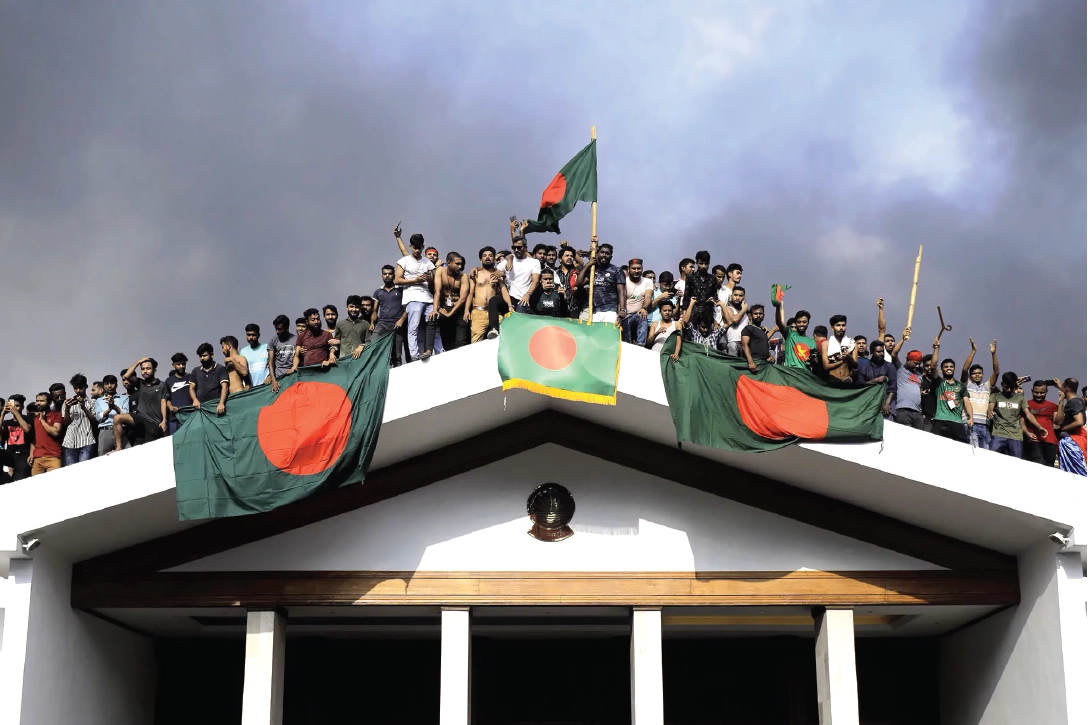
The year 2024 became a turning point. Sheikh Hasina’s increasingly authoritarian government finally collapsed under massive public protests, failing economy, and—most importantly— withdrawal of support from the military establishment.
All these factors created Bangladesh’s biggest political crisis since 1971. With the old government gone, new political groups emerged. The National Citizens’ Party (NCP) is the most popular among them. It started as a student protest movement but has now become a serious political player.
But big questions remain: Can this new party really change Bangladesh’s long history of authoritarian rule? Or will it be controlled or destroyed by the same powerful forces that have always dominated Bangladeshi politics?
To fully appreciate the significance of the current political moment, one must examine the historical context that shaped Bangladesh’s political landscape following its return to parliamentary democracy in 1991. Since then, two main parties—the Awami League (AL) and BNP—have ruled the country. Though they claim to be different, both have used the same dirty tricks when in power. They misused government departments to attack their opponents, creating endless political revenge cycles.
This problem worsened during Sheikh Hasina’s extended tenure, where the distinction between state and party became increasingly blurred. In 2014, general elections were conducted without the participation of the main opposition parties. International observers widely condemned the next elections in 2018 as fundamentally flawed. Both served as managed shows to keep Sheikh Hasina in perpetual power. These were not real elections but tools to make AL’s rule permanent while rendering the opposition toothless.
The facade of political stability carefully cultivated by Sheikh Hasina began showing cracks as Bangladesh’s economic foundations started crumbling under the weight of systemic corruption and gross mismanagement. By early 2024, the country found itself grappling with critically low foreign exchange reserves, unsustainable debt burdens, and spiralling inflation that devastated the urban poor and middle class.
What began as economic protests by university students and young professionals quickly snowballed into a nationwide movement demanding immediate political change. The government’s heavy-handed response, including arbitrary detentions, enforced disappearances, and live fire against protesters, served to fuel further public anger. The tipping point came when key factions within Bangladesh’s powerful military establishment - historically the ultimate arbiter of political disputes - signalled their unwillingness to continue propping up an increasingly unpopular regime. The speed with which Hasina’s government collapsed surprised even seasoned political observers, demonstrating how quickly authoritarian regimes can unravel when they lose both popular legitimacy and the support of key institutional actors.


The writer, based in Karachi, is a freelance contributor and investment banker. He can be reached at syedatifshamim@hotmail.com.
Leave a Reply