


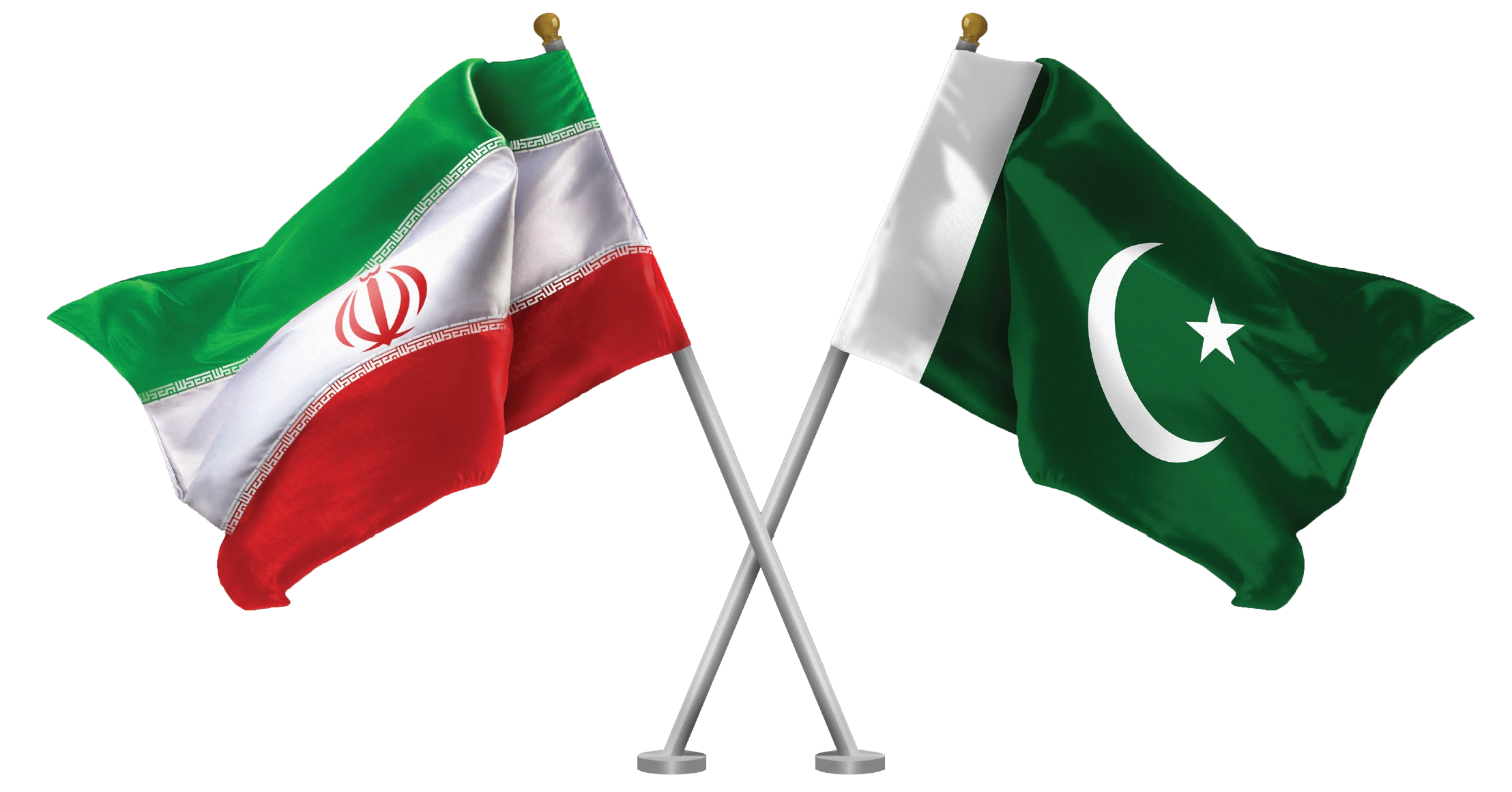
Iran was the first country to recognize Pakistan in 1947. During Mohammad Reza Shah Pahlavi’s rule in Iran till 1979, Pakistan had very close diplomatic, economic, and defence relations with Iran. Iran had strongly supported Pakistan in the India-Pakistan wars of 1965 and 1971, and it also cooperated with it in the 1970s Balochistan operation. Since the Islamic revolution in Iran in 1979, Pakistan and Iran’s relations have generally remained cordial, at times very warm but not always strong, because of their ideologically driven different regional leanings.
During the Soviet-Afghan War (1979–1989), Iran backed the US-Pakistan supported Afghan mujahideen, and Pakistan supported Iran in the Iran–Iraq War (1980–1988). But Pakistan’s support for the Taliban in the Third Afghan Civil War (1992–1996) made Iran uncomfortable as it opposed the Taliban-controlled Afghanistan. In the Fourth Afghan Civil War (1996–2001), Iran backed the anti-Taliban Northern Alliance. During this phase of the Afghan civil war, since India’s interest was allied with Iran, it advanced its relations with India, which Pakistan detested.
Following the 9/11 attacks, Iran and Pakistan joined the war on terror. Since 2014, Iran has also expressed interest in joining the China–Pakistan Economic Corridor (CPEC) as part of the larger Belt and Road Initiative (BRI). After the U.S. complete withdrawal of its troops and the Taliban’s return to power in the 2020s, Pakistan beefed up its cooperation with Iran to promote peace and stability in Afghanistan, with both sides agreeing that Afghanistan should not be used for geopolitical rivalry. In 2013, Pakistan and Iran signed a major gas pipeline agreement, but the pipeline construction on the Pakistani side was delayed due to the US sanctions imposed on Iran.
However, Pakistan and Iran remain suspicious of each other as both sides perceive that the other side is not serious about taking action against the terrorists hiding in their territory and operating against the other. Pakistan also suspects that India is covertly using Iranian soil to sponsor terrorism, and Iran has been reluctant to constrain India because of its deeper relations with New Delhi.
Pakistan had thought that after Saudi Arabia-Iran’s rapprochement mediated by China and the recent 25-year strategic cooperation agreement between Iran and China, signed in March 2021, the time was ripe for Islamabad and Tehran to advance their mutual relations to new heights. But, Iran’s unthinkable action of launching missile and drone strikes on January 16, 2024, in Pakistan’s Balochistan province, claiming that it had targeted the Iranian Baloch militant group Jaish ul-Adel, stunned the Pakistani leadership and the people at large.
This had happened for the first time in history, and Iran’s motivation to commit such a major mistake could never be justified. From Pakistan’s perspective, Iran had committed the grave mistake of opting to use force instead of sharing that information with Pakistan for its action. Therefore, to defend its sovereignty, caution Iran not to repeat such a mistake in the future, and deter India from taking Pakistan easy, Pakistan retaliated to Iranian strikes by targeting a Pakistani terrorists’ hideout in Iran’s Sistan--Balochistan province by using missiles and drones.
After its retaliation, it was a good initiative that Pakistan’s Foreign Minister spoke to the Iranian Foreign Minister, suggested de-escalating the tensions, and invited him to visit Pakistan for a dialogue. As per the media report, the Foreign Minister of Iran, Hossein Amir Abdollahian, arrived in Islamabad on 29 January 2024. Both Ministers had in-depth discussions and decided to de-escalate the tensions immediately. In a joint press conference with Foreign Minister Jilani, Iranian Foreign Minister Abdollahian expressed concern over cross-border terrorism, asserting that militants in the border regions of both countries were “led and supported by third countries.”


The writer is a former Research Fellow of IPRI and a Senior Research Fellow of SVI, Islamabad. He can be reached at hanifsardar@hotmail.com
Leave a Reply