



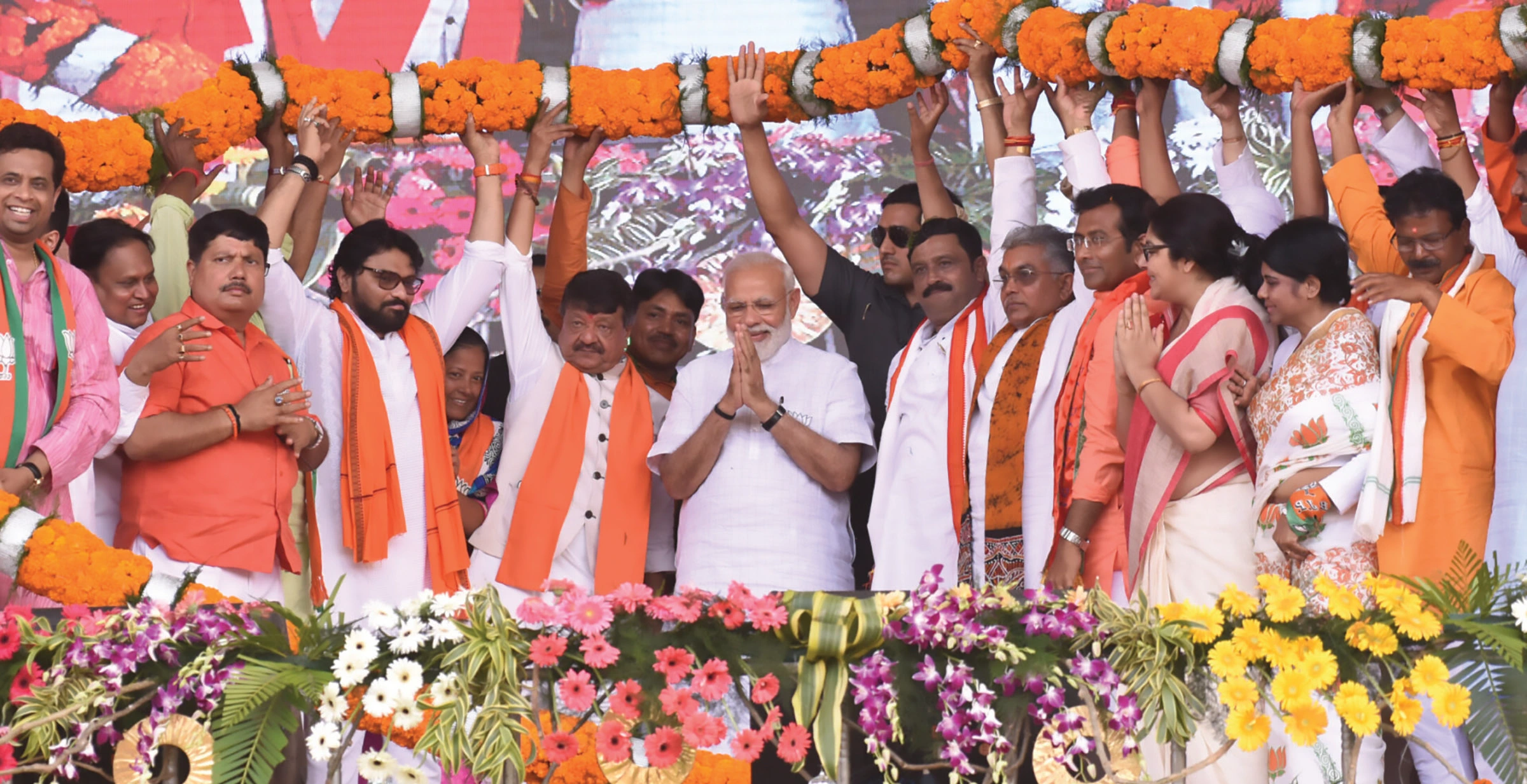
The recent state elections in five Indian constituencies, held in November and December 2023, culminated in a resounding victory for the Bharatiya Janata Party (BJP), which is led by Prime Minister Narendra Modi. These were the last state elections before the forthcoming Lok Sabha elections scheduled for April-May 2024.
In the recent state elections, the BJP swept the Hindi states of Madhya Pradesh, Chhattisgarh, and Rajasthan. The main opposition party, the Indian National Congress (INC), managed to woo just a single state of Telangana. The fifth state of Mizoram chose an independent candidate. It is evident from these results that the incumbent party will continue its winning streak throughout the forthcoming general elections.
Indian PM Narendra Modi is riding high. His highest-ever approval ratings are intact, and the party has deployed an air-tight election management strategy. State elections only further boosted the morale of already energized party workers. Things couldn’t be better for Modi and his allies. But are they?
State elections do demonstrate the electorate’s mood, but they cannot be taken as a final verdict. In the past, voters have upset election calculations based on state results. One example is the infamous 2004 election upset, which saw the Congress-led United Progressive Alliance (UPA) beat the BJP-led National Democratic Alliance (NDA). In 2004, every poll and prediction favored the incumbent BJP, but the final results saw a triumphant Congress attaining a decisive election victory.
Keeping this in mind and subscribing to the unpredictable nature of the Indian voter, can we expect to see a different result in the 2024 elections? Can Narendra Modi be stopped from claiming the premiership for a third consecutive term?
Last year in July, Modi’s political opponents formed an alliance. It was named I.N.D.I.A – an abbreviation for Indian National Developmental Inclusive Alliance. The stated goal of INDIA was to unseat Modi and his BJP in the 2024 elections.
INDIA is led by the Indian National Congress, which used to be the most popular party in the country till 2014 when it suffered a catastrophic defeat at the BJP’s hands. INDIA has put forward Rahul Gandhi as its prime contender against an immensely popular Narendra Modi. Gandhi’s 136-day ‘Bharat Jodo Yatra,” or ‘Unite India March’ carried out between September 2022 and January 2023, provided him with a much-needed political boost.
There are 28 major political parties in INDIA, including the Indian National Congress (INC), Communist Party of India (CPI), Aam Aadmi Party (AAP), All India Trinamool Congress (AITC), and Shiv Sena, among many others. A few members of INDIA hold immense political sway within their regional domains. The alliance seeks to combine INC’s country-wide appeal with the regional political strengths of allied parties and present a unified electoral platform.
Does INDIA have the potential and the ability to unseat Narendra Modi?
A look at the results of recent opinion polls reveals that it is not a possibility. The BJP-led NDA is firmly positioned to secure a majority in the forthcoming elections. An upset like 2004 is highly improbable. Yet, there are still 3-4 months until the voting starts. With political machinations, strategy, and a rock-solid political will, INDIA can still turn the tables in its favor. Let’s examine how.


The writer is a freelancer and an investment banker based in Karachi. He can be reached at syedatifshamim@hotmail.com
Leave a Reply