

International
Sea Is Red
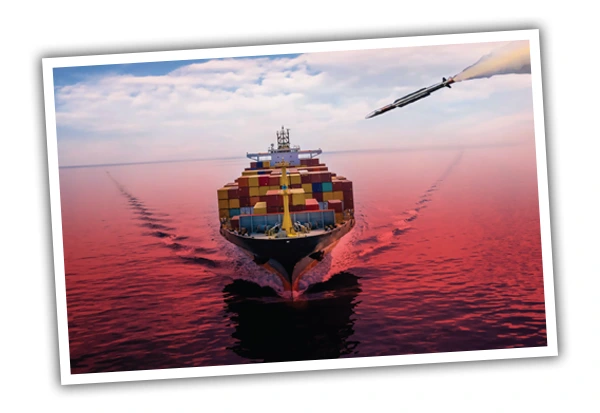
Attacks on commercial ships in the Red Sea risk pushing up the geopolitical crisis to further levels, serving as a stark reminder of the delicate balance between geopolitical stability and the uninterrupted flow of goods and energy resources on which the world heavily relies.

The Red Sea, a vital maritime route connecting the Mediterranean Sea to the Indian Ocean, has recently become a focal point of concern due to a surge in attacks on commercial ships.
The escalating Red Sea crisis not only poses a threat to maritime security but also carries significant implications for the global economy, particularly the prices of oil and other goods. In this article, we delve into the roots of the Red Sea crisis, analyze its potential repercussions on oil prices, and explore the broader impact on international trade.
The Red Sea Crisis Unveiled
The Red Sea has historically been a key artery for international trade, facilitating the movement of goods and energy resources. However, in recent times, the region has witnessed an alarming increase in attacks on commercial vessels. Various factors contribute to the complexity of the crisis, including geopolitical tensions, piracy, and regional conflicts.
One of the primary concerns is the strategic importance of the Bab el Mandeb strait, a narrow waterway connecting the Red Sea to the Gulf of Aden. This chokepoint is critical for global shipping, as it represents a gateway for oil tankers heading to and from the Suez Canal. Any disruption in this region can have far-reaching consequences for the world’s energy supply chains.
Impact on Oil Prices
The Red Sea crisis has triggered fears of potential disruptions to oil shipments, leading to increased volatility in global oil markets. Oil prices are particularly sensitive to geopolitical tensions and uncertainties, and any disturbance in major shipping routes can quickly translate into price spikes. Investors closely monitor developments in the Red Sea, as the region plays a crucial role in the transportation of oil from the Middle East to markets around the world.
The risk of attacks on commercial ships, including oil tankers, raises concerns about the security of the maritime routes in the Red Sea. A successful attack on a major oil vessel could result in a temporary suspension of shipping activities, disrupting the flow of oil and causing supply shortages. Such incidents often prompt market speculation, leading to price hikes driven by fears of potential supply disruptions.
The Strait of Hormuz, another critical maritime passage for oil transportation, is also in close proximity to the Red Sea. The cumulative effect of tensions in both regions poses a double threat to global oil supplies. In this interconnected global economy, any disturbance in one key region can create a domino effect, amplifying the impact on oil prices.
Broader Implications for Global Trade
Beyond the immediate concerns about oil prices, the Red Sea crisis holds broader implications for global trade. As one of the world’s busiest maritime routes, the Red Sea facilitates the transportation of various goods, not just oil. Any disruption in this vital corridor can lead to delays in the delivery of goods, increased transportation costs, and a general slowdown in international trade.
The uncertainty surrounding the Red Sea also prompts shipping companies to reconsider their routes and security measures. This, in turn, may lead to higher operational costs, which could be passed on to consumers. The interconnectedness of global supply chains means that disruptions in one region can have a cascading effect on businesses and consumers worldwide.
Geopolitical Dynamics
The geopolitical dynamics underlying the Red Sea crisis are complex and multifaceted, involving a web of regional rivalries, historical tensions, and global power struggles. Several key factors, as shown below, contribute to the intricate geopolitical landscape in the Red Sea region, shaping the nature and intensity of the crisis.
Regional Conflicts and Instabilities: The Red Sea region is characterized by a multitude of conflicts and instabilities, ranging from civil wars to longstanding territorial disputes. Countries such as Yemen, Somalia, and Sudan have experienced internal strife, creating power vacuums and fertile grounds for non-state actors to exploit the vulnerabilities of the maritime environment.
Proxy Wars and Foreign Interventions: The involvement of external actors in regional conflicts exacerbates tensions in the Red Sea. Various global powers, including the United States, Russia, and regional players like Iran and Saudi Arabia, pursue their interests by supporting different factions or governments. These proxy interventions often contribute to a cycle of violence and political instability, further complicating efforts to address the root causes of the crisis.
Strategic Importance and Chokepoints: The Red Sea and its strategic chokepoints, such as the Bab el Mandeb and the Suez Canal, hold immense geopolitical significance. These waterways are vital for the transportation of goods, including oil, making them attractive targets for states and non-state actors seeking to exert influence or disrupt global trade. Control over these chokepoints allows certain entities to wield considerable geopolitical leverage.
Interstate Rivalries and Competition: The Red Sea region is characterized by long-standing interstate rivalries and competition for influence. Key regional players, including Saudi Arabia, Iran, and Egypt, vie for dominance and seek to establish alliances to advance their strategic objectives. These rivalries contribute to a tense geopolitical environment, with potential spillover effects on maritime security and stability.
Ethnic and Religious Divides: Ethnic and religious divides further complicate the geopolitical landscape. In countries like Yemen, where the ongoing conflict involves a sectarian dimension between, external actors often align themselves along religious lines. These divides contribute to the perpetuation of conflict and hinder diplomatic efforts to find sustainable solutions.
To conclude, the Red Sea crisis represents a looming threat to the stability of global trade, with potential ramifications for oil prices and other commodities. The strategic importance of the Red Sea, coupled with geopolitical tensions and security concerns, underscores the need for urgent international cooperation.
As the world grapples with the complexities of the crisis, finding a sustainable solution is not just crucial for the affected region but also for maintaining the smooth functioning of the interconnected global economy. The Red Sea crisis serves as a stark reminder of the delicate balance between geopolitical stability and the uninterrupted flow of goods and energy resources on which the world relies.![]()

The writer is a Social Development and Policy graduate from Habib University. He can be reached at bilalmustikhan@yahoo.com
7th Engro LRBT Golf Tournament Drives Success for Vision Restoration
Nestlé inaugurates Solar Power Plant at Sheikhupura Factory
Sadia Rashid honoured by KPC
PRL Unveils Vision for a Sustainable Energy Future
China, Maldives upgrade ties with infrastructure deals
Afghan women detained over ‘improper’ hijab
Pakistani among recipients of Religious Freedom Award
OIC denounces temple opening at Babri Mosque site
Bangladeshi Nobel winner convicted of violating labour laws
Pakistan Launches Three Groundbreaking Initiatives
PTI Senator appointed as CEO of vaccine alliance Gavi
German brand makes strong statement for Palestine
Harvard president to resign over allegations of plagiarism
Indian state stops funding to Muslim religious schools
Saudi Arabia to allow alcohol sales
Muslim world urged to support South Africa in icj
Deepfakes deceive voters in India, Pakistan before elections
Lack of snow sparks worry for drought-hit Afghanistan


Leave a Reply