



The World Bank Group’s engagement in India is guided by the Country Partnership Framework (CPF), developed in collaboration with the Government of India, and informed by consultations with a range of other stakeholders. Each CPF is reviewed internally at the World Bank mid-way through implementation in a Performance & Learning Review (PLR).
Revitalizing India’s water resources
Rejuvenating the Ganga: Since 2014, the World Bank has been supporting India to rejuvenate the iconic Ganga River by helping build sewer networks and sewage treatment plants in 22 cities along the river. The river’s water quality has begun to show modest improvements.
The overexploitation of India’s groundwater has led to its alarming depletion. The World Bank’s support for the Atal Bhujal Yojana, the world’s largest community-led groundwater management programme, is helping build resilience in seven states where groundwater depletion is the highest.
Boosting connectivity
Rail: 70 percent of India’s freight travels on trucks. The World Bank is helping India shift freight from road to freight-only rail corridor, which is greener, cheaper and more reliable. It is also one of the most ambitious infrastructure projects in independent India.
Roads: Since 2004, the World Bank has supported India’s vast rural roads programme (Pradhan Mantri Gram Sadak Yojana) in nine states, including in hilly and difficult terrain. These all-weather roads have helped open-up new livelihood opportunities and made it easier for village communities to access markets, hospitals and schools.
Generating sustainable energy
Solar power: The World Bank is supporting India’s efforts to rapidly expand its capacity to generate renewable energy. Today, the Rewa Solar Park in Madhya Pradesh is among the largest single-site solar power plants in the world.
Improving water supply and sanitation
Urban water supply: After an acute water crisis in 2018 that left Shimla reeling, World Bank support has helped city authorities to overhaul their water supply and sanitation services.
Financial inclusion
Given the limited number of bank branches in rural India, access to formal financial services was a pipe dream for millions of rural poor. Under India’s National Rural Livelihoods Mission – with support from the World Bank – women banking correspondents are bringing doorstep banking to rural India.
Generating jobs for women
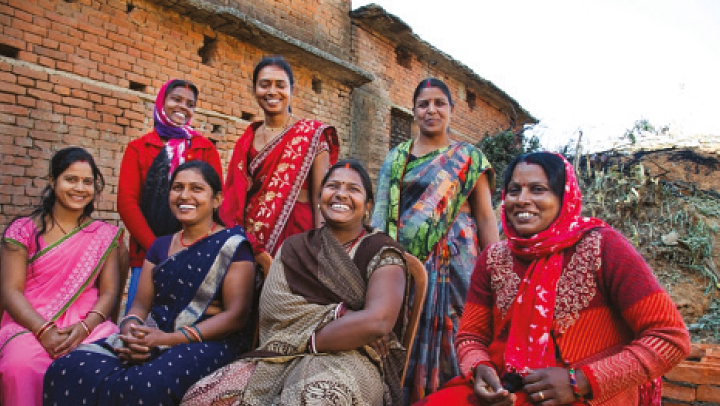
In rural Jharkhand, women masons build toilets: Under the Swachh Bharat Mission, the World Bank supported several programs to train women masons in building toilets. Today, these enterprising women masons have broken the gender stereotype. Women from minority communities learn a marketable skill: The Government of India’s Nai Manzil (New Horizons) programme, supported by the World Bank, offers school-dropouts from minority communities a second chance to complete their education and learn a marketable skill.

Those were the days. Pakistan was recognized as one of the food basket countries. In school days, the mantra was Pakistan is an agrarian economy. The nation had a surplus in cotton, wheat, rice, sugar, (and even jute in the days of East Pakistan). Commodities exporters and traders dominated. Despite perennial issues such as water logging, salinity, lower yield per acre, inefficiencies in farming due to reliance on traditional agricultural modes rather than modernization, Pakistani commodities fetched a premium price in the international market.
Pakistan even today has abundant fertile land, water, human resource, and seasons for year-round high quality production. Pakistan even today is a better-resourced country for agricultural production with the highest quality at competitive cost. Pakistan even today has indigenous nature-based production technology that requires much less imported inputs. So what happened? Why is food security now a serious matter of concern? Why is Pakistan a net importer of wheat, cotton and even sugar, not to mention pulses and oilseeds?
Does Pakistan's agricultural community want progress or do most of the farmers prefer to work, till, and live like their ancestors? The share of agriculture in GDP is now less than 19% even though 25% of the population is involved in agriculture. A large majority of farmers do not want to deviate from producing their traditional crops. A forceful motivational strategy must be developed to make the farmers get out of the rut. The best practices of farming followed in developed countries and the induction of latest farm equipment have been identified and available for farmers. Use of drone technology, less pesticides, low water wastage, and even daily information of prices on the Chicago Board of Trade would induce farmers to Think Global, Act Local . . . and prosper.