



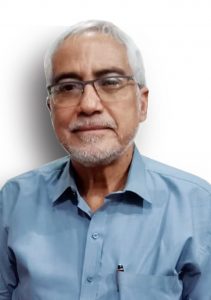
Do you agree that Pakistan has a very vibrant and forward-looking pharmaceuticals industry?
As the population increases, so does the need for medicines. So, partially I agree that Pakistan has a very vibrant pharmaceuticals industry because it has an ever-growing population. Since our local industry is huge, we face certain problems as well, standardization being the biggest flaw.
Currently, two types of medicines are available in the market, one, from multinational companies and the other locally made. Some local medicines are of a good standard. The others are of substandard value.
Many people in the country have no access to modern medicines. Why is that?
It’s just the difference in class - people who can afford always go for branded products but that's not the case with the lower middle-class.Whichever medicine you buy should be efficient.
What is the role of the doctors’ community?
Our doctors are very active but some of them also promote substandard medicines. The pharmaceutical industry wants doctors to achieve targets and get benefits in return. The doctors then become brand ambassadors of the pharma companies. Reputable doctors strongly condemn such practices.
How did Covid-19 affect the pharmaceuticals industry?
When many businesses were shutting down, private hospitals and the pharmaceutical industry were making money.
People have started taking medicines they found useful through social media.
The pharmaceutical industry also benefitted as the pricing of the medicine manifolds. In my opinion, prices of essential medicines should be controlled. Our pharmaceutical industry is very capable. If it makes medicines with good efficiency, we won’t need to import medicines.
Who is responsible for maintaining import laws?
DRAP introduces 500 medicines per day in the market. No one has ever seen DRAP taking action against any medicine as they have no system to check the contents of the medicine or its efficacy.
Another problem we face is that of homoeopathic doctors. After a one-year or two-year course, they get themselves registered as doctors and open clinics. Despite being homoeopathic doctors, they also operate as allopathic doctors and patients suffer at their hands. This practice needs to stop.
How can Pakistan expand its pharmaceuticals exports?
If Pakistan wants to expand its pharmaceuticals exports, it must ensure the efficacy of medicines and quality control as other countries do not accept any medicine from Pakistan unless the product is standardized and fulfils international standards. Only then do they approve the medicine for further processing.
Currently, I'm not sure whether we are in a position to expand our exports. Our pharmaceutical industry was much better in the 80s but the sudden increase of medicine prices in Pakistan has enabled other countries to market their products here and they have benefited from the situation. Pakistan still needs to up its game to be able to make a place in the international market.
In the process of making doctors, do medical institutions also focus on personality development?
Nothing is being done in terms of personality development as we lack ethical training; that is because the subject of medical ethics is not even a part of the course. These days, what happens is that if you ask a question from a medical student, he searches it online and provides you with an answer. In short, today we have students who are just becoming online doctors.
It's been 42 years since I did my MBBS and I still remember my anaesthesia training. Believe me, the best learning in becoming a good doctor is to have bedside training where your professor or the head doctor is guiding you to examine the abdomen of the patient, check his intestine, analyze the hands and bones, etc. One might forget what he learns from a book but the things you discover during such training is a lifetime experience for everyone. 
Leave a Reply