
Technology
Poised to Revolutionize
Artificial Intelligence has become the most powerful resource that will determine the fate of nations in the times ahead.

The old concept of strategic stability found new understanding in the framework of nuclear armed states, specifically in South Asia. As technology progresses, ingress of Artificial Intelligence (AI) and Machine Learning could have both positive and negative impact in strategic stability. The concept of strategic stability and nuclear deterrence appeared during the cold war. At that time, it was described and explained as a representation of deterrence based on mutual destruction.
However, due to the changing political and military environment, the concept of strategic stability also evolved. From mutual destruction, the strategic stability shaped itself into strategic relations between two powers where there are no incentives of first strike. This was evident from the two joint statements of 1990 and 1994 after the end of cold war.
Security and peace in South Asia and the survival of the sub-continent is counting on the stoutness of nuclear deterrence and strategic stability. Pakistan is the only nuclear state whose nuclear program is India-oriented. India and Pakistan have come on the edge of war many times and Balakot is one recent incident.
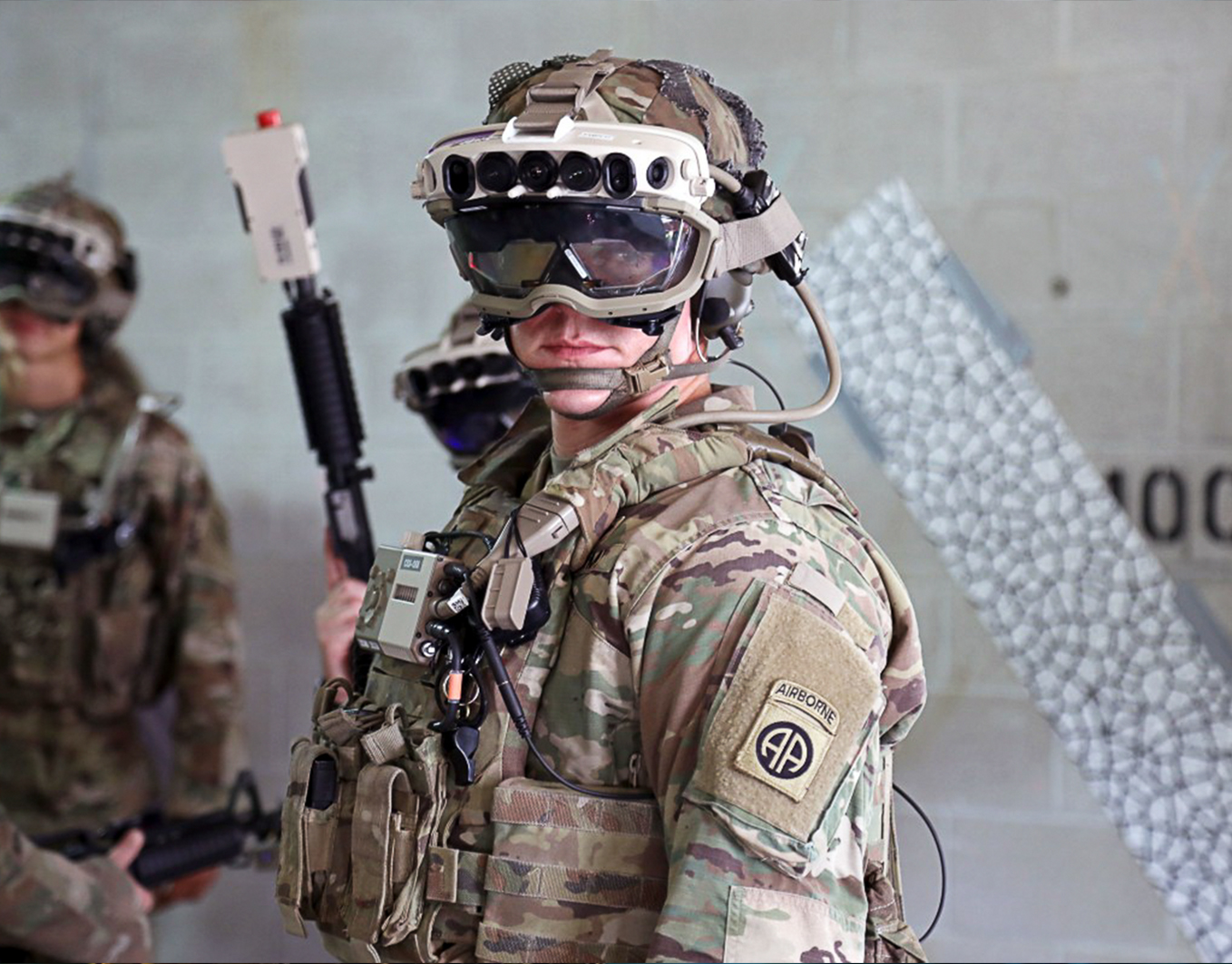
China, India and Pakistan are interested in developing and enhancing their AI technologies for military purposes. AI is explored in the areas of command and control systems, BMD, early warning, intelligence, unmanned aerial vehicles (UAVs), unmanned underwater vehicles (UUVs), and cyber warfare.
In this age of advancing technologies, use of AI in military applications is still assertive. Pakistan is very much willing to use AI in its command and control systems. But, this is a very bold step, given that the Prime Minister is the chair of the National Command Authority. Pakistan strategic forces have the custody of delivery systems and the warheads are solely controlled and managed by the SPD.
The geographical contiguity of India and Pakistan makes genuine difficulties for the survivability of nuclear powers since closeness makes them harder to stow away and simpler to hit with atomic and conventional methods. The flight time of missiles is relatively shorter.

Given the geographical complexity of warfare, AI and machine learning can aid growing better situational responsiveness about strategic assets during peacetime just as in emergency. For instance, AI can have applications in such nuclear related abilities such as automatic target recognition (ATR), early warning and support in the decision-making process.
Beside this, AI frameworks are also being used at sensitive organizations and facilities like CHASNUPP for security purposes. For example, tey are used for access control, utilizing thumb impressions, advanced retina outputs and facial acknowledgment programming to limit access to delicate high-security establishments.
However, use of any particular technology in nuclear weapons is neither good nor bad. But its application determines its effect. The whole idea of using and advancing nuclear technologies is either to strengthen deterrence or undermine the enemy’s capability to deter.
Artificial intelligence (AI) is getting more significant for every segment of complex discouragement architectures, particularly given its capability to altogether upgrade insight, surveillance and reconnaissance (ISR) abilities.The coordination of AI into nuclear weapon frameworks could upgrade the exactness, precise location and response times, and thus generalexecution of key hostile and guarded frameworks. The sway towards strategic stability might be either positive or negative.
AI is secure, accurate and advanced but is also unstable. Advancement in precision enemy targeting and advanced capability of surveillance in the adversary’s camps could create challenges as well. It could lead to the crisis of second strike or pre-emptive strike.
Another example of AI is the autonomy provided to unmanned underwater vehicles (UUVs), which would increase the risk of instability and uncertainty in times of crisis. Submarines are known as the ultimate deterrence vehicles. One of the most evident examples was when Pakistan’s submarine locked Indian submarines in the Indian Ocean and the Indian Navy had to back out. This was a classic example of submarine warfare deterrence. By applying AI in underwater warfare, deterrence will be at a loss which would create vacuum and uncertainty.
In South Asia, maybe this is far away but the transfer of advanced technology to India from the U.S. and Israel, mainly in field of AI, is a larger threat for Pakistan and will unbalance the equilibrium of power in the region.
India is currently enhancing its conventional and strategic precision strike missiles. The idea and goal behind it is to strike deep within the enemy’s territory. For example, the development of its land, sea and air cruise missiles and installing the cruise missile BrahMos on Su-30 fighter aircraft. Increase in the range of BrahMos and Nirbhay cruise missiles is another example of strategic enhancement for counterforce.
These advancements also include the deployment of an integrated multilayered ballistic missile (BDS) system by India. These advancements would make maintaining an ample second-strike force harder. In turn, it would lead Pakistan to vigorous defencive systems on advanced mobile launch systems that can avoid the incarceration.
However, how much technology advances, it can never replace human beings and their decision-making abilities. Technology can work with assistance of humans but not on its own. The political leadership will not be willing to lose its cards of deterrence despite the lesser reaction times. After all, it’s the nuclear weapons and humans together which deter nuclear war. ![]()
The writer is a freelance contributor, pursuing MPhil in Political Science from the Government College University, Lahore. He can be reached at aasad6889@gmail.com |
|
Cover Story
|
|
News Buzz
|
Update |


Leave a Reply