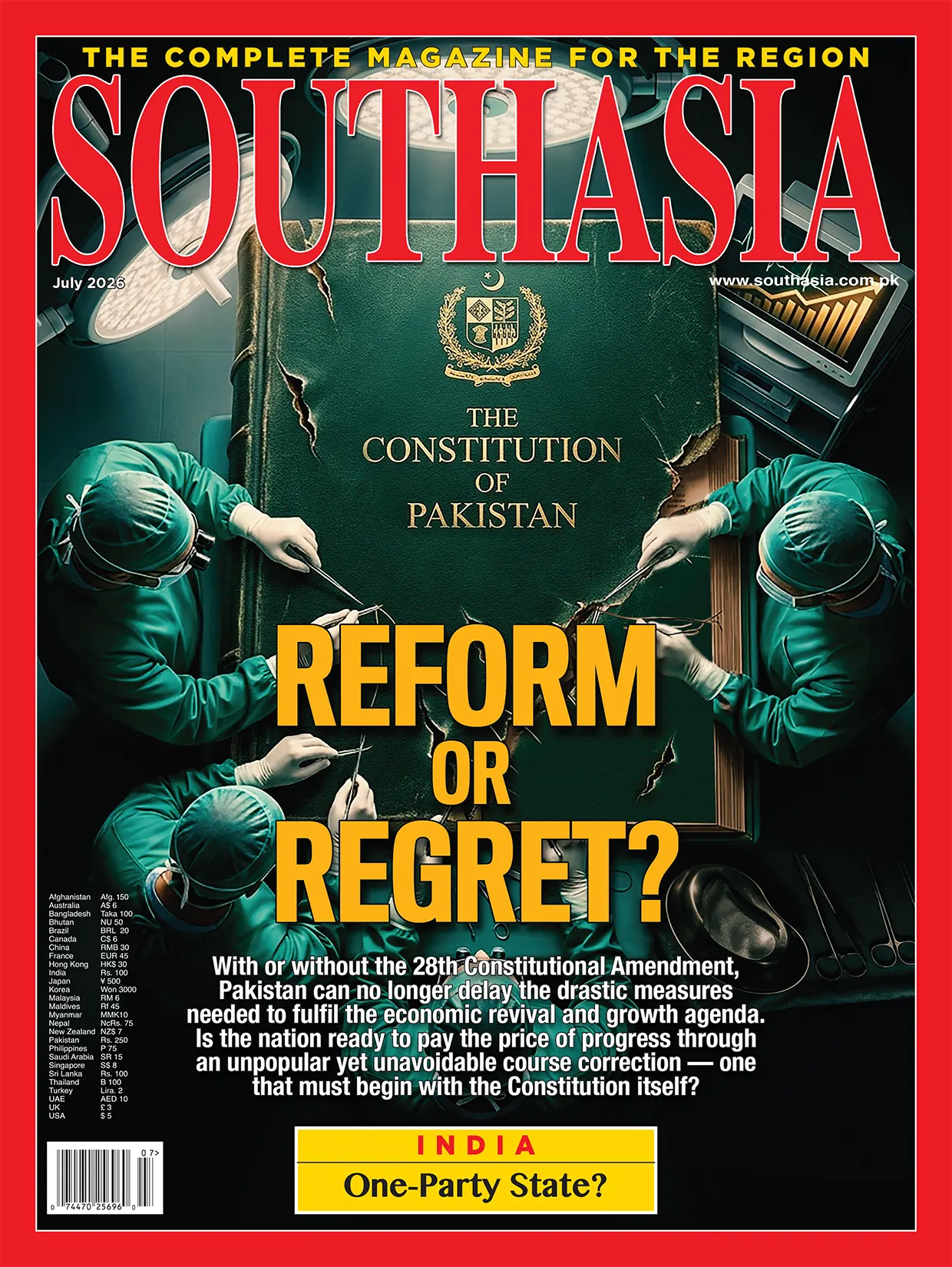




Pakistan has followed the British legacy from the very earlier days of its inception. The rulers of the country not only followed the colonial legacy in terms of constitutional mechanism as the Provisional Constitution was based on the Indian Act of 1935 but the same administrative pattern like all powers were given to the Governor-General rather the Prime Minister, was followed. This was a major flaw that we did not make any mechanism according to our own then prevailing conditions of the country; we followed British India without realizing that the dynamics had changed.
As for the debate that which forms of government, democracy or dictatorship are suitable for Pakistan is concerned it is very obvious that dictatorship is not the viable solution in a federal country where a lot of differences of ethnicities and religion, etc. exist. A dictatorship is a form of government in which, by surpassing all kinds of freedoms of expression and bypassing the constitution, a person rules the country according to his/her wish. We have many examples of dictatorship and authoritarian power mechanisms the world over like Hitler in Germany and Mussolini in Italy. There are different types of dictatorships. One the most common type is authoritarian rule but there is also a concept of “dictatorship of the proletariat”.
The concept of proletariat dictatorship is used by those who believe in Communist ideology as, according to Karl Marx, there are “six stages — primitive communism, slave society, feudalism, capitalism, socialism and finally global, stateless communism”. Marx believed that societies would pass through all these stages. The last stage suggested by Marx is ‘stateless communism’; this actually reflects the concept of proletariat dictatorship, where the majority, the people, will rule without having any state mechanism and society would become classless. With respect to the terminology, the dictatorship of the proletariat reflects the concept of ‘dictatorship’, but this is actually real democracy in the sense that it represents the wider majority of the oppressed people.
 Yet, this concept given by Karl Marx is opposite to the common concept of dictatorship, but still, we cannot find a single example the world over that any society has passed through these stages. In fact, many societies in the world, including Russia, China, Cuba, and Vietnam, etc., have passed through the fifth stage, i.e. socialism, but not to the sixth stage due to different internal and external reasons.


The writer has a Ph.D in World History from the College of Liberal Arts, Shanghai University, and teaches at the National Institute of Pakistan Studies (NIPS), Quaid-i-Azam University, Islamabad. He can be reached at qasim_shu2016@yahoo.com |
|
Cover Story
|
|
News Buzz
|
Leave a Reply |
Update |
True mirror of Pakistani politics has been discussed from initial stage to current scenario. But the last sentence has the same thing which we have been repeating the mistakes against army for democracy.