



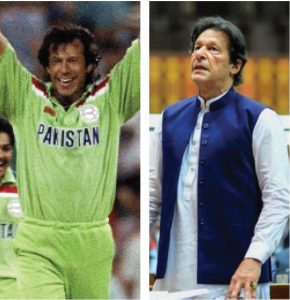
Ever since the Pakistan Tehreek-e-Insaf (PTI) has been in power, there has been general speculation that progress on the CPEC has slowed down. Part of this could be the perception that Imran Khan was against the projects started by Nawaz Sharif. It has always been Nawaz who is viewed as a builder of infrastructure. In a nation where the construction of roads and bridges are viewed as a path toward development, it comes as no surprise that the wholesalers of concrete are popular leaders. But the CPEC work has also been slow due to a combination of bulwarks that the global powers have placed very cunningly in Pakistan’s path toward true development.
The year when PTI came into power, Pakistan was in dire need of cash infusion. Saudi Arabia, the traditional and transactional ally of Pakistan, came to its rescue and gave Pakistan a $3 billion loan as well as a $3.2 billion oil credit. That allowed Pakistan some breathing space. In the real world, run only by national interests, being in debt to a nation results in the indebted nation to be indebted not in money alone, but in almost every sphere of foreign and domestic policies. Even local journalism in the indebted country is not safe from that trap. Little wonder, Saudi cash slowed down the work on CPEC.
Once the Chinese expressed their concerns, they had to be calmed down. Using Islamabad’s insistence on asking Riyadh’s support over the Indian human rights violations in Kashmir, Saudi Arabia started pushing Pakistan to repay the loan. This time the Chinese came to Pakistan’s rescue. Pakistan started paying back the $3 billion Saudi loan in installments.
However, the real game changer in slowing down CPEC has been the IMF. Ever since Pakistan entered the IMF agreement, the US influence and the IMF economic hitmen have systematically caused the slowdown of the CPEC project. Washington has always shown concern for Pakistan to be in a debt trap of Chinese money due to CPEC. Many journalistic wizards also make noises that most of the benefits of CPEC are going to China and only a fraction is being given to Pakistan. The corona virus pandemic added more spice to the drama.
 If Pakistan appeases the IMF, which by extension means the United States of America, then the Chinese get upset. If Pakistan tries to turn the Chinese frown upside down, the Americans throw at Pakistan problems such as FATF, Saudi loan repayment, and so forth.

The writer is a political analyst. He can be reached at imran.jan@gmail.com. Twitter @Imran_Jan.> |
|
Cover Story
|
|
News Buzz
|
Update |
Leave a Reply