



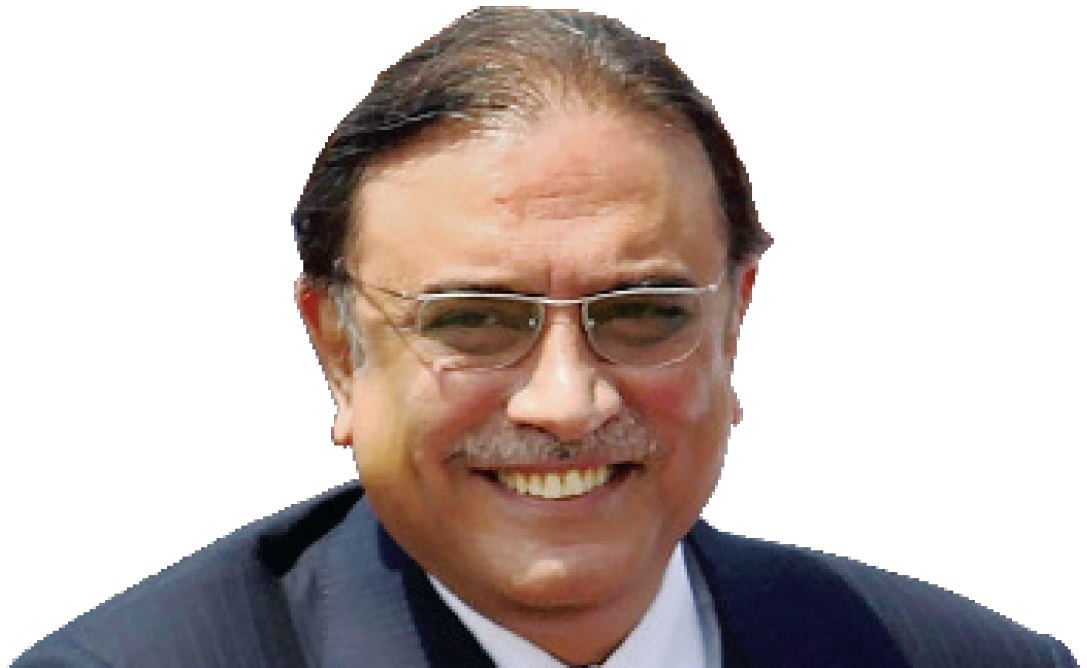
Colonial rulers introduced western political institutions in British India, though gradually, without creating necessary conditions for their growth and development. After independence, democracy has struggled in Pakistan and due to a real or imaginary existential threat, its civil-military establishment has been playing a praetorian role. As a result, a genuine leadership and politics of ideals could not develop. Most of the leadership had access to the corridors of power with the blessings of the military establishment as unashamedly admitted by many of them. The establishment arrogated to itself the role of kingmaker and guardian of the physical and ideological boundaries of Pakistan in the absence of any constitutional basis. Military interventions, corrupt and unscrupulous political elite and the almighty establishment have further shaken the belief of the common man in democracy and rule of law and his ideals of happiness and prosperity remain elusive.
Political parties are the heart and soul of democracy. The Constitution of Pakistan guarantees the people of Pakistan the right to form and join a political party. Pakistan Peoples Party (PPP) is a liberal democratic party, apparently fighting for democracy and rule of law. It was formed by Zulfiqar Ali Bhutto in 1967. He had parted ways with Field Marshal Ayub Khan in the twilight of his rule, on the eve of the Tashkent Declaration, which was signed in 1966. Bhutto attracted liberals, peasants, labourers, students and the oppressed classes who joined him in flocks, believing him to be a messiah. His western outlook and education, anti-establishment postures and the slogan of socialism disguised his latent lust for power and he was exposed soon.
President Gen. Yahya Khan held general elections in 1970, which were won by the PPP in West Pakistan. However, Bhutto, in connivance with the establishment, refused to accept the results of the elections.
 Mujeeb Ur Rehman, leader of the Awami League had a landslide victory in East Pakistan. Since he had more votes than any other party in the Pakistan National Assembly, he gained the requisite majority to form a government. But an uncompromising, belligerent, autocratic and feudal ZAB came in Mujeeb’s way at the behest of the establishment that was afraid of the politically active and awakened Bengalis. After East Pakistan went its own way and Bangladesh was formed, the Pakistan establishment had no option but to hand over power to ZAB to overcome the disgrace after the shameful surrender in Dacca in 1971. Yahya, once a trusted lieutenant of Ayub Khan but having slithered into the swamps of debauchery, was cleverly trapped by ZAB, who installed him as the Civilian Martial Law Administrator. Emergency in the country continued as fundamental rights were suspended.
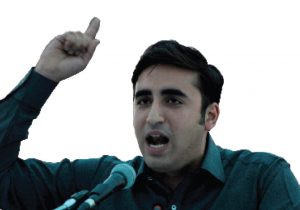 In April 1986, when late Benazir Bhutto returned to Pakistan and landed at the Lahore Airport, the Punjab gave her a huge and unprecedented welcome, which was said to be partly in an effort to mitigate the blame of ZAB’s blood at the hands of Punjabi judges. In 1988, Benazir could not resist her temptation for power and succumbed to the establishment’s games. She agreed upon much less than what she deserved. Despite compromises, her days in power were marked due to her weakness for power. Unlike many other leaders willing to make sacrifices for the people and democracy, the late Benazir wrongly believed that the doors of power in Pakistan were opened with the American key and with the blessings of the establishment. Moreover, politics having been further corrupted and becoming a money minting machine during the military rule of Ziaul Haq, by the doling out of tens of millions of rupees to legislators, survival and perpetuation in power was possible only through money bags. She allegedly fell for the easy buck. Her first term ended only after twenty months and the second after thirty. Her political rival, Mian Nawaz Sharif, a business tycoon from Lahore, was a product and darling of the establishment. He was ready to lend his shoulders to topple her on both occasions. When her turn came, she reciprocated the ‘favour’ in kind.

The writer is an advocate of the Supreme Court and former Additional Attorney General of Pakistan. He holds an LL.M. degree from Harvard Law School and is the co-author of a book ‘Comparative Constitutional Law.’ He can be reached at mwaqarrana@yahoo.com |
|
Cover Story
|
|
News Buzz
|
Update |
Leave a Reply