Region
Final Countdown?
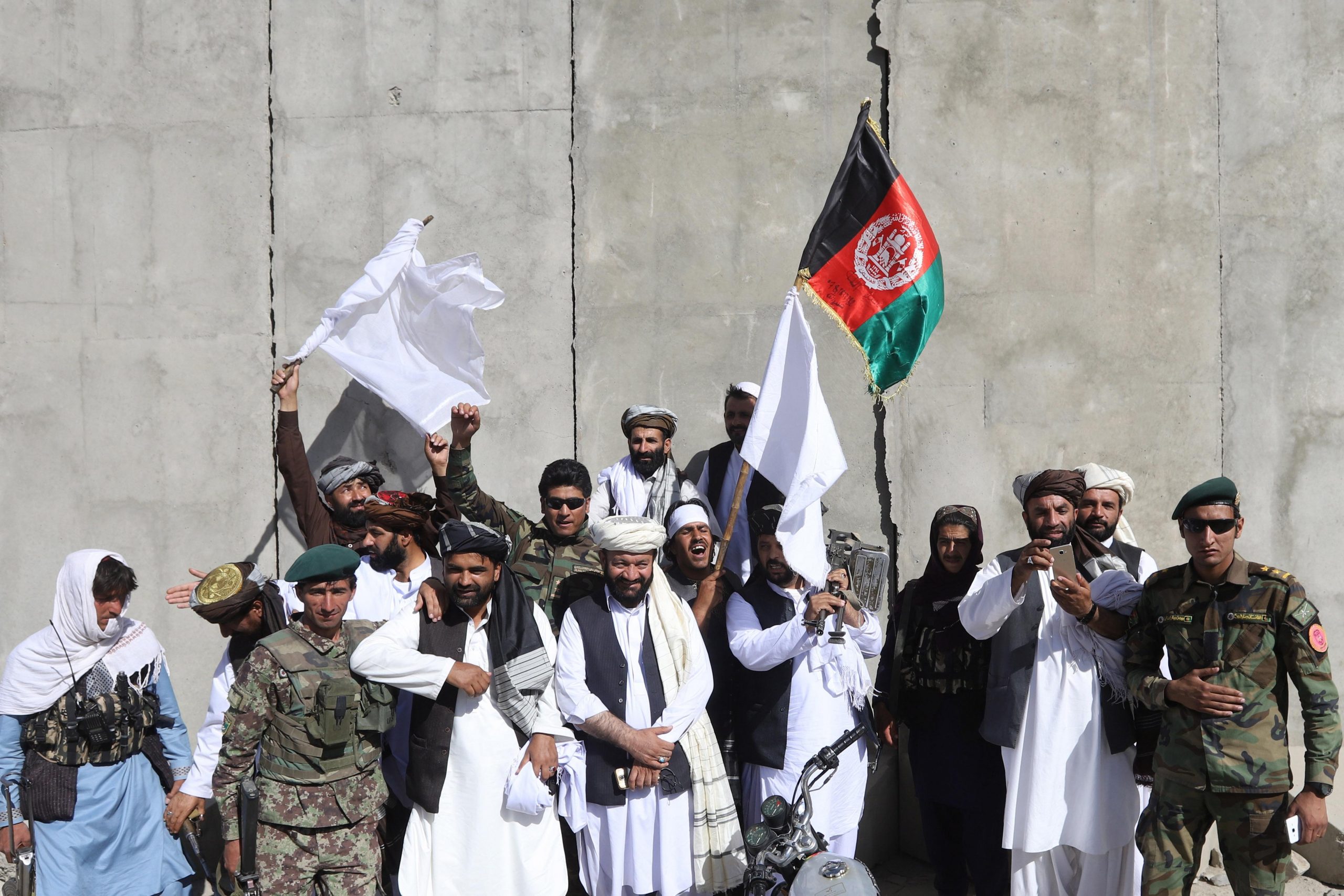
Peace has always been elusive in Afghanistan. Will the Americans leave and will the Ashraf Ghani government and the Taliban live in harmony?

The future of Afghanistan remains volatile despite the years of hard-earned efforts to bring about peace in the war-ravaged country and the region at large. Every day presents a new set of challenges to the already complex situation. The Biden Administration’s revised plan for troops withdrawal from Afghanistan has created a confused state of affairs.
The Trump Administration signed an agreement with the Taliban in February 2020 that paved the way for the American troops’ pullout along with Taliban assurances to deny space to foreign militants on Afghan soil. The agreement ensured that every US soldier would leave Afghanistan by May 2021.
However, the incumbent in the White House has decided to go ahead with his predecessor’s accord. As per the proposed plan, troops will start leaving Afghanistan from May 2021 and the process will be completed by September 11, 2021, the 20th anniversary of 9/11. President Biden has iterated, “It was never meant to be a multi-generational undertaking. We were attacked. We went to war with clear goals. We achieved those objectives….al Qaeda leader Osama bin Laden was killed by American forces in 2011 and the organization has been degraded in Afghanistan. And it’s time to end the forever war.”
Subsequently, Secretary of State Antony Blinken and Secretary of Defence Lloyd Austin alongside NATO chief Jens Stoltenberg, announced that the alliance would together be leaving Afghan soil by the deadline set by the United States.
This announcement, along with the 8-page draft proposal pertaining to the future political scheme befuddled the Taliban as well as the Afghan government. The document calls for an interim administration, ceasefire, and an UN-sponsored conference of all regional stakeholders. President Ashraf Ghani rejected the call for the provisional setup, saying, “Be assured that as long as I am alive, they will not see the formation of an interim government. I am not like those willows that bend with the wind.” On another occasion, he reiterated that he would transfer power to his successor only after his tenure ended in 2025.
On the other side, Taliban have also rebuffed the newly announced timeline to pull out troops in September instead of May. In reaction, they have refused to participate in the ‘Turkey Conference on Afghan Peace.
In addition to the intricate situation, the US-Taliban agreement has paved the way for an intra-Afghan dialogue that aims to address mutual grievances and to hammer out a sound plan for the future of their country through peaceful means.
Unfortunately, the intra-Afghan dialogue coincided with hostilities between the Taliban fighters and the Afghan government that dealt a heavy blow to the dialogue process. It also created an atmosphere of mistrust between the parties. As a result, talks between the factions dragged on for an indefinite time, contributing to a situation fraught with risks.
Now that the US and its NATO-allies have decided to conclude troops pullout by September instead of May this year contrary to the accord, there are many dangers to the emerging scenario - the US-led alliance withdrawal or otherwise. In case of foreign troops leaving, there is a risk of civil war between Afghans, like what happened in the 1990s. The spoilers may employ their nefarious designs.
The Taliban may also scale up the violence hoping to pressurize the US to expedite the withdrawal process. In such a scenario, the Biden Administration may also be compelled to prolong the troops withdrawal plan.
There is also a possibility that after the foreign forces leave Afghanistan, there will be vacuum till the intra-Afghan negotiations have been propelled on the right track and Afghans are united to deny space to any spoilers- state or non-state actors.
If history is any guide, there is a need to holistically address the present Afghan quagmire in order to ensure lasting peace on Afghan soil and the overall region, or else threats will be emanating from this unsolved puzzle.
Diplomatic activity should be undertaken by the stakeholders which might convince the major players - the USA, Taliban and the Kabul government, regarding three fundamental issues on which hinges the future of the troubled nation. Firstly, they have to re-negotiate the timeline as to when the US-led allies are supposed to withdraw. Secondly, after the success of intra-Afghan negotiations, the future of the Afghan political setup and the interim government must be discussed. Thirdly, the Afghan leadership’s unity must be ensured to deny space to the spoilers and terrorist enterprises that pose a threat to themselves as well as the world.
Additionally, the Afghan parties to the conflict should exhibit maximum patience to steer the negotiations in the right direction. They must realize that in case these hard-earned efforts are wasted, history will hardly be kind to them and the vicious circle of unending trouble will never cease, at least in the foreseeable future.
It is high time for the factions to be more accommodative than ever during the intra-Afghan negotiations; the US should also take into confidence the Qatar-based Taliban leadership regarding their exit from Afghanistan in September, along with the assurance that the superpower will honour the agreement. Pakistan, Turkey, China, Russia and Iran must also play their vital part in the diplomatic arena to steer the peace process in the intended direction, along with a dignified exit to America from its longest war.
Are we aiming for the impossible? Having taken stock of the progress as of now on the part of the parties, it is certainly nerve-racking but not impossible! ![]()
The writer is a freelancer and can be reached at amjadsiyal@hotmail.com |
|
Cover Story
|
|
News Buzz
|
Update |


Leave a Reply