



We all have been taken in by the popular Gujarati culture at some point in our lives. Be it their music, art or their food, Gujarati culture has a pervasive influence across South Asia. Gujaratis are well-recognized for their ingenuity in business, their amiable disposition and decency in deportment. The Gujarati community is a socially thriving one, being not only financially strong, but culturally very well-heeled as well. The Gujarati people believe in fostering strong communal ties, which is why not only do they enthusiastically partake in collective, traditional rituals like wedding ceremonies, but also are at the forefront in generously carrying out charity works for the underprivileged in their community. The fairs and festivals of Gujarat showcase the true fervour, zeal and colours of its diverse culture. Thousands of people congregate in Gujarat to experience the rich cultural Gujarati heritage of Navratri, Mahotsav, Deepawali, Rathyatra and Kite festival.
In Gujarati dishes, the essential taste is a blend of sweet, spicy and sour. Each region has a distinctive zest tied to its local food. A typical Gujarati dinner includes bhakri-shak or khichdi-kadhi. The Gujaratis are distinguished predominantly for their sweet tongue, and hence every meal is followed by a sweet dish or sometimes even jaggery.
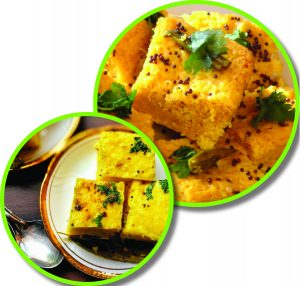
One of the most popular indigenous foods of Gujarat is dhokla. A tasty snack -- recognized as a staple dish and enjoyed all over the subcontinent, particularly in Maharashra and the adjacent states. The dish is proudly served in Karachi as well. Prepared with rice and split chickpeas, which are soaked overnight, this soaked mixture is then ground and turned into a paste that is later left to ferment for about four to five hours (or overnight). In order to make these dhoklas flavourful, chilli flakes, coriander and ginger are added to the fermented paste, as well as baking soda in order to make the dhoklas spongy, soft and fluffy. The more the baking soda, the more spongy and porous the dhokla will be. The cooking preparation includes this fermented paste to be kept in plates, often shut in a container that does not let the steam escape. After the dhoklas are completely ready, they are taken out and shallow fried in oil with roasted mustard or cumin seeds (tardka). The dhokla slices are garnished with fresh coriander and mint leaves, and then served with a variety of chutneys —typically tomato or the plain besan-coriander chutney.


The writer is a Lahore-based free-lance contributor. She can be reached at sophiyaqadeer |
|
Cover Story
|
|
News Buzz
|
Update |
Leave a Reply