



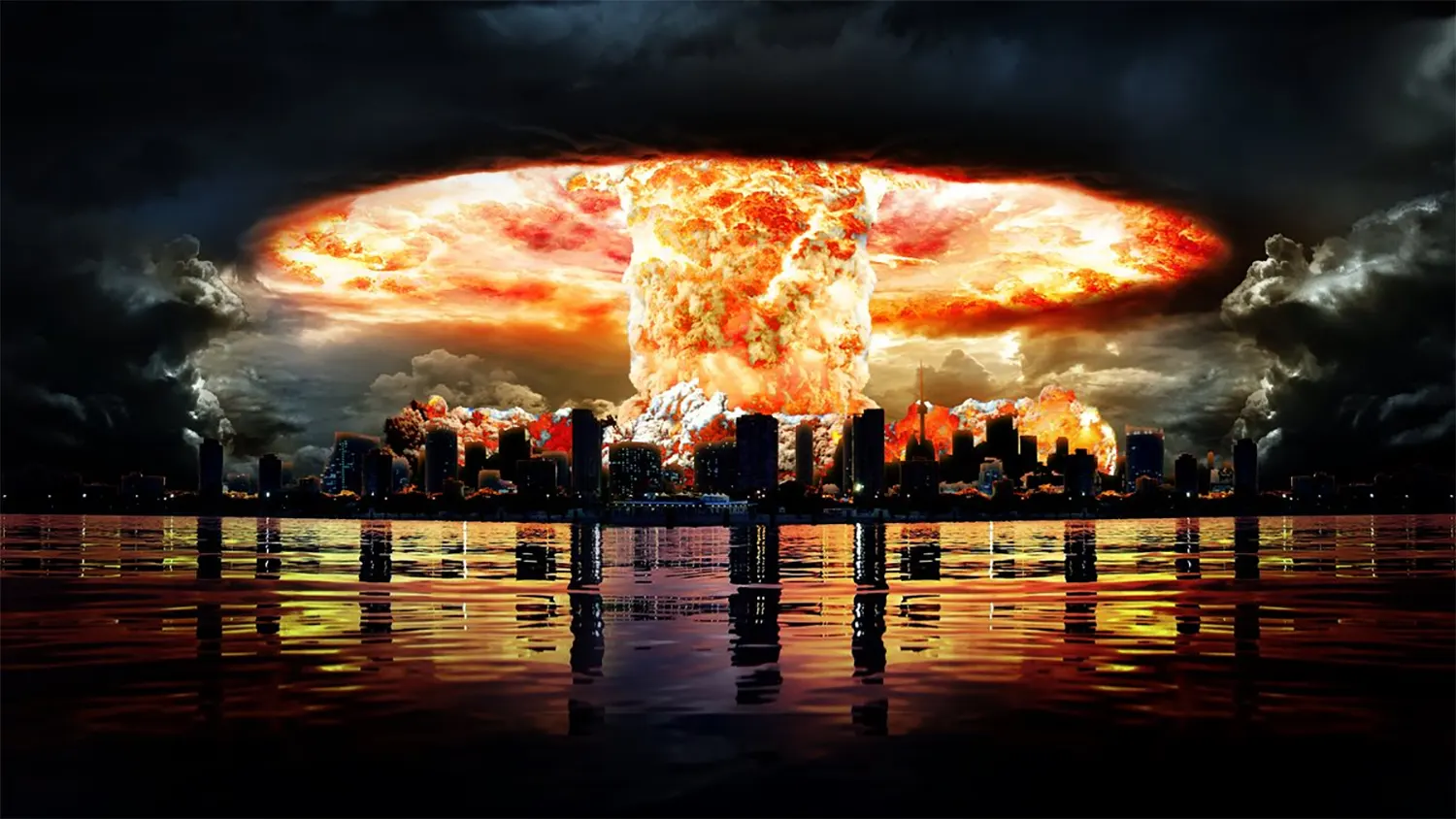
War can affect a society in many ways. However, the environmental consequences that arise from war are not often looked at. By damaging ecosystems, contaminating water and soil, destroying infrastructure, and altering the climate worldwide, modern ways of waging war can have devastating effects on the environment. With all forms of war being harmful to the environment, nuclear weapons are the most harmful.
The consequences of war can last for decades and even centuries. If we, as a global community, think we may one day prevent the destruction of both nature and civilization as we know it, we must understand the environmental consequences of war.
Nuclear weapons are Environmentally Catastrophic.
Nuclear weapons are capable of inflicting significant damage both on and above ground in all situations. The detonation of a nuclear weapon releases vast quantities of radiation that contaminate the land and air.
During the 1954 Castle Bravo nuclear test conducted in the Marshall Islands, a large amount of radioactive ash was dispersed across several of the islands nearby, putting them in close contact with highly dangerous levels of radiation. Today, many individuals living in those islands have developed many severe forms of malignancies owing to radiation exposure.
As it was seen in the atomic bombings in World War II in Hiroshima and Nagasaki, nuclear weapons can cause both immediate destruction and long-term environmental pollution when deployed. Whereas with the atomic bombings, radiation exposure has resulted in so many negative health issues (i.e., various types of cancers, other severe health-related incidents, genetic mutation), and serious disruption of ecosystems has occurred for generations to follow.
With the use of weapons such as depleted uranium in both the first and second Gulf Wars and in the conflict in Iraq as well, there are even greater concerns about the effects of environmental contamination as a result of modern-day war. Depleted Uranium (DU) munitions leave behind radioactive material, which creates a long-term contamination of soil and water. Once DU is released into the environment, it may persist for many years, posing hazards to communities and animals in conflict zones, even after the conflict concludes. There is a growing body of evidence to support that communities around military operations in general and battle zones specifically have a greater incidence of illness, such as lung disease and a wide variety of cancers, as a direct result of exposure to contaminated soil and water.
Potentially disastrous effects of nuclear war include the risk of a nuclear winter. The Threat of Nuclear Winter (TTW) report, published in 1983, revealed the potential for a nuclear explosion/massive war to emit large amounts of smoke and soot into Earth’s atmosphere, resulting in blocking out sunlight for several weeks to several years. Consequences could include substantial changes in average global temperature, failure of the agricultural system, worldwide famine affecting more than a billion people, and long-term impacts on ecosystems and biodiversity.
More recent studies on climate change have confirmed that even a limited nuclear exchange could have a devastating effect on global agricultural production and pose a serious threat to worldwide food security.

Leave a Reply