



 Pakistan viewed the Taliban’s return to power in August 2021 with cautious optimism. It was a strategic triumph, fulfilling decades-long aspirations of having a friendly regime in Kabul. The idea of strategic depth - a passive western flank - seemed to have been achieved at last.
Yet, less than four years later, the geopolitical landscape is shifting in an unpredictable manner. India’s growing engagement with the Taliban has introduced a disruptive new variable into the equation. The unexpected alliance between the two countries manifests deliberate strategic statecraft. Within this changing geo-political landscape, Pakistan needs a policy recalibration based on realism rather than nostalgia.
Since the fall of Kabul, India’s approach towards the Taliban has been a masterclass in adaptive diplomacy. New Delhi’s current Afghan policy rests on three interlocking pillars designed to advance Indian interests and simultaneously expose the limits of Pakistani influence.
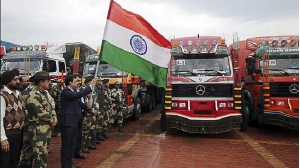
First, India uses humanitarian aid as a strategic tool. It has sent tonnes of wheat, medicine, and vaccines to Afghanistan. This serves two purposes: it preserves the vast reservoir of Indian goodwill built over the years through schools, dams, and infrastructure projects. It also positions New Delhi as a responsible and capable neighbor. But the most important aspect of Indian aid is logistical. It moves not through Pakistan but through Iran’s Chabahar Port. Bypassing Pakistan is symbolically very significant. Every Indian aid truck entering Afghanistan sends a loud and clear message: India can reach Afghanistan without Pakistan’s permission or assistance.
Second, India is pursuing a calibrated diplomatic engagement. It has technical teams in Afghanistan. It has reopened its embassy in Kabul without formal recognition of the Taliban regime. India has established direct channels and holds high-level talks with Taliban ministers. This engagement strips away ideology and treats the Taliban as the de facto authority. It also signals that India will not outsource its Afghan policy to the West.
Third, India is engaged in quiet coalition-building. It has intensified security consultations with regional stakeholders, including Iran, Russia, and Central Asian republics. All of them share concerns about extremist elements spilling over into their own territories. By aligning with this nascent regional consensus, India avoids isolation. It embeds itself in a broader strategic dialogue about Afghanistan’s future. In this dialogue, Pakistan’s voice is no longer singular.
For the Taliban, Indian overtures are both tantalizing and fraught. The regime in Kabul is crippled by international isolation. Moreover, it is economically over-reliant on Pakistan. Many within the Taliban resent Pakistan for its perceived heavy-handedness. Recent cross-border airstrikes targeting the TTP have deepened this resentment. The Taliban desperately need legitimacy. Even limited engagement with the world’s largest democracy offers a modicum of international respectability and breaks the monotony of dependence on Islamabad and Beijing. Security-wise, a relationship with Delhi could provide leverage against Pakistani pressure.
India does not want to win the Taliban over. It is seeking to exploit these internal fissures and encourage pragmatic elements within the movement. The goal is to fracture the Taliban’s external dependencies and move them away from total reliance on Pakistan. In this web, India becomes a stakeholder Kabul cannot afford to alienate.
But the Taliban’s calculations are perilously complex. The movement is heavily indebted to Pakistan. Anti-India elements hold great influence within the regime. These factors create serious internal constraints.
Pakistan’s reaction to these developments is one of profound anxiety. It views the situation through an intertwined security and geopolitical lens. It fears strategic encirclement. For decades, Pakistan envisioned a friendly Afghanistan providing strategic depth against India. Taliban’s engagement with India raises the spectre of Indian intelligence gaining a foothold on Pakistan’s western flank. This could mean collaboration with anti-Pakistan elements like the TTP. From this perspective, every Indian aid shipment or diplomat in Kabul is a Trojan horse - part of a design to destabilize Pakistan’s Balochistan and Khyber Pakhtunkhwa provinces.
Pakistan sacrificed immense blood, treasure, and international reputation to stand by its western neighbor. Seeing India - its arch-rival - gaining a foothold in Afghanistan is deeply devastating. India achieved this without firing a shot or extending formal recognition. It exposes the blunt limits of Pakistani influence. It reveals the Taliban as sovereign actors with their own national interests. The irony is unmistakable: the same people Pakistan supported to safeguard its western border are now forging alliances with its primary adversary in the east.


The writer, based in Karachi, is a freelance contributor and investment banker. He can be reached at syedatifshamim@hotmail.com.
Leave a Reply