



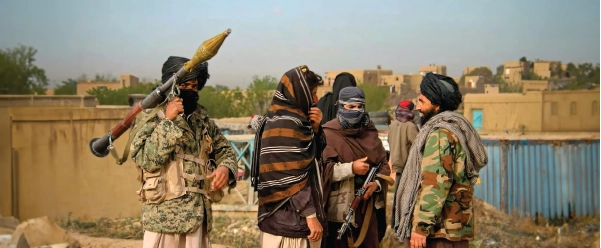
There is renewed interest in the Taliban’s ability to shake off its diplomatic isolation, and in this context, a comparison is often made as to whether Taliban 0.2 is better organized than Taliban 0.1 in ultimately securing diplomatic recognition. How far the second administration could adopt a softer position in ideological practices remains enigmatic to outsiders, but not to Afghans, who fully know where the real power of the Taliban lies—in Kandahar, not in Kabul.
After the withdrawal of U.S. forces from Afghanistan, Pakistan had expected a peace-loving government in its neighbour that would maintain friendly relations with Islamabad. However, after the Taliban came to power, terrorist incidents in Pakistan multiplied, and civilian and security personnel casualties have increased owing to non-stop terrorist attacks. Islamabad accuses the Tehreek-e-Taliban Pakistan (TTP) and the Baloch Liberation Army (BLA), backed by India, of being behind these terrorist incidents, and of using Afghan territory as base camps. Reportedly, Islamabad has presented ample evidence that Afghan citizens were involved in terrorist incidents inside Pakistan. Islamabad also provided incontrovertible proof that the BLA and the TTP have safe havens inside Afghanistan.
Despite repeated warnings, the Afghan Taliban have not taken concrete action against these groups; instead, they have adopted the stance that terrorist acts inside Pakistan are Pakistan’s internal matter. After the Afghan Taliban’s lack of cooperation against the terrorists, when Pakistan struck the terrorist hideouts inside Afghanistan, the Taliban regime itself began a confrontation with Pakistan, suggesting the Afghan Taliban are not interested in acting against those groups.
With the help of friendly countries, talks were held between the Afghan Taliban and a Pakistani delegation in Doha and Türkiye, but in vain. According to media reports, Pakistan’s agenda in those talks was based on a single point: to stop terrorism emanating from Afghan soil. However, the Afghan Taliban expressed an inability to implement Pakistan’s demand.
Analysts say one important reason the Afghan Taliban ignore Pakistan’s demand is that the Tehreek-e-Taliban Afghanistan (TTA) and Tehreek-e-Taliban Pakistan (TTP) are two sides of the same coin. When the Afghan Taliban were fighting the Americans and the Kabul government, the TTP strongly supported them. The two movements share the same ideology and political outlook. Neither accepts the Durand Line between Pakistan and Afghanistan as an international border; they claim Afghanistan’s boundary extends up to Attock, a city in Punjab, Pakistan. The claim is absurd, as any country other than India or Pakistan cannot stand up today and say it does not accept the India-Pakistan border established in 1947.
A second important reason is Afghanistan’s current instability. Although the Taliban have taken Kabul, there remain many groups in Afghanistan that could threaten the Taliban, the most important of which is ISIS or Islamic State Khorasan (IS-K). Some circles suggest there are factional groupings even within the Afghan Taliban, which makes them fear that if they took a hard line against the TTP, those factions or the TTP might join ISIS and threaten their regime. Still, observers closely following Afghan affairs believe the Afghan Taliban have considerable influence over the TTP and, if they wished, could compel the TTP to stop operations against Pakistan. They are simply not doing so. If the Taliban’s excuse is accepted that action against the TTP would weaken them, then why do they not act against the BLA networks residing in Afghanistan?
Islamabad has given the Afghan Taliban incontrovertible evidence that BLA terrorists, after murdering innocent people, take refuge in Afghanistan to escape Pakistan’s law enforcement. The Taliban’s policies suggest they are using the TTP and BLA against Pakistan under a deliberate strategy to achieve some of their objectives; similarly, by developing ties with India, they may be trying to increase pressure on Pakistan.


The writer is a SouthAsia Special Correspondent from Australia. Based in Melbourne, he is a veteran journalist and TV producer and has served various TV channels and newspapers in Pakistan and Australia. He can be reached at adeel644@yahoo.com
Leave a Reply