



Pakistan, Bangladesh embark on a new beginning
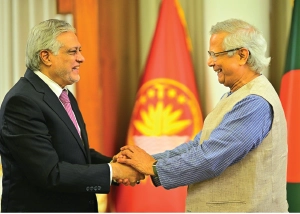 The revival of old connections was on the table as Pakistan Foreign Minister Ishaq Dar met with Bangladesh Chief Adviser Muhammad Yunus on August 24, the second day of his visit to Dhaka.
Revitalisation of regional cooperation through the South Asian Association for Regional Cooperation (Saarc) remained high on the agenda, as both sides also signed “six instruments,” including an agreement on visa abolition for diplomatic and official passport holders. The two leaders discussed strengthening bilateral ties, boosting trade, youth-to-youth exchanges, increasing education and cultural exchanges, and revitalising regional cooperation through SAARC.
“Our visions are aligned, and Saarc remains a top priority for both of us… I feel our two economies are complementary. There are many areas where we can work together,” Dr Yunus was quoted as saying. Professor Yunus emphasised several areas of collaboration, including frequent cultural exchanges. “When Pakistani singers perform in Bangladesh, everyone appreciates their talent. That is the spirit we must build upon,” he remarked.
Ishaq Dar, the first Pakistani foreign minister to visit Bangladesh in 13 years, also met with his counterpart, Md. Touhid Hossain, for a candid discussion on bilateral ties. Both sides expressed eagerness to advance bilateral relations, boost trade and commerce, and collaborate in regional and global forums. The two men differed on the outstanding or unresolved issues between their two nations, mostly dating from 1971. Dar said that these issues had already been “resolved twice”: in 1974 (when Pakistan formally recognised Bangladesh) and again in 2002, when then-president Pervez Musharraf visited the country.
Sri Lanka ex-President Wickremesinghe hospitalised after arrest
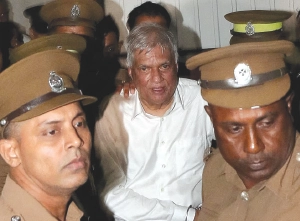 Wickremesinghe, 76, who led Sri Lanka during a devastating economic crisis, was arrested and taken into custody in August.
The next day, he was taken to the emergency care unit at Colombo National Hospital with complications from dehydration, diabetes, and high blood pressure. Wickremesinghe was later transferred to the intensive care unit, where his condition was stable.
Local media reported that Wickremesinghe, a six-time prime minister who lost the presidency last year, had been investigated for a visit to Britain to attend a special graduation lunch to celebrate his wife’s honorary professorship at a university there. An ally from his United National Party said Wickremesinghe was innocent and suggested the case was politically motivated.
ADB to back rail upgrade connecting Reko Diq to Karachi
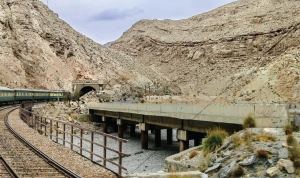 The Asian Development Bank (ADB) has stepped in to fund upgrades to part of Pakistan’s railway system. The ADB is in advanced talks to lead the financing of a $2 billion upgrade of a 500-km stretch of the railway line, which had previously been part of the Chinese project. The proposed rail upgrade would modernise the track and bridges from the commercial capital Karachi to Rohri, near Sukkur, so trains can run faster. In Rohri, the line will meet a branch coming from the area of the Reko Diq mine, which will carry the copper concentrate to the port.
Displacement, crop devastation as Indus floods ravage South Punjab
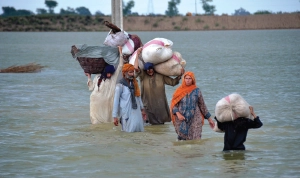 Thousands of villagers in low-lying areas of Layyah, Taunsa, Dera Ghazi Khan, Rajanpur, and Muzaf-fargarh are compelled to leave their homes after the rising level of the Indus River washed away all the protective guide bunds and dykes constructed to support the Layyah-Taunsa Bridge as heavy rains continue to lash many parts of Punjab.
The severe flooding destroyed earthen homes and agricultural fields in Sumra Nashaib, Dulu Nas¬haib, Lohanch Nashaib, Mir¬ani Paka, Loni, Darkhan, Cha¬dhar, Mohana, and Mosan Shah, leaving families displaced and without shelter. Many struggle to save livestock amid the rising floodwaters. In Taunsa, several villages such as Bait Lakho, Jarh Leghari, Jarah, Urra, Bodu Manaan, Thulla Chaki, Eida Arain, Basti Habib, Lal Shah, and Kotla Miran have been submerged, with houses reduced to rubble. Thousands of acres of crops in these areas are underwater and entirely ruined, leaving the displaced population without shelter or livelihood, forced to live under the open sky.
In Muzaffargarh, hundreds of residents in Tehsils Jatoi and Alipur villages were also compelled to evacuate as floodwaters from the Indus inundated their areas. In Tehsil Jatoi, the villages of Laskani and Kehal saw mass evacuations after a breach of 10 to 15 feet occurred in a Zamindara bund. Locals attempted to fill the breach on their own, receiving no assistance from district or divisional authorities. Similarly, in Alipur tehsil, the villages of Bait Dewan, Mouza Shahpur, Mouza Thehri, Mouza Phul Sanjra, Basti Gishkori, Basti Faizu Mandoos, Basti Allah Bachaya Gopang, Basti Kolachi, Basti Bosan, Basti Turk, Basti Lashari, and Basti Noor Mand Gopang have also been inundated. Cotton, sesame, mung beans, and other crops have been destroyed.
In the Langarwah area of Alipur tehsil, the rising level of the Indus River breached a flood protection bund, inundating hundreds of homes and vast agricultural lands.
Wazir Khan Gopang, a resident of Bait Dewan, said that his 20 acres of sesame and 10 acres of cotton had been destroyed. He lamented the government’s failure to take preventive measures. He and his family had to relocate, and he was struggling to save his livestock amid the rising floodwaters.
Targeting or threatening members of the press is unacceptable: US senators
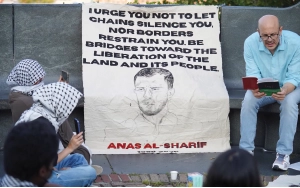 Agroup of 17 United States senators has appealed to Secretary of State Marco Rubio to pressure Israel to let journalists access Gaza and ensure they are protected, according to Al Jazeera.
“The United States must make it clear to Israel that banning and censoring media organisations and targeting or threatening members of the press is unacceptable and must stop,” the Democratic senators said in a statement.
“We urge you to press the Israeli government to protect journalists in Gaza and allow international media to access the territory.”
The letter condemned the Israeli attack last week that killed four Al Jazeera journalists as well as two freelance journalists, sparking international outcry.
“Absent a compelling explanation of the military objective for this attack, it appears Israel is publicly admitting to targeting and killing journalists who have shown the world the scale of suffering in Gaza, which would be a violation of international law,“ it said.
U.S.- China Strategic Rivalry Poses Significant Challenges to Pakistan
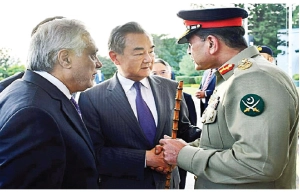 Pakistan’s Foreign Office has reaffirmed that Pakistan’s relations with China remain unaffected by recent geopolitical shifts and resulting realignments.
“We are very confident that these relations are stable and sustainable on their own and will continue to grow and achieve new heights,” Foreign Office (FO) spokesperson Shafqat Ali Khan said during the weekly media briefing. His remarks came a day after Chi¬n¬ese Foreign Minister Wang Yi visited Pakistan as part of his three-nation South Asian tour to attend the sixth Pakistan-China Strategic Dialogue.
While the Pak-China dialogue broadly reviewed various aspects of the bilateral relationship, both sides carefully navigated the region’s shifting geopolitical landscape marked by warming China-India ties, Pakistan’s growing engagement with the United States, and tensions in US-India relations driven by President Trump’s tariffs and policies. Maintaining an exclusive relationship with China and the United States is a delicate balancing act for a country like Pakistan due to the strategic rivalry between the two global powers. Each country offers distinct benefits to Pakistan, yet aligning too closely with one risks straining ties with the other. China is Pakistan’s long-standing strategic partner. The China-Pakistan Economic Corridor (CPEC), part of Beijing’s Belt and Road Initiative, has brought billions in infrastructure investment, promising economic growth and regional connectivity. In addition, both countries share military cooperation and mutual geopolitical interests, especially concerning India.
Swiss Deputy Head of Mission lauds Nestlé Pakistan’s contribution to economy
 Swiss Deputy Head of Mission lauds Nestlé Pakistan’s contribution to economy
Newly appointed Deputy Head of Mission Laurent Cousinou of the Swiss Embassy in Islamabad visited the Nestlé Pakistan factory in Sheikhupura and acknowledged the company’s commitment to Pakistan’s vision for economic growth, renewable energy, and sustainability initiatives.
Talking on the occasion, Mr. Laurent Cousinou said, “Staying true to its Swiss heritage, its commendable that Nestlé Pakistan has led multiple initiatives over the past few years, its USD 50 million export plan by 2030 and investment of PKR 2 billion in renewable energy and sustainability initiatives in the country reflect its commitment to the country’s economic prosperity and growth.”
 Welcoming the new envoy, Faisal Nadeem, Head of Technical, Nestlé Pakistan, said, “We are delighted at Mr. Laurent’s visit and his keen interest in our operations. For over 35 years, Nestlé Pakistan has been committed to being a force for good throughout its value chain for the country’s future by boosting exports and investing in renewable energy and sustainability initiatives.”
The company has also strengthened its localization journey, sourcing over 90% of its raw and packaging requirements locally. Earlier, Nestlé Pakistan initiated an investment of PKR 2 billion in its renewable energy journey, operationalizing two 2.5 MW and 2.6 MW solar power plants in Sheikhupura and Kabirwala, two biomass boilers, and numerous other solar power plants in different sites. Nestlé announced its commitment to reduce its emissions and reach Net Zero by 2050 in line with UN SDGs 13 and 15.
India test-fires ballistic missile ahead of US tariff hike
 India test-fired an intermediate-range ballistic missile capable of carrying multiple nuclear warheads, a government statement said, in an apparent show of strength ahead of a threatened US tariff increase.
The Agni-5 missile was successfully launched in India’s eastern Odisha state, with authorities saying it “validated all operational and technical parameters.”
The test-fire came a week before US tariffs doubled from 25 percent to 50 percent unless India met President Donald Trump’s demand to stop buying Russian oil.
India last tested the Agni-5 missile in March 2024.
Prime Minister Narendra Modi said this month that India was seeking self-reliance with energy independence and developing its own defence systems in the face of US tariffs.
New Delhi has deepened defence cooperation with Western countries in recent years, including in the Quad alliance with the United States, Japan, and Australia as an apparent counter to rival China.
However, India’s relations with China have warmed recently, with several bilateral visits, and Modi is scheduled to visit Tianjin later this month, his first visit to the country since 2018.
Agni, meaning “fire” in Sanskrit, is the name given to a series of rockets India developed as part of a guided missile development project launched in 1983.
The Agni-5 employs technology that enables it to carry several nuclear warheads, so they can split up and hit different targets.
Mahmood Achakzai appointed as NA opposition leader
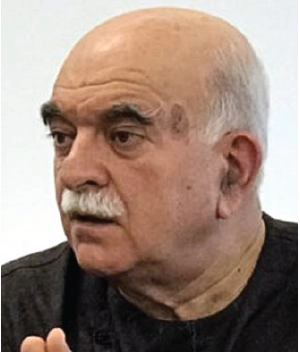 Incarcerated PTI founder Imran Khan has nominated Pakhtunkhwa Milli Awami Party Chairman Mahmood Khan Achakzai for Opposition Leader in the National Assembly.
“Azam Khan Swati has been nominated as Leader of the Opposition in the Senate,” PTI Secretary-General Salman Akram Raja said. He said Imran has asked for five names to decide on his nominee for the opposition leader in the Punjab Assembly.
The announcement comes after the Election Commission of Pakistan earlier this month disqualified PTI’s Omar Ayub Khan as the NA opposition leader and Shibli Faraz from the same role in the Senate, along with other opposition MNAs and MPAs, following their convictions in May 9 cases.
Support pledged for the auto sector
 Haroon Akhtar, the Special Assistant to the Prime Minister (SAPM) on Industries and Production, stated that the government is taking steps to bolster the country’s industrial base and has called upon the auto sector to become more competitive.
Addressing the Auto Parts Summit 2025, organised by the Pakistan Association of Automotive Parts and Accessories Manufacturers (Paapam), Mr Akhtar outlined a vision for a thriving domestic automotive industry.
“The new tariff policy coupled with a new industrial policy and regulatory reforms, along with the plan to revive certain sick industries such as the steel mills, will prove that the future of Pakistan’s automotive industry is bright,” he said. He assured local manufacturers that the government would stand by them, adding, “But we want you to be competitive, and we will help you.”
To level the playing field, the SAPM assured auto parts makers that quality standards applicable to local manufacturing will also be strictly implemented on imported parts and vehicles.
However, industry stakeholders voiced significant concerns over government policies detrimental to local enterprise. Paapam Chairman Usman Malik highlighted the challenges posed by the commercial import of used cars, arguing it undermines the local industry.
HBL Launches Business Debit Cards for SMEs
 HBL has joined hands with Mastercard in launching its Business Debit Card designed exclusively for SMEs - sole proprietors and entrepreneurs. Two card variants have been launched, Classic and World Business Debit Card. This initiative marks a major stride in the Bank’s commitment to enable Pakistan’s businesses with innovative financial solutions and accelerating the shift towards a cashless Pakistan economy.
With over 5 million SMEs contributing nearly 40% to the national GDP and employing one-third of the country’s workforce, the need for sustained investment into the SME sector is essential for Pakistan’s economic prosperity. HBL has played a leading role in enabling this segment by becoming the first bank to surpass PKR 100 billion in SME lending. HBL also remains the pioneer of non-collateralized lending and ensuring increased access of credit to SMEs. The Bank remains committed in empowering SMEs with financing solutions and contributing directly to Pakistan’s GDP.
The Business Debit Card is a payment solution which ensures that SMEs can manage their day-to-day transactions, in a more seamless and convenient manner. HBL remains the largest issuer of debit cards in Pakistan, and the launch of the business debit card represents its commitment to financial inclusion and a digitized ecosystem across all customer segments.
The launch event, held at HBL Tower, Karachi, on 27 August 2025, was attended by Muhammad Nassir Salim, President & CEO - HBL, Aamir Kureshi, Head, Products, Transactional Services & Solution Delivery - HBL, and J.K. Khalil, Division President, East Arabia - Mastercard, along with senior leaders from both institutions.
Speaking at the launch Muhammad Nassir Salim, President & CEO – HBL, said:
“The Government of Pakistan and the State Bank continue to emphasize SME growth as a driver of economic stability, innovation, and employment. HBL stands aligned with this vision. By equipping SMEs, sole proprietors, and entrepreneurs with the means to transact securely and seamlessly, HBL is supporting the national agenda of enabling businesses to grow, formalize, and contribute to Pakistan’s economic progress.”
Australia lashes out at Netanyahu over ‘weak’ leader outburst
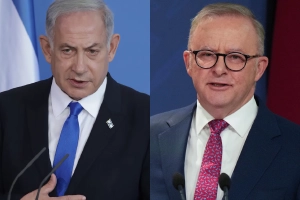 Australia lashed Israeli leader Benjamin Netanyahu after he said the country’s prime minister was weak, with a top minister saying strength was more than “how many people you can blow up”.
For decades, Australia has considered itself a close friend of Israel, but the relationship has swiftly unravelled since Canberra announced last week it would recognise a Palestinian state. Netanyahu drastically escalated a war of words, calling his Australian counterpart Anthony Albanese a “weak politician who betrayed Israel”.
Australian Home Affairs Minister Tony Burke said it was the sign of a frustrated leader “lashing out”. “Strength is not measured by how many people you can blow up or how many children you can leave hungry,” Burke told national broadcaster ABC. “What we’ve seen with some of the actions they are taking is a continued isolation of Israel from the world, and that is not in their interests either.” Through the 1950s, Australia was a refuge for Jews fleeing the horrors of the Holocaust. The city of Melbourne at one point housed, per capita, the largest population of Holocaust survivors anywhere outside of Israel.
Netanyahu was infuriated when Australia declared it would recognise Palestinian statehood next month, following similar pledges from France, Canada, and the United Kingdom. In the space of nine days since that decision, relations between Australia and Israel have plummeted.
Exports to nine regional states rise
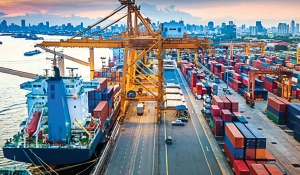 Exports to nine regional countries grew by 5.10 percent in the first month of the current fiscal year compared to the same period last year, primarily due to increases in shipments to China, Sri Lanka, and Bangladesh.
This growth is attributed to recent shifts in the regional political landscape, though trade relations with these nations have been strained in recent years due to restrictive government policies.
According to data compiled by the State Bank of Pakistan, exports to Afghanistan, China, Bangladesh, Sri Lanka, India, Iran, Nepal, Bhutan, and the Maldives totalled $357.01 million in July, up from $339.68m in the corresponding month last year. For the FY25, exports to regional countries rose modestly by 1.49pc to $4.401bn, up from $4.336bn in FY24.
China remains Pakistan’s largest regional trading partner, accounting for 60pc of total regional exports. Shipments to China increased by 24.70pc in July, reaching $199.65m, compared to $160.10m in the same month of the previous year. However, the exports declined by 8.6pc in FY25, falling to $2.476bn from $2.709bn the preceding year.
Imports from China also increased, rising by 14.68pc to $1.695bn in July from $1.478bn in the same period last year. For FY25, imports from China grew by 20.79pc to $16.312bn from $13.504bn.
Exports to Afghanis¬tan, traditionally one of Pakistan’s top trading partners, dropped significantly by 38.23pc to $54.39 million in July FY26, compared to $88.06m last year. While Afghanistan was once Pakistan’s second-largest export destination, this drop is partly due to shifting trade dynamics and the lack of official data on trade through land routes.
Exports to Iran were non-existent via official channels in July FY26, as most trade with Tehran occurs informally through border areas in Balochistan, often in the form of barter. Similarly, exports to India remained minimal, at just $1.15m, with trade usually routed through third-party markets like Dubai and Singapore, adding to costs.
Pakistan joins the global elite with a new payment system
 The SBP has officially launched PRISM+, a new Real-Time Interbank Settlement Mechanism, to modernise the country’s payment infrastructure and promote a digitally inclusive economy. This initiative marks a key milestone in developing Pakistan’s financial market infrastructure. SBP Governor Jameel Ahmed said that
PRISM+ aligns with the central bank’s Vision 2028, aiming to bolster Pakistan’s digital financial infrastructure. With PRISM+, Pakistan joins a select group of countries adopting the ISO 20022 global messaging standard for retail and large-value payment systems.
Telecos under scrutiny for mismanagement
 The latest Auditor General (AG) report has raised serious concerns over massive violations in the telecom sector, including misconduct by state-owned PTCL and the Special Communications Organisation (SCO).
The report also reveals that Jazz, the country’s largest telecom operator, overcharged consumers by Rs6.58bn during 2023-24.
The report highlights that despite multiple directives from the Supreme Court of Pakistan, the Public Accounts Committee (PAC), and repeated requests from the Auditor-General, PTCL has refused to open its accounts for audit.
Several objections were raised in the audit paras of regulatory bodies such as the Universal Service Fund (USF) and the Frequency Allocation Board, where PTCL was found guilty of failing to pay its dues and committing various financial irregularities. Further, the audit report also flagged Rs3.54bn worth of financial irregularities related to SCO, a state-owned telecom entity operating in Gilgit-Baltistan and Azad Jammu and Kashmir.
Leave a Reply