


ADutch social psychologist, Gerard Hendrik Hofstede’s cultural dimensions theory is a framework for understanding how cultural values influence behavior across societies. One of the six key dimensions is short-term versus long-term orientation, which measures a society’s time horizon in planning and decision-making. Short-term-oriented cultures emphasize respect for tradition, social obligations, and immediate results, while long-term-oriented cultures focus on future rewards, perseverance, and adaptability.
Pakistan’s society generally has a short-term orientation. Decision-making in business and governance often prioritizes quick, tangible outcomes over strategic long-term planning. This can be seen in policies driven by the present federal and provincial governments, which focus on immediate profit rather than sustainable growth.
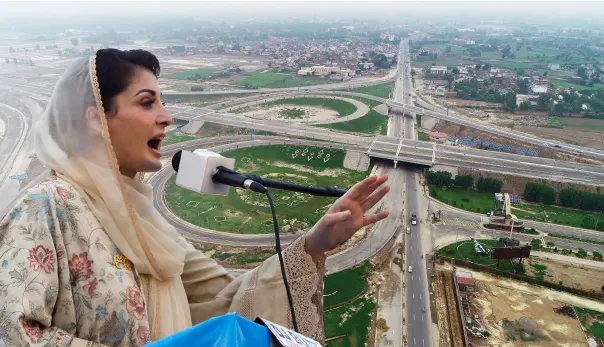
Since taking office in February 2024, Maryam Nawaz Sharif, Pakistan’s first female Chief Minister, has launched multiple welfare and development initiatives. However, her governance must be evaluated against Punjab’s financial constraints, Pakistan’s economic crisis, and the long-term effectiveness of her policies. Let’s critically examine the key Initiatives taken by Maryam Nawaz’s government.
Under welfare programs, her government offered short-term relief by taking long-term fiscal risks. For instance, the Nigheban Ramadan Package (2024) and Ramzan Aid Package (2025) distributed free flour and subsidized food to millions, respectively, and PKR 10,000 per household. While politically popular, the Rs. 30 billion+ expenditure raised concerns about Punjab’s debt sustainability. The Apni Chhat, Apna Ghar Housing Scheme, was launched to provide affordable housing, but Punjab’s Rs. 5.4 trillion debt (2024) limits large-scale execution. Only 5,000 units have been approved so far, a drop in the ocean for Punjab’s 120 million population. So, populist measures provide immediate relief but lack a clear funding strategy in Pakistan’s 24% inflation, an IMF-mandated austerity climate.
Her initiatives in healthcare and education are also progressive, but carry implementation gaps. Like field hospitals and health card revival, a positive step, but Punjab’s 40% rural health centres remain understaffed, and basic health units lack basic facilities. School Upgrading program promises renovations for 10,000 schools, but only 1,500 were upgraded by mid-2024 due to budget cuts, and the number doesn’t seem to cross 3000. Intentions might be good, but execution lags due to financial constraints, and no model tackles financial constraints. Under the ‘Free Bikes for Students initiative,’ some 20,000 bikes were distributed, but fuel subsidies worth Rs. 7 billion are unsustainable amid Pakistan’s circular debt crisis.
Like former Punjab CM Shehbaz Sharif, Maryam Nawaz has also focused on infrastructure and transport. The programs are ambitious, but feasibility remains unclear. For example, the expansion of Lahore Metro is proposed, but Punjab’s PKR 800 billion+ development budget is already strained. Symbolic gestures do not last long, and fiscal realities may derail long-term plans. Pakistan faces a $242 billion public debt (2024) and Punjab’s PKR 5.4 trillion debt.


The writer is a Research Assistant at the Centre for International Strategic Studies Sindh (CISSS), Karachi. He can be reached at alihamza@cisss.org.pk
Dr. Ali Hamza is used to write and communicate in a very professional manner.
I must appreciate the way you elaborate the things and need of the hour analysis regarding prioties and liabilities for economic growth. Excellent article elaboting the Govt. Prioties and KPI’s against current economic conditions of Pakistan