

Interview
‘Pakistan needs not to be apologetic about its nuclear program.’
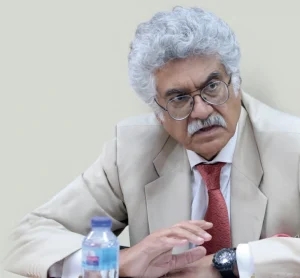
Zamir Akram, Pakistan’s Ambassador and Permanent Representative to the UN and other International Organizations in Geneva from 2008 to 2015, was recently interviewed by a leading online platform based in London, U.K. The following are the excerpts taken from the interview.
Please tell us something about your new book titled ‘The Security Imperative: Pakistan’s Nuclear Deterrence and Diplomacy.’
The book underlines that Pakistan, since its independence, has faced a security threat to its existence, largely as a result of the inherited differences that we have with our larger, more powerful neighbour India and also because of how the international situation has evolved over the years. In the beginning, of course, Pakistan, as we know, relied on the Western powers, the United States, to ensure its joint security pacts. But as the experience of the 1971 war demonstrated, reliance on such alliance systems was not sufficient, and, therefore, it was felt at that time that we needed to have an indigenous deterrent capability, and this became all the more urgent after the Indian nuclear test of 1974 and the Indian acquisition of nuclear weapons. In addition, their numerical advantage in conventional weapons against Pakistan made it imperative for Pakistan to pursue a nuclear weapons program for credible deterrence, and that’s why I have named this book.
Since we decided to launch our nuclear program, our diplomacy has played a major role in pursuing the program, enabling us to enhance our capabilities, and over the years, we have been able to establish a credible deterrence against India, which, in my view, has ensured Pakistan security to the present time. The reason that I wrote this book is also that I wanted to give a Pakistani perspective because Pakistan’s nuclear program has been written about by Americans, Indians, and British authors showing their own perspectives.
It has been heard that internationally, the book is not available at Amazon or other vendors.
The book was available on Amazon for about 6 weeks or so. Then, after some months of its launch, Amazon emailed that they had decided to block this book as well as all books that Paramount Publications has published. I believe there is something in this book that is not palatable to the Western powers that be or even to our Indian neighbours because there are some home truths that have been brought out.
I think the US would be most sensitive to the account that I have given of the nuclear proliferation by the United States itself. The Israeli program was definitely helped by the Americans, which they have tried to hide. But even you would be surprised by the fact that the chemical weapons and missile development programs of Iraq’s Saddam Hussein were helped by the US. India has also been engaged in the proliferation of chemical, biological, and other kinds of Weapons of Mass Destruction (WMD) with Iraq, Iran, and other countries. There is no need for Pakistan to be apologetic about this nuclear program. We’ve done it for the sake of ensuring our national security. It is a perfectly legitimate program right on our part to do this, and we will continue to do this as long as our security is threatened.
What is different in this book that has not been presented in other books?
One of the key distinctions is that during my career, I have served in various countries important for Pakistan, such as India and the United States, along with the UN. So, I’ve had this personal experience of dealing with the issue of non-proliferation of nuclear weapons with these countries at the bilateral and multilateral levels.
In my book, I have extensively used my notes from those exchanges. For instance, during Benazir Bhutto’s second tenure as a prime minister, the Pressler Amendment, which authorised banning most of the US military and economic assistance to Pakistan, was in place at that time, and talks were held with the then U.S. President Bill Clinton on the removal of those sanctions. I was part of the dialogue, too. We went through a process called the Brown Amendment, how that amendment was pursued with much difficulty, and what kind of opposition we met even from the Clinton administration. Then, in the United Nations, particularly in the Conference on Disarmament, Pakistan took a position against the start of negotiations or a fissile material cut-off treaty. At that moment, I was the Ambassador of the Permanent Representative to the Conference and Disarmament. My book explains how and why we had to take the position that we did because any kind of treaty that would not ban the existing stocks of fissile material would be inherently unfair to Pakistan. This is because there is a big gap between the fissile materials stocks of India and Pakistan, and so this book explains why and how we achieve that objective. The US and India signed the civilian nuclear cooperation agreement, but the same was denied to Pakistan. The book explains the episode in more detail as to how we engaged with the US in those days. But it also explains how we engaged with China, something not known to the general public yet. The book also reveals how Pakistan entered into a civilian nuclear cooperation agreement with China. The book also sheds light on the issue of how and why we took a decision not to sign the Non-Proliferation Treaty (NPT) and the Comprehensive Test Ban Treaty (CTBT). Well, the problem is that there has always been, in my view, a Western bias or discrimination against any Muslim country acquiring nuclear weapons. That is never stated in the West, but it is inherent. If you look at the history of the US-led Western approach towards non-nuclear proliferation in South Asia, the Chinese exploded their first nuclear device, and after that, there was actually serious thinking within the US that the US should assist India in acquiring these weapons as a deterrent against China.
Then, in 1974, when the Indians did explode a nuclear device, there was really no action to punish the Indians or to ensure that the Indians rollback what they had actually done was to illicitly transfer fissile material meant for peaceful uses towards weapons production, and so there was a number of attempts to cancel or reverse the deal. In fact, the US entered into an agreement to continue supplying nuclear fuel to India. So, the Symington Amendment and the other pieces of legislation that were adopted in the US did not punish India in any way but were primarily aimed at preventing Pakistan. Going down the same road, it became extremely difficult for Pakistan to pursue its program as compared to what the Indians had done, and this is why the point of departure or the differences emerge between Pakistan and the US on this issue of nuclear proliferation. Americans were not ready to accept or appreciate that Pakistan had a legitimate security concern.
What about the civil nuclear cooperation between Pakistan and China?
The first two atomic reactors were set up with Chinese assistance. But the change in the American approach towards India helped China realise that Beijing needed to engage in further civilian nuclear cooperation, despite the UNSC resolution that was adopted in 1998 following the nuclear tests by India and then by Pakistan, which did not permit any kind of nuclear-related cooperation with either India or Pakistan. But it was the US that broke that understanding in 2004 when they signed that civilian nuclear cooperation agreement with India, and then in around 2008, they even got a waiver for India for the Nuclear Suppliers Group (NSG). That also provided the opening that the Chinese needed, and they responded positively to our diplomatic approach that we take forward our cooperation in the civilian sector. So, I think we have pretty solid civilian nuclear cooperation with China. Notably, all of this civilian nuclear cooperation between Pakistan and China is under IAEA safeguards with full monitoring. It is consistent with the commitments of both countries, Pakistan and China, to their obligations under the International Atomic Energy Agency (IAEA).
There are so many misconceptions that Pakistan has been held by China in terms of military.
The Western powers promoted an off-base narrative that Pakistan really did not have any capability to put together a nuclear weapon or pursue a nuclear weapons program and that all this was handed over to Pakistan by China, which is incorrect. Actually, way back in the 1950s and 60s, there was a tremendous amount of nuclear learning in Pakistan as a result of the efforts indigenously as well as through the efforts of some of our leading scientists of those days who did some pioneering work and then because of the Atoms For Peace program where we again were involved in the peaceful uses of nuclear energy, leading to the construction of KANUPP reactor in Karachi and the Pakistan Institute of Nuclear Science and Technology in Islamabad. So, we had both the technical as well as intellectual capability to execute our nuclear program. After India’s first successful nuclear bomb test in May 1974, the then prime minister Zulfikar Ali Bhutto convened a meeting in Multan where he brought together all these nuclear scientists and tasked them to pursue Pakistan’s nuclear program. We also approached China to help us develop a civilian nuclear program. So, we already had a base from which to build, and of course, despite the sanctions, we built it in pieces, putting small components together. The result was the development of the Chashma one and two 300 MW reactors. So that was the first step taken in the early 70s.![]()
Jinnah was a bigger leader than Ataturk: Moot
Shaheen Afridi weds Shahid Afridi’s daughter Ansha
Wahab Riaz retires from international cricket
Nestlé Pakistan promotes nutritional awareness, sustainability education
Watch Shah Rukh Khan’s ‘Jawan’ on Netflix
Trudeau’s Allegations Upend India-Canada Ties
Toyota Pakistan and Bank of Punjab: Redefining Auto Finance
Michael Jackson’s moonwalk hat sells for $82,170
Pakistan to face highest inflation: ADB
Musk mulls charging all X users monthly fee
Naila Kiani, the first Pakistani woman to summit three peaks above 8,000m
Washington, Riyadh exploring mutual defence pact
India becomes the first nation to land near Moon’s south pole
‘Tree of Life’ on the verge of extinction
SC goes live as full court tackles controversial law
AlHuda CIBE Continues its Commitment to Islamic Finance FinTech Services
The Legend of Maula Jatt’ earns international nomination


Leave a Reply