Saharanpur
The Jury is Out
The BJP government seems to have revoked the contentious farm laws to gain political mileage. However, will the BJP bring back the laws after winning the forthcoming assembly elections being held in February and March in five Indian states?

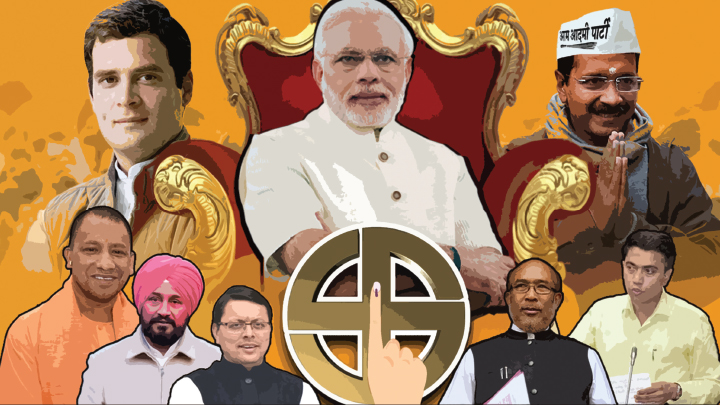
Assembly polls in India are set to take place in its five major states—Goa, Manipur, Uttarakhand, Punjab and Uttar Pradesh—in early 2022. They will be held in seven phases from Feb 10 to March 7. While the election in Punjab, Uttarakhand and Goa would be held in a single phase on February 14, voting in Manipur would be held in two phases on Feb 27 and March 3. Uttar Pradesh—the most populous state in India—would vote in seven phases in order to elect 403 Members of Legislative Assembly (MLAs) from Feb 10 to March 7. The counting of votes is set to take place on March 10.
The Bharatiya Janata Party (BJP) is aiming to get re-elected in the forthcoming assembly elections while the Indian National Congress and other key regional parties are seeking to unseat the BJP. At the heart of the election campaign will be farmers and their protests spanning over a year that forced BJP government to capitulate and revoke the contentious farm laws that could have allegedly revolutionized the Indian agriculture sector.
Farmers from different states particularly from Haryana, Punjab and western UP staged massive protests at the outskirts of New Delhi demanding the revocation of new farm laws and legal guarantee for the Minimum Support Price (MSP) on their produce. Against this backdrop, Prime Minister Narendra Modi announced that his government would repeal the contentious laws, bowing to pressure from farmers after almost over a year of demands that the contentious laws be rolled back. Subsequently, the Indian Parliament in November 2021 passed the Farm Laws Repeal Bill revoking three laws aiming at deregulating agricultural markets.
The crucial local elections have come on the heels of protests that saw tens of thousands of people, including women farmers and elderly growers, braving extreme weather conditions as well as a second wave of Covid infections to camp on the Delhi’s borders. The BJP government seems to have revoked the contentious farm laws in a bid to gain political mileage, but many in the opposition camp are skeptical that the BJP may bring back the laws after winning the elections. Congress party chief spokesperson Randeep Surejewala has already voiced his concern, “The government bowed down only because their defeat was clearly visible in Uttarakhand, Punjab and Uttar Pradesh. After the elections in five states, they will bring back this law from the back door.”
India has been beset with a multitude of challenges under PM Modi’s watch, inter alia, growing inflation, rising unemployment, and faltering economy struggling to claw out of the pandemic slowdown. Additionally, farmers are bitter about the laws and their treatment by the government, for instance, BJP’s own leaders have been accused of using violence against the unarmed farmers in Uttar Pradesh. In this context, the move to repeal the farm laws aims to undercut any advantages to the adversaries that may arise out of the emerging situation.
However, it is still doubtful that the move would benefit the BJP in the forthcoming elections. For example, according to some reports, BJP’s fortunes appear bleak in Uttar Pradesh—a bellwether state. People in villages are still angry at the BJP with many even putting up signs to stop the entry of BJP leaders in their areas. Agriculture is the main source of livelihood of people in the twenty-one districts of Uttar Pradesh, and prominent politicians in the region hail from the farming community. It is for this reason that agrarian issues dominated the electoral politics of the state until BJP started playing politics along caste and religious lines.
The western part of Uttar Pradesh has remained a stronghold of the BJP since 2014 but the farmer’s movement seems to have galvanized the opposition parties in the region. The opposition of the farm laws united under the banner of Samyukta Kisan Morcha (SKM) and rose to prominence. The protest rallies called by the farmers subsequently became a huge success with people belonging to all communities, castes and religions becoming a part of them.
While the farmer’s movement emboldened the opposition, it undermined the aura of invincibility built around PM Modi’s leadership. The BJP is unlikely to reap any electoral gain by repealing farm laws as people are cognizant of the fact that they were withdrawn only after immense pressure, and one of the largest and longest farmer’s movement since the Indian independence. The farmers’ community feels dissatisfied and alienated. The firefighting done by the BJP was too little, too late. Notwithstanding, the jury is still out on whether the contentious farm laws succeeded in placating the growers and bolstering chances of the BJP’s success in the forthcoming assembly elections. ![]()

The writer is a researcher at the Centre for Aerospace & Security Studies in Rawalpindi. She can be reached at mahamgillani@gmail.com


Leave a Reply