




Without knowing about the psychology of rapists and other sexual offenders, it is difficult to understand the long-term effects of rape and sexual assault on victims. Making of a rapist is a mystery to many as many people wonder how could a seemingly sane person commit a heinous crime called rape.
An ad reading, “Are you a rapist?” appeared in many publications in Los Angeles in 1976. The unusual and terrifying ad was published by Samuel Smithyman, a doctoral student, who was sceptical about receiving any positive response from the ad, but he received hundreds of calls from men from different professions and walks of life.
Confessing to committing rapes in their lifetimes, men included government servants, school custodians, painters, computer programmers, doctors, teachers, clerks and even police and law enforcement officers.
First and foremost, rapists are ordinary people just like most of us. Rather than being a lonely, idle or ineffective person, a rapist, mostly hailed from middle and upper-class backgrounds, is a well-dressed, well-educated and employed person who lives in a family setting.
In fact, it is not easy to profile a rapist, because of deviant sexual behaviour of adult males. However, there are some clues that may help us identify a potential rapist lurking around.
The subconscious level of a rapist holds a pent-up grief from his childhood trauma of being molested , or experiencing the other forms of sexual abuse, hence the ensuing development of cognitive and behavioural patterns. As a corollary, the personality of a rapist is mainly determined by his early childhood experiences and traumatic life events.
Children who are victims of child molestation are likely to abuse other children when they are adults. Adults who grope or touch kids inappropriately or force them to perform certain sexual acts trigger a chain of similar events and in many circumstances, they try to inflict the same physical and emotional injuries to the victim that they had gone through in their past.
Rapists are usually unable to get rid of their early childhood traumas, a deep-seated problem which creates a self-reinforcing loop. A rapist’s motives are hard to pin down and differ from person to person. According to many studies, rapists are narcissists to the core and commonly suffer from a lack of compassion for others with a mysterious hostility towards women.
Psychologically speaking, rape is primarily used as a vehicle to perpetrate power and control while sexual intemperance is merely a by-product of this desperate move. All bets are off for a rapist as he may use excessive force for compliance and may engage in a wide range of such sexual behaviours as groping and fondling to the bare minimum.
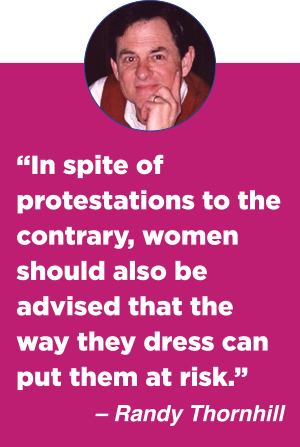 The sexual assaults are defined as sheer violence and brutal vehemence, reflecting an intentional act of aggression against the victim’s physical well-being. Some rapists strive to regulate their aggression by creating dominance over the victim to demonstrate their strength and mastery. This means that a victim’s level of acquiescence determines the level of force and threat being utilised.


The writer has taught Criminology at various colleges in California, USA. He can be contacted on his Facebook page:www.Facebook.com/PsychologicalHealing711. His Instagram handle @PsychologicalHealing711
This is true reality .