



Ever since the onset of the much-touted China Pakistan Economic Corridor (CPEC), some unreal and ambitious pictures have been painted with regards to the ambitious project, dubbing the Gwadar city as the Future Singapore or Dubai. Even at this point in time, the mega project is boasted as a destiny forging project for both Pakistan and China, though the ground realities tell an exactly opposite and different story to that of the official account.
As goes the official narrative, the CPEC project worth $47 billion was kick-started in 2013 during the tenure of the then Prime Minister Nawaz Sharif. However, the latest figures suggest that the overall value of the CPEC is worth $62 billion, which is a whopping figure of course. The leading proponents of the CPEC make tall promises of building and upgrading the infrastructure, improving the fragile economy of the host country, and establishing Special Economic Zones in otherwise the most deprived parts of the country.
Gwadar, which is the ground zero of the mega project and where the Gwadar port lies, continues to live in an unabated and persistent cycle of darkness. Gwadar city is located on the Arabian Sea on the south-western Balochistan, a province suffering from historically rooted grievances for decades. Living in the coastal areas on the bank of Arabian Sea, the indigenous people of Gwadar depend on the sea for their livelihood, which is the centuries-old source of their bread and butter. From the very beginning of the CPEC project till now, its exaggerated charisma fails to shower any sort of blessing on the people of Gwadar so far.
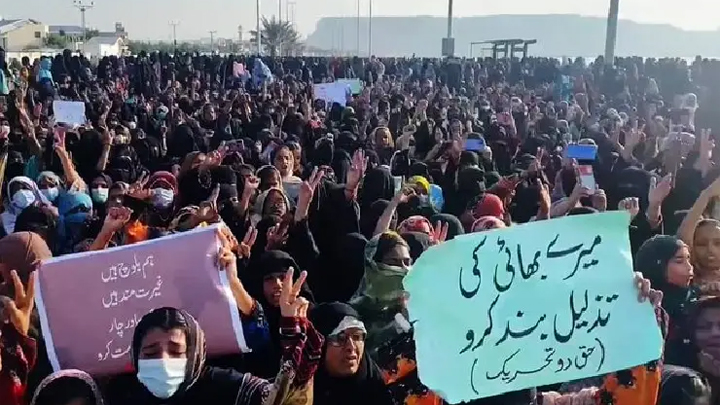
Today, the plight of Gwadar has once again caught global attention since the launch of the “Haq Do Movement,'' in which hundreds of thousands of people are on the roads for their basic rights. Although the protests in the port city have been happening over a period of time, the on-going 'Haq Do Movement,' under the leadership of Maulana Hidayat Ur Rehman Baloch, has attracted a large number of people across Balochistan, especially from the Makran region. The protesters have a 17-point charter of demands, albeit the prime focus is stopping the rampant humiliation of the local residents at numerous checkpoint points, which are set up in the name of security. The agenda also includes the prevention of deep-sea fishing using illegal trawlers as well as giving permission to local people to continue border trade with neighbouring Iran.
‘The people of Gwadar are on the roads for not demanding amenities of life, but they are protesting to stop intervention of authorities in their sources of earning,’ says Rehman Baloch. After a period of more than two weeks, the Haq do Movement has managed to mobilise a huge number of people chanting slogans against mushroom growth of security checkpoints and embedded trawler mafias. As long as the local population of Gwadar remains sidelined and deprived, the success of CPEC is a herculean task.
Much to the chagrin, the policies related to CPEC were designed without taking the people of Gwadar into consideration. As a corollary, the Haq do Movement has come to the forefront.
The current situation of Gwadar reflects well on the fact that the CPEC project has done very little for the progress and development of the indigenous people. No matter how much the statistician, economists and politicians wax eloquent about the project by brushing the residents’ issue under the carpet, the stark and harsh ground realities won’t simply disappear. The "Haq Do Tehreek" for the past three consecutive weeks in the port city Gwadar exhibits the untold and dark sides of the CPEC, which seems a profit-driven venture in place of an all-inclusive development programme.

The writer is a freelance contributor based in Balochistan. He can be contacted at nizambaloch149@gmail.com
Leave a Reply