

Region
Dangerous Idea
There are many questions that Pakistan must answer before its begins to talk peace with the TTP.

The Taliban takeover of Kabul has altered the regional security dynamics, foreign policy choices and realities. It has also affected the regional powers’ activism and interest, with China, Russia and Iran being at the forefront. The Taliban regime is a single manifestation of the changing security paranoma. Pakistan is not an exception. Being Afghanistan’s immediate neighbour and sharing the longest botder with it, Pakistan is the country most affected by the political and security instability in Afghanistan. However, the Taliban’s accession to power has changed its security posture and threshold. Unlike Ghani’s and Karazai’s regimes, when the RAW-NDS nexus and Indian-sponsored proxies posed the greatest security threats to Islamabad, the Taliban’s ascendency has transformed the threat spectrum. Put another way, the threat threshold has been reduced to a considerable extent. This is mainly because of two reasons: Taliban’s denial of space to India as a launchpad against Pakistan and the latter’s say and primacy in Taliban leadership. This is evident from Pakistan’s intelligence and political leadership rushing to Kabul in the immediate aftermath of the Taliban’s accession to power.
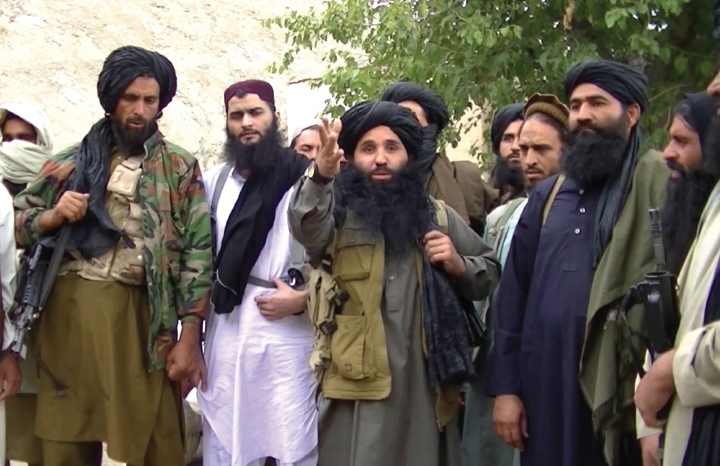
Although the Taliban takeover did diminish the TTP‘s operational and logistic capabilities, it is still a cause of concern for Islamabad. After being released from prisons in Afghanistan, the group members are reported to be regrouping in the tribal regions of Pakistan. The Taliban’s assurance of not allowing its soil to be used against any other state notwithstanding, radicalisation and extremist tendencies might still exist, and perhaps may be rejuvenated. Weakened by reining in of Indian influence and the Ghani government’s collapse, the TTP might be softening it’s tone both with the Taliban and Pakistan, in a ploy to restore their relevance. Taliban ascendency is one of the greatest reasons for the TTP, which may have led to its postponing its nefarious plans to earn legitimacy both in the eyes of Kabul and Islamabad. Kabul has already asserted its reluctance to take action against the TTP as it probably assumes that the terrprist group poses no threat to Kabul.
In this backdrop, Pakistan’s engagement with the proscribed group that bled the country and its innocent citizens for over a decade, calls for concern and caution. More troubling, however, is Islamabad’s official willingness to grant general amnesty to the hard-core TTP.
In a interview with TRT , the Turkish TV and radio channel, Prime Minister Imran Khan revealed that talks were underway with the TTP under the facilitation of the Afghan Taliban.
“There are different groups which form the TTP and some of them want to talk to our government for peace. So, we are in talks with them. It’s a reconciliation process,” he said.
Similar assertions were made in mid-September by Pakistan Foreign Minister Shah Mahmood Quraishi.
“Our government would pardon them if they (TTP terrorists) promise not to get involved in terrorist activities and submit to the Pakistani Constitution,” Quraishi said.
The Pakistan president has also talked of a general amnesty for those who lay down their arms and respect the constitutional and ideological landscape of the country.
These peace overtures with a nationally and internationally proscribed group have been distressingly received by many a quarter in and outside the country. Calling for general amnesty and concessions for the very groups that played at the hands of the country’s enemies, wreaked havoc and destroyed both men and materials and ruthlessly and mercilessly killed over 80,000 Pakistanis, is nothing short of mockery of the state’s sanctity and blood of martyrs. Moreover, the group hijacked the country’s peace and order for over a decade and kept Pakistan from getting on the path of prosperity. Its activities led to regionally and globally tarnishing the image of Pakistan crippling sanctions, Pakistan-phobia and international isolation. It is now the very group that Pakistan is inclined to extend general amnesity to.
The engagement with the TTP is a myopic peace-building plan sans a pragmatic reflection on the repercussions the country would further suffer nationally, regionally and globally. The ground realities seem to have been overlooked this while deciding talks withthe TTP.
Since the RAW-NDS nexus has broken up and the US influence reduced to naught under the Taliban, the group has lost sponsorship against Pakistan and has been looking for time and space to reorganize, rejuvenate and restore its relevance. It aims at earning legitimacy with Islamabad and Kabul only to strengthen its position. Even if general amnesty is granted and its members lay down arms, what assurance would they offer that they wouldn’t relapse to their old ways of militancy?
It might serve as motivation and inspiration to other anti-state militant organisations vying for destabilising the country. Moreover, a sense of alienation and resentment among the masses of Balochistan would be another setback to the country’s dream of sustainable peace and order. Absolving the TTP would be tantamount to stabbing in the backs of those valiant relatives of the lion-hearted military personnel and martyrs who fought till the last drop of their blood to safeguard the sanctity of the country and the lives of their countrymen. Apart from that, ceding TTP enough public space under the pretext of amnesty would give the militant group enough time to regroup and reorganize.
The serious implications of extending general amnesty to the TTP would also suffer a setback on the international front. First is the FATF saga. Since the USA has time and again scapegoated Islamabad for its own failure in Afghanistan, it would use FATF to further tighten the noose around Pakistan. A negative message would be sent to the world for Pakistan’s lenient approach against hard-core militancy and terrorism. It would serve as an instance for the Indo-US nexus to lobby against Pakistan and its diplomatic manoeuvrability on the issues afflicting the Muslim world in general and Kashmir and Palestine in particular.
Since national security and sanctity are areas of vital significance, the country’s leadership should adopt a cautious approach in dealing with the TTP. If Islamabad is bent on the inevitability of talks, they should be carried out in such a pragmatic and cautious way that potential negative implications are minimised
The hard-core TTP leadership shouldn’t get easy escape and relief under the guise of talks and amnesty. Even if they renounce violence and pledge allegiance to the constitution and the law of the land, they should be made to face the music under provisions the constitution has envisioned.
Since the country has already suffered great losses, a repetition of similar episodes of violence should be avoided for the sovereignty, sanctity and security of the larger good of the people.![]()

Ali Hassan Bangwar is a freelance columnist and researcher based in Kandhkot. He can be reached at alihassanb.34@gmail.com


Leave a Reply