



Financial Technology (Fintech) is an expansive term, encompassing an entire range of innovative technology-led business models disrupting traditional ways of conducting commerce, especially in the financial sector. From relatively humble beginnings in payments and remittances, Fintech has expanded into marketplace lending, wealth management and investments and, most recently, crypto and digital currencies, hoovering up smaller sectors such as Trade Finance, Insurance and Personal Financial Planners in the process. The common aspect in all is a focus on convenience, based on a re-engineered customer experience designed to delight.
Since most Fintech firms are neither banks nor registered financial services firms, they have often been unconstrained by existing regulations. This is especially not in their formative years when they are “stealing” market share from financial services firms and are free to innovate in ways that delight harried customers. They rely sometimes on loose, uneven partnerships with banks to make the “last mile” delivery of payments, loan originations, conversion of crypto currencies into established legal tender, reinsurance and actual broker-dealers to settle trades. As in the popular advertisement for diet drinks, Fintech firms “have all the taste and none of the calories.”
Should regulators be concerned? Quite simply, almost every aspect of domestic and international anti-terrorism, anti-money laundering and safety and soundness of the financial sector is contingent upon identified, tagged and transparent monitoring and reporting. Equally, the management of monetary and fiscal policy relies on being able to literally count the money supply. The creation of new money via lending and the underlying health of credit origination, insurance and capital markets, is only possible with robust monitoring and periodic examination according to established and set standards.
The regulatory response internationally has been varied. China and the UK created “sandboxes,” whereby startup Fintech firms could operate either in lightly regulated and guard-railed sub-spheres or under benevolent (almost somnolent) prudential supervision. This approach allowed giants like Baidu, Alibaba and TenCent (BAT) to experience rapid monopolistic growth over the last 15 years. The recent bringing to heel of their free-wheeling practices by Chinese regulators is simply the second part of the sandbox bargain - once you achieve scale, you play by the rules that established financial firms do. China has used this “honest broker” approach to establish near superiority for its Fintech champions domestically and, debatably, in some international markets as well.
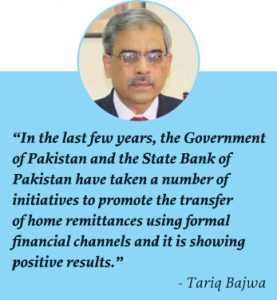 The regulatory response in Pakistan has been swift and proactive, with the State Bank of Pakistan (SBP) taking the initiative to be at the forefront of supporting and assisting the Fintech explosion, similar to how the UK and China did in their respective countries with sandboxes. The SBP has upgraded regulatory frameworks, and part of this upgrade includes removing barriers to entry, enabling and aiding Fintechs with payments, as well as promoting new technology and tech-based services/products. The regulatory framework has been fine-tuned and advanced to facilitate business to consumer (B2C) and e-commerce exports, facilitating the start-ups active in e-commerce spaces. This has helped to enhance the utilization of their platform and also support domestic exporters, especially SMEs, to reach out to new markets abroad. The SBP’s rules for Payment System Operators and Payment Service Providers enable, amongst other advantages, large value real-time fund transfers, agent-based branchless banking and inter-operable ATM networks with a low interchange fee.


The writer is a prominent member of Pakistan’s financial community, having served as the Founder-President of a commercial bank and Director of the State Bank of Pakistan. He currently serves on the Boards of some of Pakistan’s most respected corporate and philanthropic organisations and was awarded the Sitara-e-Imtiaz for his meritorious service.
Leave a Reply