

Region
A Matter of Responsibility
Systemic changes are necessary for devolution to be effective. The process enables
citizens to participate actively in their own development.

It is often argued that seven decades is a small period in the life of a nation as nation-building requires a long time for consistent development and continuity of policies. To progress in different fields, people need to be consistently exposed to sound policymaking. In the case of Pakistan, it would be fair to acknowledge that precious gains have been achieved during the last seven decades. However much has remained unfulfilled and unaccomplished. Some political scientists also assert that the argument against the paucity of time to achieve progress is a lame one as various nations have achieved progress in shorter time spans. Some nations achieved socio-political and economic progress within decades, whereas others took more than a century to do so. It turns out that various factors are at work when progress, development, and growth are studied. Institutional failure in policymaking and implementation is cited as the principal reason why Pakistan has failed to ride the development wave which helped South Korea, Malaysia, Singapore, Japan, China and Vietnam transform themselves into developed countries. Various factors have contributed to the inertia of Pakistan’s development. Some blame could be laid on constipated policy-making by state institutions which couldn’t predict the grave challenges the country faced and is still facing.
In the past years, several instances have exposed the fragility of the nation and the federating units. There have been language disputes, discord on sharing of water, disparity in sharing energy resources and in sharing federal receipts. Provincial discord has often reared its ugly head to threaten the federation. These issues have resulted largely due to unequal sharing of resources, greater representation of one province in the federation and in the key political institutions. It has often been argued that an overbearing Punjab with its largest population has created hegemony in the federation. It has usurped the rights of the smaller provinces, such as Khyber Pakhtunkwa (KP) and Balochistan. For example, issues of insurgency have added to the alienation of the Baloch people.
How has the federation come up with solutions to the grave problem of national integration in the past decades? The response of the federation has not been swift in nipping the evil of inter-provincial issues in the bud due to an overarching and over-strengthened federal government that was shy to accept the idea of provincial autonomy. For almost 65 years, the federal government has looked after keys affairs such as defence, revenue, health, education, and external affairs. Through the 18th Amendment in 2010, the concurrent list mentioned in the fourth schedule to the constitution which contained around 47 subjects on which both the provincial and federal government could legislate, was abolished. This paved the way for greater integration between the federating units as the intervention of the federal government was reduced, and the provinces could rely on their own muscles to run their affairs.
National integration has been given a boost to resolve the pressing issues of the smaller provinces. The Aghaz-e-Haqooq-e-Balochistan package was announced in November 2009 with an aim to removing the misgivings of the Baloch people, provide opportunities for education and employment to their youth and integrate them into mainstream economic activities. The package also incentivized political and administrative reforms in the province to remove all bottlenecks to governance. This included special development projects for different regions of the province.
How has the federation come up with solutions to the grave problem of national integration in the past decades?
The increased provincial share is often blamed for increasing the federal budget deficit, which is not based on facts. A study by the Punjab government shows that the enhanced provincial share from the tax resource has contributed just 0.8pc to 1pc of GDP to the federal deficit. The real reason for the deficit lies elsewhere. For starters, Islamabad has failed to raise the tax-to-GDP ratio from 10pc to 15pc during the five-year life of the seventh award. It also continues to spend a lot of money to maintain structures of the devolved ministries and functions because of political reasons and is unable to plug the massive hemorrhaging of resources by the SoEs. Devolution has done much to strengthen the federation. The centre should now focus on raising taxes, cutting its unnecessary expenditures and pulling out of devolved functions. It should look ahead and not attempt to reverse the progress made so far.
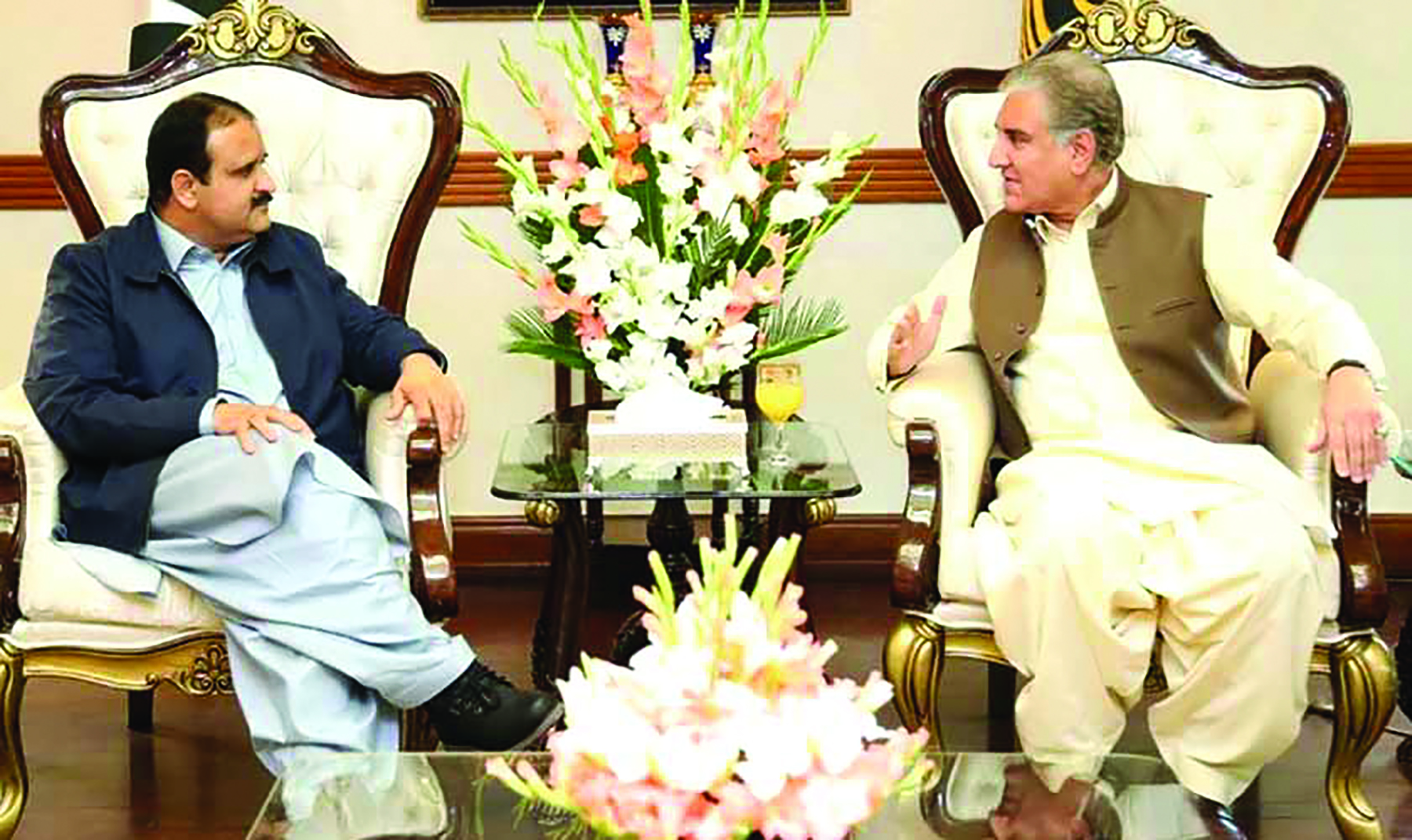
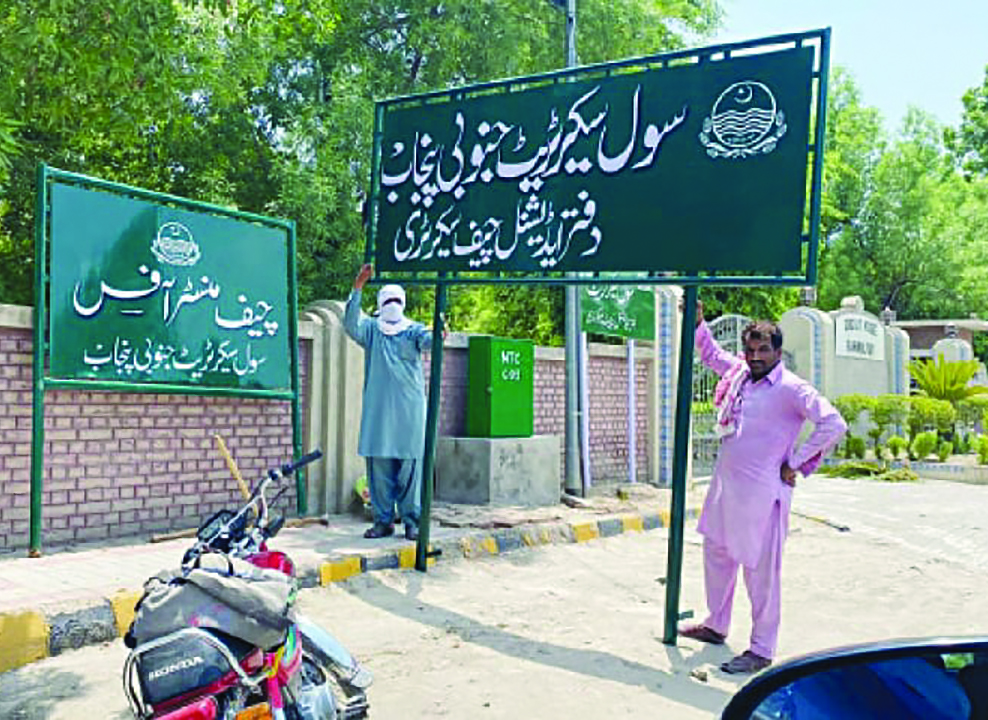
Recently, in a landmark decision in the administrative history of Punjab, the provincial government ordered the much-awaited postings of administrative secretaries in the South Punjab Secretariat that will function as an independent administrative setup, free of any control by the provincial secretariat in Lahore. The government has already posted an Additional Chief Secretary and an Additional Inspector General of Police to head the civil and police setup in Southern Punjab. The South Punjab Secretariat is housed in Bahawalpur while the police hierarchy will have offices in Multan.
To begin with, 15 administrative departments along with their respective secretaries will have their offices in the new secretariat. They include the departments of Finance, Home, Law, S&GAD, Board of Revenue, Irrigation, Communication and Works (C&W), Local Government & Community Development (LG&CD), Health, Education, HUD&PHE, Agriculture, P&D, Livestock & Dairy Development and Wildlife & Fisheries. The Finance Department has also created 77 new posts in different grades to run the new administrative setup. As per the break-up, they include one post in BS-21, 21 posts in BS-20, 21 posts in BS-19, and 34 posts in BS-18. Officers performing duties in the Southern Punjab secretariat will get an additional allowance equivalent to their one basic salary. The increased provincial share is often blamed for increasing the federal budget deficit, which is not based on facts. A study by the Punjab government shows that the enhanced provincial share from the tax resource has contributed just 0.8pc to 1pc of GDP to the federal deficit.
One view also is that devolution has proved little more than a cover for further centralized control over the lower levels of government. Despite the rhetoric from Islamabad of empowerment, local governments have only nominal powers. Devolution from the centre directly to the local levels is said to negate the concept of decentralization since Pakistan’s principal federal units, its four provinces, have been bypassed. ![]()
The writer is a legal practitioner and columnist. He tweets @legal_bias and can be reached at shahrukhmehboob4@gmail.com |
|
Cover Story
|
|
Special Editorial Feature
|
|
News Buzz
|
Update |


Leave a Reply