What if…
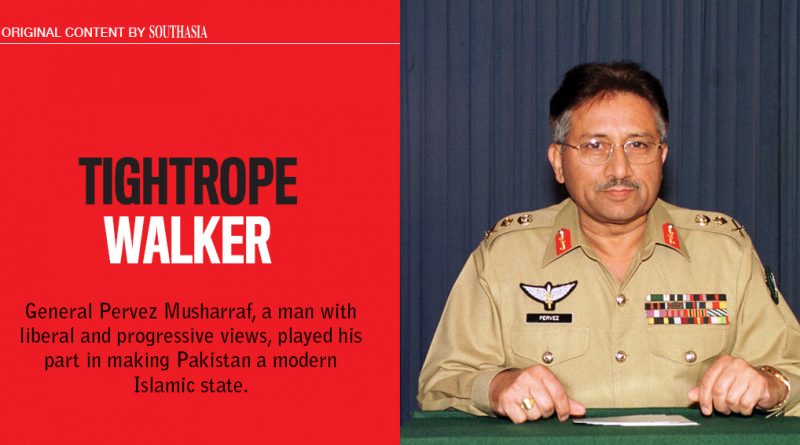
…Pervez Musharraf had quit office 6 years earlier than he did?
Read moreThe TTP has cleverly affiliated some of its objectives with the political goals of some Pakistani religious and ethnic-oriented political parties, particularly Baloch and Pashtun nationalists.
Read moreThe year 2023 will be a make or break moment for Pakistan. Some decisive measures are required by those who matter in terms of dealing with widespread frustration, pessimism and gloom about the present and future of the country.
Read moreIn a republic with weak institutional and regulatory control on checks and balances in state governance, the ‘One Percent Republic,’ mainly represents the fraternity of the upper crust.
Read moreHow can a country like Pakistan with such immense natural resources end up being a one-percent republic?
Read moreHow can you say that Pakistan’s elite will rescue the country from sovereign default, despite on-going economic slump together with the deteriorating living conditions today? To make it happen, how and from where could the elite arrange such a huge sum of 27 billion dollars?
Read moreSuccessive governments, including the present one, have made serious attempts at improving civil-military relations, but mostly on the basis of compromises and undermining the Constitution.
Read moreEven if the military withdraws or refrains from direct intervention in the political sphere, its vast resources and its past experience of political power are likely to make the military remain a political factor.
Read morePerhaps the answer is the introduction of a presidential form of government based on the American model with direct elections.
Read moreAt this crucial juncture when Pakistan needs political stability and single-mindedness at the top decision-making levels more than ever, there’s a need to demarcate the scope as well as limitations of civil-military relations without running the risk of unconstitutional intervention or institutional trespassing.
Read moreFor sound governance under a democratic system, should there be complete separation in Pakistan’s civil-military relations?
Read moreThe appointment of the next Pakistan Army chief will be made in the context of existing civil-military relations and institutional traditions.
Read moreInequality in Pakistan comes in two forms: industrial assets and land. Of late the latter has become an important contributor to the incomes of the rich.
Read moreThe World Bank Group’s engagement in India is guided by the Country Partnership Framework (CPF), developed in collaboration with the Government of India,
Read moreRegional cooperation has the potential to produce significant gains across all countries of South Asia.
Read morePakistan is the most urbanized country in South Asia. Its magacity Karachi can be transformed into a livable and competitive urban centre with smart policies and tools.
Read moreThe need for new leaders and new political parties is a reality.
Read moreThe burden of creating national unity falls more heavily on the Punjab.
Read moreThe ingress of the Pakistan Tehreek-e-Insaf into the Punjab’s heartland has sent shivers down the spines of many strong-rooted political parties.
Read moreThere is too much focus on saving the queen and losing sight of the king.
Read more