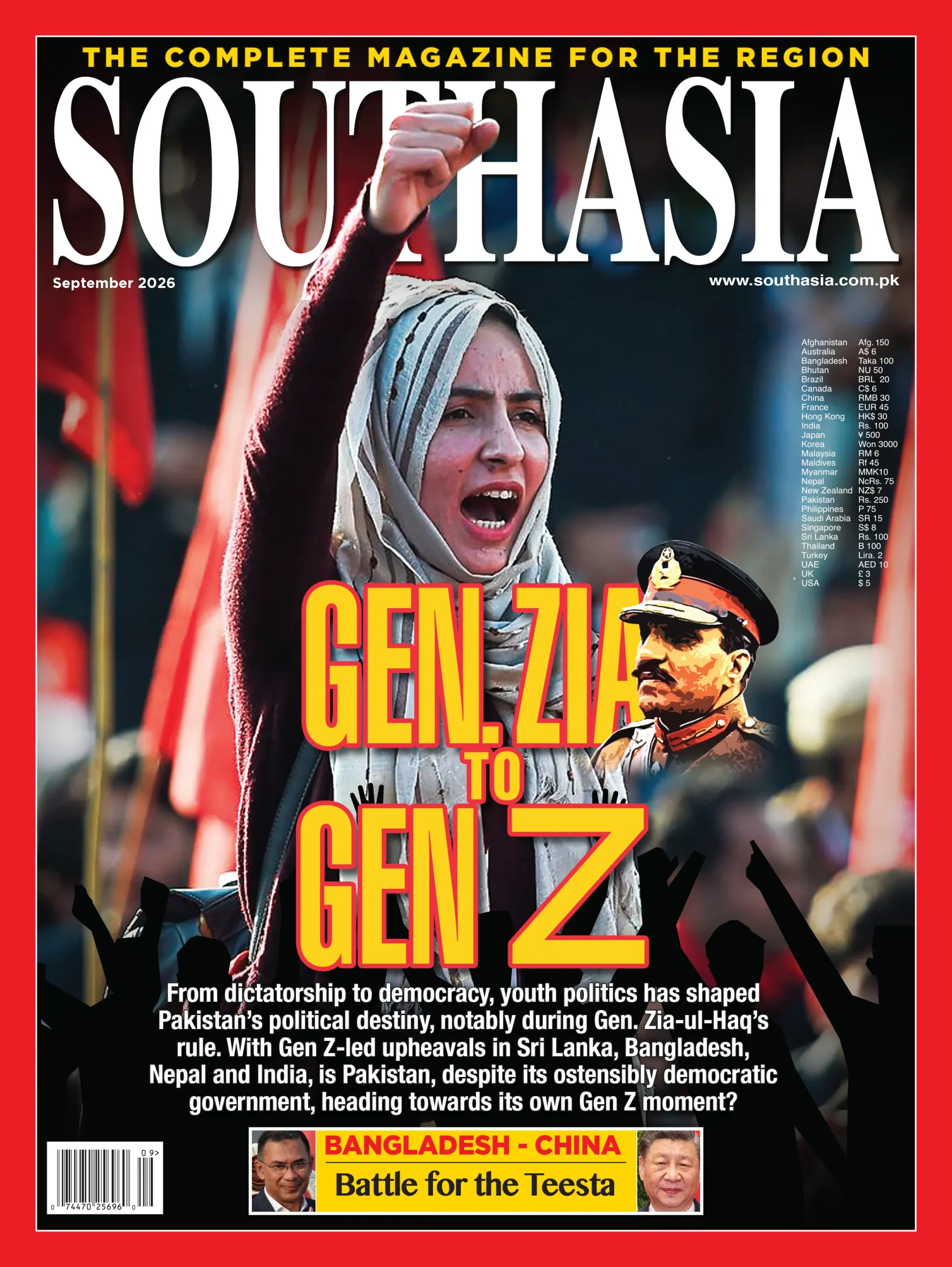




The collapse of Sheikh Hasina’s government in August 2024 marked far more than the end of a political era in Bangladesh. It triggered one of the most significant geopolitical realignments in South Asia, which quickly evolved into a strategic contest involving India, China, the United States, Japan, the European Union and the Gulf states. Almost two years later, Bangladesh finds itself at the heart of an increasingly competitive Indo-Pacific, where its geography has become both its greatest strategic asset and its greatest vulnerability.
For more than a decade, Hasina’s Awami League government provided political continuity and a highly predictable foreign policy. Guided by Sheikh Mujibur Rahman’s principle of “Friendship to all, malice towards none,” Dhaka maintained relations with all major powers while simultaneously deepening ties with India. Security cooperation expanded, cross-border insurgencies declined, connectivity projects flourished, and bilateral trade grew steadily. For New Delhi, Bangladesh became a cornerstone of its “Neighborhood First” policy, and a vital gateway to India’s northeastern states.
But this partnership generated domestic criticism. Opposition parties and many younger Bangladeshis argued that the Awami League leaned too heavily towards India while longstanding disputes remained unresolved.
Hasina’s decision to seek refuge in India after her ouster reinforced public perception that Dhaka had become overly dependent on New Delhi. The interim administration led by Nobel Peace Prize laureate Muhammad Yunus sought to reset that narrative, signalling that Bangladesh’s foreign policy would no longer revolve around any single external partner.
This recalibration has unfolded amid intensifying geopolitical competition. With a population of nearly 180 million, a growing manufacturing sector and a strategic location on the Bay of Bengal, Bangladesh has emerged as one of the Indo-Pacific’s most important middle powers. Today, virtually every major power views the country as an indispensable strategic partner rather than merely a development recipient.
China has been particularly quick to consolidate its influence. Already Bangladesh’s largest trading partner and a leading source of infrastructure finance, Beijing has strengthened engagement not only with the BNP government but also with opposition parties, business leaders and civil society. By cultivating relationships across the political spectrum, China appears intent on safeguarding its interests regardless of future political upheavals.
Recent Chinese commitments in manufacturing, logistics and renewable energy reflect Beijing’s long-term economic ambitions. Defense ties are equally significant. China remains Bangladesh’s principal supplier of military equipment, providing naval vessels, aircraft, armored vehicles, missile systems and air-defense platforms. This partnership is likely to endure.
On the other hand, the United States has also adjusted its approach. During U.S. President Joe Biden’s administration, bilateral relations were frequently strained by disagreements over democratic governance, electoral credibility and human rights, including sanctions on members of Bangladesh’s Rapid Action Battalion. But under the Trump administration, Washington has placed greater emphasis on strategic competition with China, maritime security and resilient Indo-Pacific supply chains.
Consequently, Bangladesh’s strategic position on the Bay of Bengal has gained renewed importance in American thinking. Defense cooperation has expanded through joint military exercises, coast guard collaboration, maritime domain awareness and disaster-response programs. At the same time, the United States remains one of Bangladesh’s largest export markets, particularly for ready-made garments, while American firms increasingly view the country as an attractive manufacturing alternative as global supply chains diversify beyond China.
The contrast between Washington and Beijing remains evident. China generally separates economic cooperation from domestic political concerns, whereas the United States continues to emphasize governance, transparency, labor rights and institutional reform. Bangladesh’s challenge is to preserve access to Western markets and technology while benefiting from Chinese investment without becoming overly dependent on either.


The writer, based in Karachi, is a freelance contributor and investment banker. He can be reached at syedatifshamim@hotmail.com.
Leave a Reply