For Pakistan, sustaining cohesion throughout the various stages of nuclear acquisition in order to achieve nuclear capability represents a prudent decision aimed at safeguarding the nation in anticipation of a potential global crisis, which is now imminent.
By Kashaf Imran | March 2026
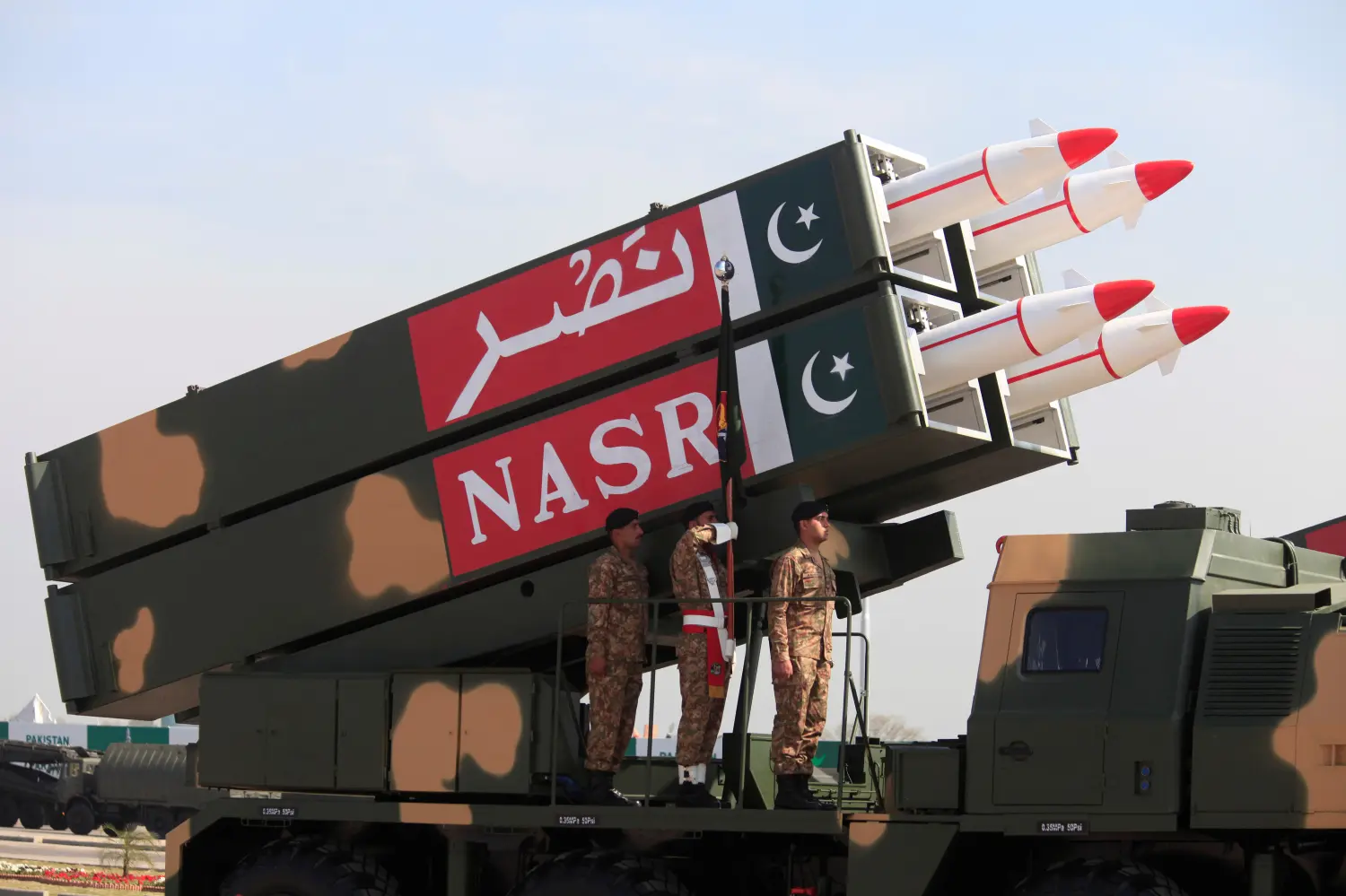
Pakistan's protracted journey towards nuclear security constitutes an extensive and continuous process, characterized by various stages dedicated to the development of a solitary atomic weapon. As Pakistan’s political history depicts, there has been a divergence of interest among leaders, both under military and civil rule, regarding the acquisition of nuclear weapons. However, protecting national interest and securing the nation was a point of convergence regarding acquiring the nukes. Today, when the world is on the verge of an apocalypse under the US-Zionist hegemon, the decision to acquire nukes proved to be foresighted and in favour of the national security of Pakistan. Pertinently, Tel Aviv and New Delhi's strong ties add to the threat for Pakistan, but the acquisition of nukes ensures stability.
Field Marshal Ayub Khan, Pakistan's second president from 1958 to 1969, showed little interest in the nuclear weapon programme but wasn't oblivious to India. Kamal Matinuddin, Pakistan’s former diplomat and military historian, cites words of Ashok Kapur, i.e., Ayub Khan, reportedly said that “we will buy a bomb off the shelf if India goes nuclear”. The statement reflects that threat perception regarding India and acquiring nukes was central to sustaining security.
The twist in time occurred when Z.A. Bhutto came into power and altered the course of Pakistan's history, rightfully earning him the title of the architect of Pakistan's nuclear programme. Bhutto's populism, strategic exaggeration, and knack for mixing facts with fiction played the role of devil's advocate in favour of Pakistan's ambition of acquiring nukes with the aim to balance out its concentric enemy, India.
With the passage of time, Bhutto's confidence started to skyrocket, and he began to openly talk about the need for Pakistan to acquire nuclear weapons. It was in the year 1964 when Bhutto realized it was the need of the hour to take action beyond rhetoric, as India was already reprocessing spent fuel from New Delhi's power reactors for military use. The war of 1965 reinforced Bhutto’s intention, as the outbreak of war reflected the high time for substantial action and concrete actions for the security of Pakistan.
From then on, Bhutto began to consider nuclear deterrence for the sake of preventing India from crossing the international frontier. He continued to work on his aspirations to acquire nukes by igniting the emotions of his people through his words that say “for Pakistan the nuclear threat was real and immediate. The 1974 test of peaceful nuclear explosion by India increased Bhutto’s determination for the acquisition of nukes, and he came up with his famous statement, “We (Pakistan) will eat grass, even go hungry, but we will get one of our own (atom bomb). We have no other choice!” Bhutto brought Dr. Abdul Qadeer Khan into the program in 1975, who introduced centrifuge-based uranium enrichment. This parallel track was crucial since it did not depend on external sources.
The aspirations of Bhutto were forwarded by Gen. Zia ul Haq, who, like his predecessor, also encouraged AQ Khan and provided him with all the assistance. However, the point of difference between the approaches was that Bhutto’s approach was a mix of nationalist populism and strategic exaggeration, while Zia’s approach was in lines parallel to policy of ambiguity.
Zia was determined to lead Pakistan in the acquisition of nukes to offset the superiority in conventional weapons possessed by New Delhi. For this ambition, Zia remained steadfast. The Soviet Afghan war was a blessing in disguise for Islamabad, as the United States needed Pakistan’s support; hence, Washington DC turned a blind eye to Pakistan’s aspirations to acquire nukes, as the USA’s entire focus was to curb the threat of Soviet invasion, giving Pakistan room for its nuclear programme.
Things changed when the Soviet Afghan war came to an end, and the importance of Pakistan faded away. The infamous Pakistan-specific Pressler Amendment was invoked, claiming that the USA was duty-bound to certify each year that Pakistan doesn't possess a nuclear device for the next phase of the assistance package. However, Pakistan had already crossed the threshold in 1987, having already reached a significant milestone in its nuclear program through the development of nuclear weapons capability, even though it had not yet conducted a nuclear test.
Unlike her father, Z.A. Bhutto, Benazir Bhutto was not in favour of Pakistan’s nuclear weapons programme, and she pledged her opposition. However, in her second term in 1993, there was a shift in her stance on the nuclear programme. She supported the programme and assertively claimed that Pakistan’s nuclear programme was peaceful but also had security dimensions. In 1993, U.S.-Pakistan relations remained complex, with Washington pressing Pakistan to sign the Comprehensive Nuclear-Test-Ban Treaty (CTBT) and refrain from further nuclear development. However, Pakistan refused to give up its nuclear option, primarily due to security concerns related to India. Despite international pressure, Benazir Bhutto's government did not halt Pakistan's nuclear ambitions.
Nawaz Sharif continued the nuclear strategy initiated by Z.A. Bhutto and maintained by subsequent governments, emphasizing the importance of nuclear deterrence in the face of India’s growing nuclear capabilities. His second term in 1997 marked the most significant phase in the development of Pakistan’s nuclear programme. The most significant event leading up to Pakistan’s nuclear tests came when India conducted its second round of nuclear tests in May 1998 (Operation Shakti). India tested five nuclear devices on May 11, 1998, which effectively ended the strategic ambiguity regarding India’s nuclear weapons status. In response to India’s tests, Pakistan decided to carry out its own nuclear tests.
The assassination of Ayatollah Khamenei made Pakistan the next primary target. Pakistan has undergone a severe crisis over the last 11 months. Firstly, the May 2025 confrontation, secondly October 2025 flashpoint with the Taliban, which then escalated into a full-scale open war in February 2026, and lastly, Pakistan’s geostrategic sensitivity regarding the Middle East crisis. Moreover, India and Israel's strong partnership further adds to a severe threat to Pakistan. With all these crises occurring simultaneously, the survival of any nation would be under the radar. However, Pakistan’s survival in this acrimonious security architecture reflects its resilience and deterrence. The civil-military efforts for acquiring nukes resulted in the current standing to maintain deterrence while sustaining peace and stability in South Asia.
Based in Islamabad, the author is pursuing an MS at NUST and is associated with the Institute of Regional Studies (IRS). Her areas of expertise include foreign policy analysis, security studies, and counterterrorism. She can be contacted via email at kashafimran59@gmail.com.





Leave a Reply