



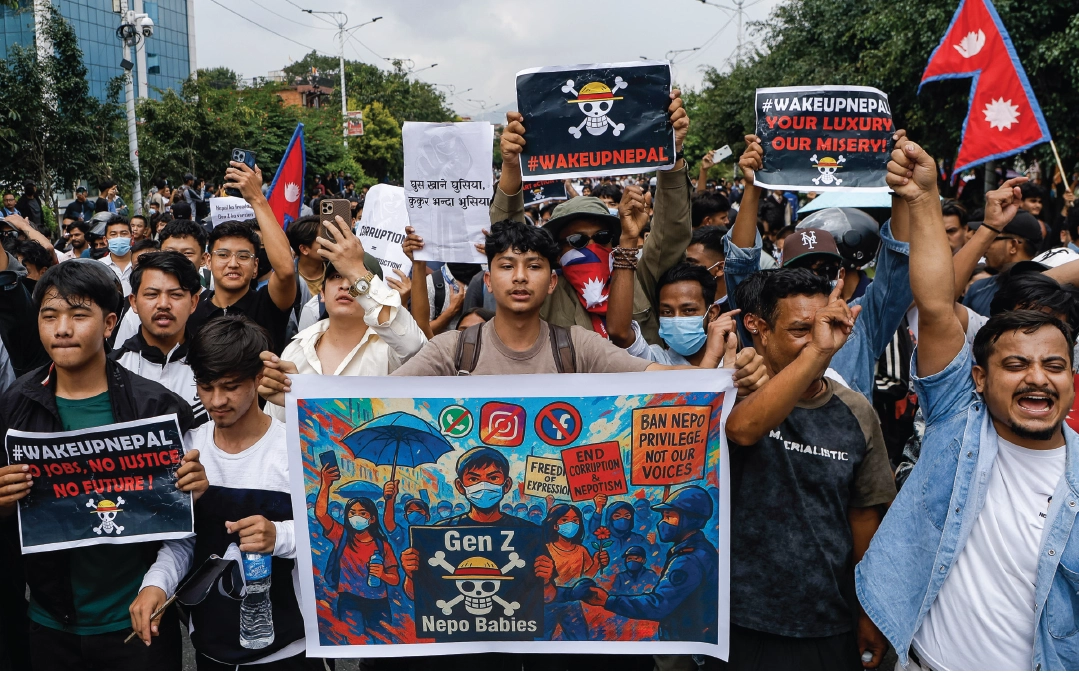
Over the last three and a half months, the political developments in Nepal have revolved around the Gen-Z movement that set ablaze state and private properties worth billions and toppled the government within a few hours on September 9, 2025. The Gen-Z protest did not have a discernible face; hence, the young protesters selected septuagenarian former Chief Justice Sushila Karki to represent the Gen-Z and advocate for their demands. Ultimately, on September 12, Sushila Karki became the first woman to serve as the executive head of Nepal.
The appointment of Sushila Karki as Prime Minister blatantly breached the Constitution that strictly forbids a sitting or retired Chief Justice or Supreme Court judge to assume a political office, including the position of minister or prime minister. Despite this fact, Sushila Karki’s extra-constitutional appointment as Prime Minister – a soft coup de-état - was conditionally accepted by the public due to her nearly spotless record as chief justice in the past. She was acknowledged by the people as the ambassador of good governance who would implement systemic reforms and streamline Nepal’s persistent political chaos.
Unfortunately, the expectations of the people were short-lived as Prime Minister Karki, on her first address to the nation, clearly conveyed that her sole responsibility is to hold elections scheduled for March 5, 2026, and hand over the power to the next government. She hinted that other issues, such as the investigation of persistent state-sponsored corruption and atrocities committed by the state against the Gen-Z protesters, are not her priorities. However, some high-level corruption cases that were veiled by the past governments are being reopened of late. But the pace of the government is not sufficient enough to match the expectations of the people.
More than half the stipulated term of the government has already elapsed. Unfortunately, the first three months of the government were not encouraging. The government formed on a banner of good governance is marred by several controversies, mirroring the failures of its predecessors. The Attorney General appointed by Prime Minister Karki is alleged to have withheld the judicial prosecution against the alleged illegal activities of a fertility clinic in which she holds shares, constituting a clear conflict of interest. In addition, the Prime Minister herself was criticized by the public for appointing her close aide and his family members to the Prime Minister’s Secretariat. Furthermore, the media have raised allegations against some of the ministers, accusing them of financial misconduct that harmed the country.
Nepal has been plagued by bad governance, state-sponsored corruption, and entrenched oligarchy for many decades. The current government formed on the background of the violent Gen-Z movement was expected to break this shackle. Seventy-six young protesters were killed, and state and private properties worth billions were set ablaze within two days during the Gen-Z movement. Hence, it should have been the sole responsibility of the government to contemplate the essence of the Gen-Z movement. The mere continuance of the previous governments was not the mandate of the current government.


Based in Germany, the writer is a senior scientist and independent opinion maker. He regularly contributes political commentaries and analyses on current affairs to leading English dailies published from Nepal. He can be reached at pushpa.joshi@gmail.com
Leave a Reply