



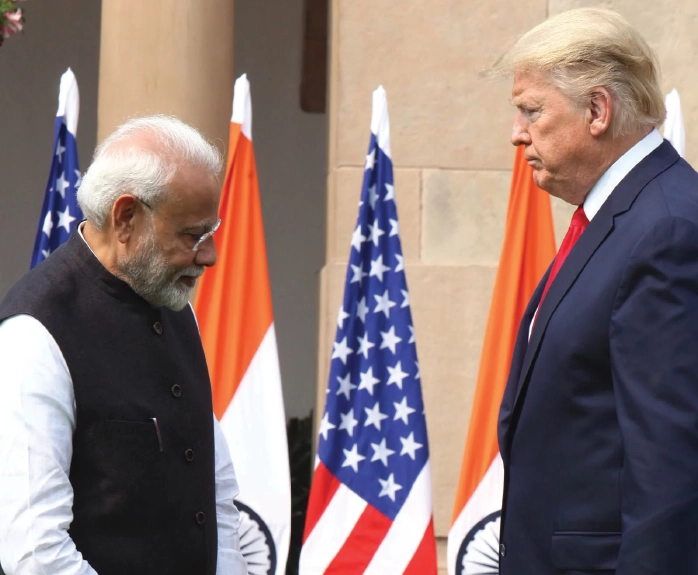
The July 9 deadline set by the U.S. President to conclude trade talks with India has passed, with both sides struggling to finalize even a mini trade package. Both governments understand that a successful deal could mitigate risks to their growing strategic partnership. As two key global economic players, a trade agreement between them would have far-reaching implications—not only for bilateral ties but also for the global trading system. Other countries and regions are closely observing their negotiations.
India, for its part, must navigate a complex set of sensitive issues: agricultural subsidies, the import of GMO products, intellectual property rights, digital trade regulations, and tariffs on high-tech goods. Conceding to President Trump’s tariff demands or allowing genetically modified agricultural imports could seriously damage Prime Minister Modi’s domestic image as a strong nationalist leader. Still, a deal could unlock opportunities for high-end manufacturing, access to cutting-edge American technology, and investment in renewable energy and infrastructure—all of which align with India’s development agenda. It may even pave the way for the long-discussed U.S.–India Free Trade Agreement, which has been under intermittent negotiation since 2017.
However, the current negotiations are clouded by tough choices and President Trump’s shifting positions. India has arguably over-leveraged its 1.6 billion-strong market while maintaining informal trade barriers. This time, Washington seems unwilling to tolerate high tariffs and non-transparent practices on its exports.
From the American perspective, a trade deal would help diversify supply chains away from China and boost U.S. exports in defense, energy, technology, and services. For President Trump, it would reinforce his approach of using economic leverage and strategic alliances to assert “America First” and counter China’s influence. Yet reaching a mutually beneficial agreement has historically been difficult due to India’s cautious stance on trade liberalization and its domestic sensitivities, especially in agriculture and digital sovereignty. Modi’s emphasis on self-reliance sometimes conflicts with foreign demands for greater market access and regulatory flexibility.
Still, growing convergence in strategic areas—such as defense, semiconductors, and clean energy—has created strong incentives for cooperation. Any agreement is likely to be more modest than a full FTA, focusing instead on targeted sectoral reforms and reducing trade friction in key areas.
Politically, whether it is a mini or comprehensive deal, it would be a win for both governments. It would help draw out the negative from President Trump’s recent anti-India remarks. For Trump, sealing a deal would validate his deal-making prowess. For India, any agreement would reinforce its strategic partnership with the U.S. and its position as a global manufacturing and tech hub. Yet the true value of the agreement will depend on implementation, robust dispute resolution mechanisms, and sustained diplomatic engagement.
If a mini trade package is agreed upon, a more comprehensive deal could be finalized in the autumn, when Trump visits India to attend the Quad Summit this year. Trade agreements are never static documents—they demand continuous dialogue and recalibration. A failure to deliver on expectations could reignite protectionist sentiment and trigger political backlash, especially in sensitive domestic constituencies.
Sources familiar with the negotiations describe the mini trade deal as a limited arrangement focused on a few high-priority sectors where alignment is possible without drastically altering existing economic frameworks. Recent strategic realignments—particularly in defense, semiconductors, and clean energy—have revived momentum for a mutually beneficial agreement.


The writer, based in Rawalpindi, is a former ambassador and can be contacted at mian.sana@gmail.com.
Leave a Reply