



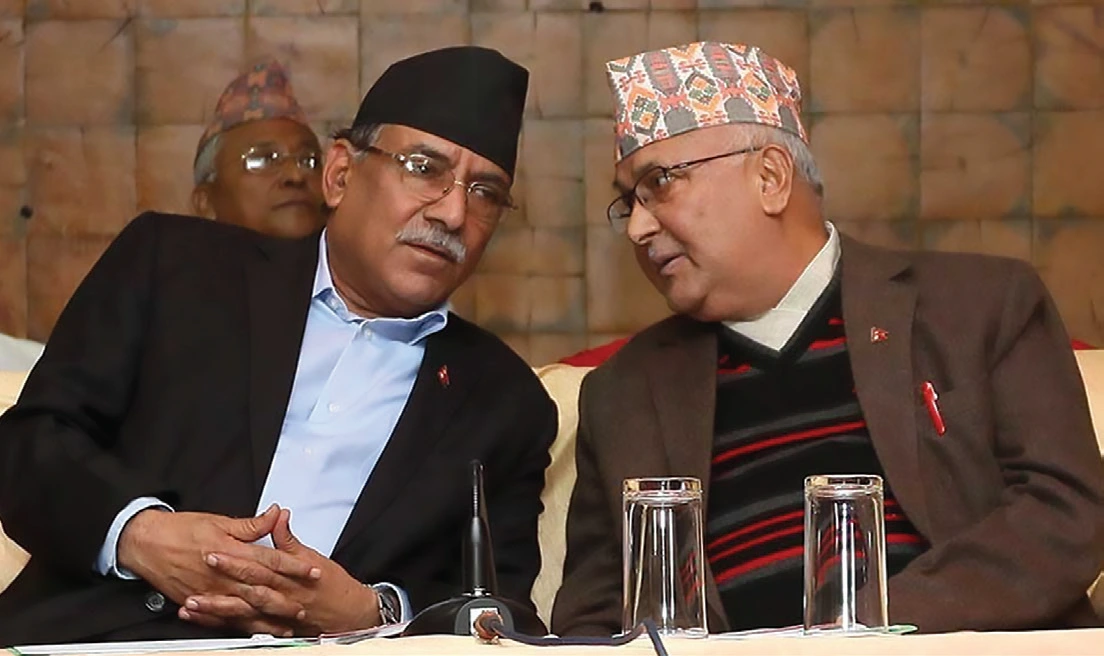
The recent reunion of the Maoist Center and the Communist Party of Nepal (Unified Marxist Leninist: CPN-UML) in the Left Alliance government of Nepal is a significant testament to the resilience of the Nepalese people in the face of the country’s political and socio-economic issues.
After navigating through political uncertainty and coalition dynamics, the two leftist parties have resolved their differences and come together to tackle Nepal’s challenges. This development underscores the need for a comprehensive analysis of Nepal’s political history, the present socio-political landscape, and the underlying motivations that have prompted the two parties to reunite at this particular moment. Nepal has not been immune to significant political changes in its history, including removing the monarchy, resolving a prolonged civil war, and the establishment of a federal democratic republic. The Maoist insurgency began in 1996 and was a testament to the country’s deep-rooted political issues. The Comprehensive Peace Agreement 2006 marked a significant milestone but did not end Nepal’s challenges. The country’s first constituent assembly elections in 2008, the formation of a coalition government led by the Maoist Center, and the ongoing disagreements over drafting a new constitution all underscore the complex nature of Nepal’s political journey.
A major political shift occurred in 2018 when the Left collaboration administration was formed due to the Maoist Center’s collaboration with the CPN-UML. Unfortunately, the Maoists’ desire for a new political structure led them to dissolve connections with the Nepali Congress. Hence, this coalition lasted only a short time. Political unpredictability, economic difficulties, and societal complaints combine to make Nepal’s present scenario unique. There have been several obstacles in the country’s federalist transition, which began with the new constitution promulgated in 2015. Disputes about representation, resource distribution, and province borders are examples of these difficulties.
The COVID-19 epidemic has exacerbated Nepal’s preexisting socio-economic disparities by highlighting gaps in healthcare coverage and heightening poverty and unemployment. Political parties are confronted with the daunting task of tackling pressing matters like economic growth, social inclusion, and governance change in the face of these obstacles. Given these difficulties, the Maoist Center and the CPN-UML have reformed the Left Alliance administration to address the nation’s political, economic, and social problems. This move aims to achieve political stability and socio-economic development in Nepal. The frequent changes in administration and coalition dynamics in Nepal have been cited as causes of the country’s political instability and issues with governance. For the administration to confront these difficulties effectively, the Maoist Center and CPN-UML have reunited and reestablished their partnership. This will offer stability and coherence to the government. The two parties aim to increase political clout, boost their reputation, and gain substantial control over government policy and decision-making processes.
 The Maoist Center and the CPN-UML have a strong foundation in leftist ideology. Promoting economic and social equality and amplifying the voices of marginalized communities are at the heart of their mission. By aligning their ideologies, the two parties aim to secure the support of their voter bases and establish a shared vision for Nepal’s development and governance. External factors, such as geopolitical considerations and global influence, may have played a role in the reconciliation between the Maoist Center and CPN-UML as significant players in the region, China and India advocate for a collaboration between the two groups due to their concern for Nepal’s democracy and economy.


The writer is a freelance contributor. She can be reached at gulnaznawaz1551@gmail.com
Leave a Reply