



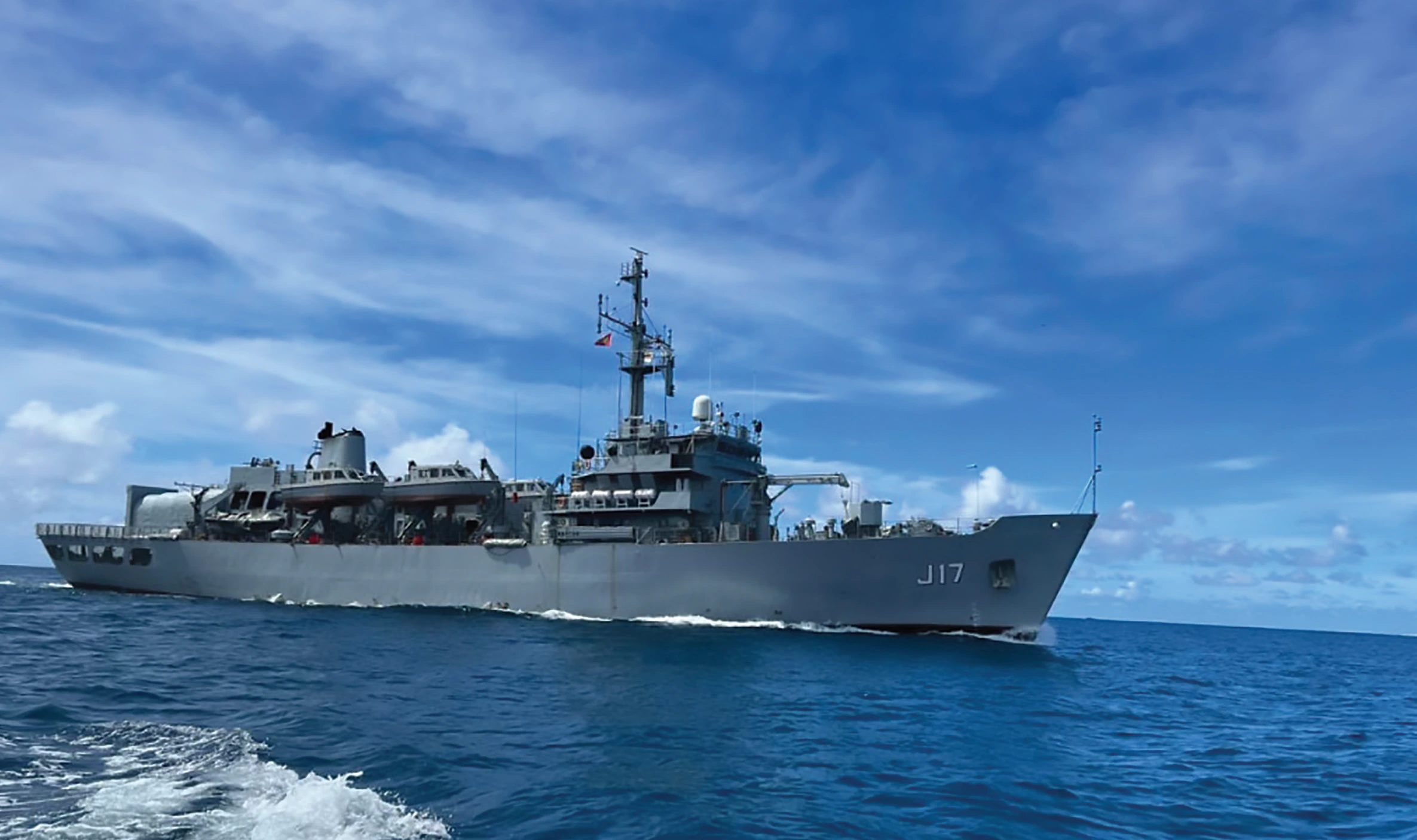
In an unforeseen turn of events, the Maldivian government, driven by President Mohamed Muizzu, has decided not to re-establish a critical hydrographic overview concurrence with India. This choice has started inescapable interest, prompting questions about the intricacies behind this surprising manoeuvre and the potential consequences for the mutual relationship between the two countries.
In the past, the hydrographic survey agreement, which is the foundation of maritime cooperation between India and the Maldives, has been helpful in mapping and studying the ocean floor. This cooperative effort planned to work with routes that guarantee safe sea courses and back financial exercises like delivery and fishing. Over the long run, this organization was vital in fortifying two-sided ties, encouraging trust, and advancing collaboration in the Indian Ocean region.
Reports proposing that natural worries were at the core of the choice acquaint another aspect of the conflict, highlighting the sensitive harmony between the financial turn of events and environmental protection. In this specific circumstance, the end of the hydrographic overview understanding addresses a take-off from laid-out standards of participation and shared interest in sea exercises, bringing up issues about the inspirations and contemplations that prompted this surprising move.
The stressed relations over the hydrographic study understanding additionally convey international ramifications, given the essential interests of the two countries in the Indian Ocean. Nonetheless, seeing this choice from a perspective that marginally leans towards the Maldives permits us to comprehend the intricacies in question and the likely legitimization of focusing on ecological worries.
By choosing not to renew the agreement, the Maldives addresses the challenge of balancing economic development with environmental preservation, acknowledging the intricate considerations nations face in this delicate equilibrium. Further, this could be seen as a strategic move from a geopolitical perspective. India and the Maldives have critical vital interests in the Indian Ocean, a locale of crucial significance because of its international and financial importance. The Indian Ocean fills in as a basic sea course for exchange, maritime exercises, and global impact.
Geopolitically, such a move could flag changes in how the two countries see and draw in with one another in the more extensive setting of territorial power elements. While this choice presents a component of vulnerability, understanding it according to the Maldives’ point of view permits us to recognize the country’s all in all correct to rethink its needs and settle on choices lined up with its essential advantages.
International strains frequently include offsetting public interests with territorial steadiness. The end of arrangements like the hydrographic study one requires a sensitive equilibrium to avoid adversely influencing more extensive international connections in the Indian Ocean. Countries have the right to prioritize environmental issues and deal with geopolitical complexities in a way that serves their interests. While the end might have suggestions for provincial soundness, recognizing the Maldives’ more right than wrong to go with choices to its most significant advantage is an essential part of political comprehension.
Following the announcement of the termination, there has been a wide range of public discourse in both India and the Maldives, reflecting various perspectives on the more significant implications. While some might see it as a brief mishap, others express more critical worries about the expected effect on strategic relations, local security, and the general organization among India and the Maldives.


The author is an education professional and can be reached at tania.74912@gmail.com
Leave a Reply