


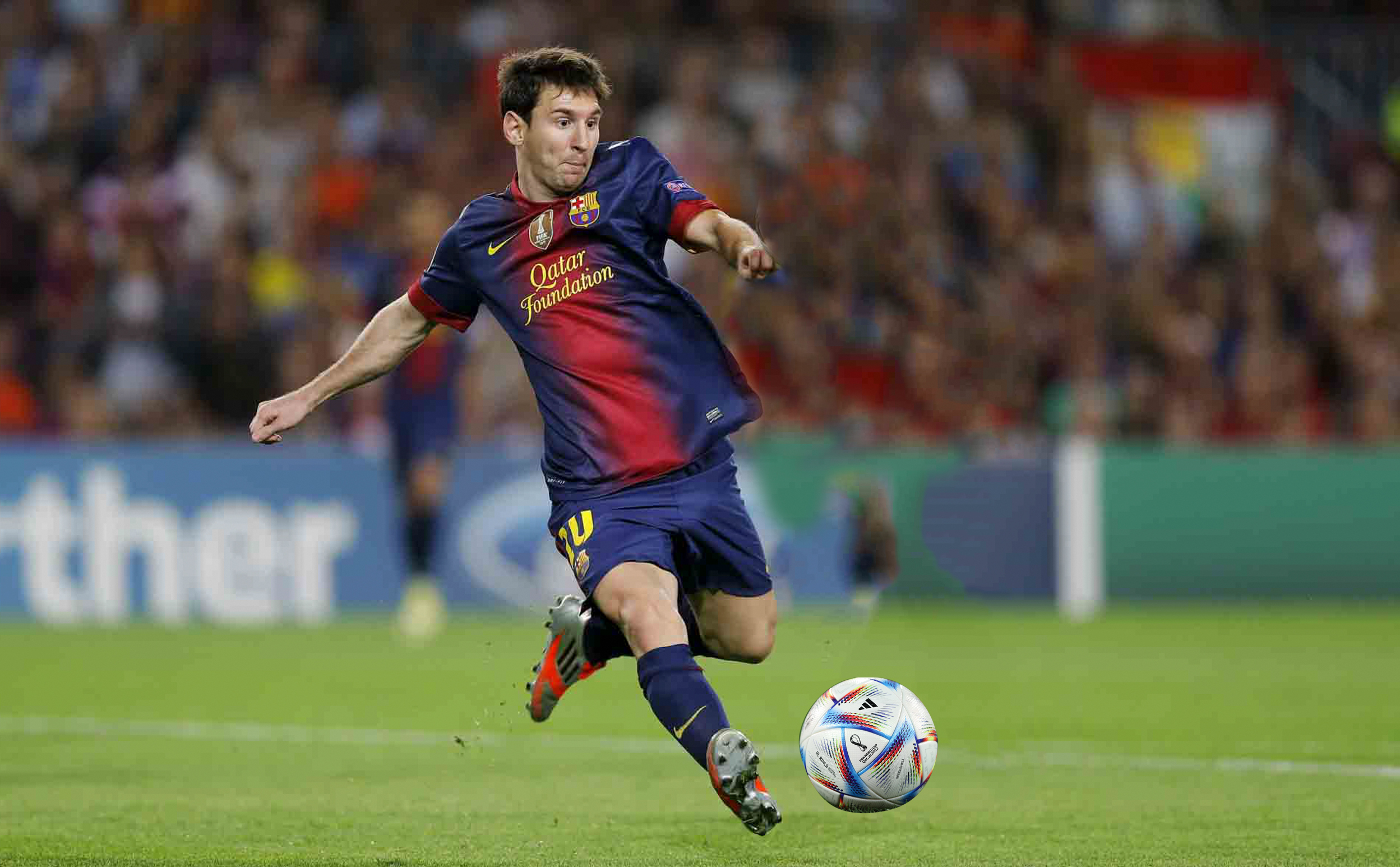
Pakistan is supplying the soccer balls to be used in the forthcoming FIFA World Cup, a mega event which this time will be held in the winter instead of the summer due to the hot weather in Doha, the Qatari capital.
Pakistan has once again been chosen to supply soccer balls for the World Cup, which is an honour for the country and a testimony to the quality of these footballs. Workers at the factory in Sialkot have worked extra hours to ensure on-time delivery of the footballs.
Sialkot is famous for producing the finest quality sports goods and has been supplying footballs for mega-events for a long time.
When and how Sialkot got famous for the soccer balls is itself very interesting. The history of soccer ball production is traced back to the British era. The Britons who were very fond of football used to order their stock from Britain and at times they would get impatient with the waiting time for shipment of footballs to arrive by sea. It is said that in 1886 a British sergeant asked a Sialkoti saddle maker to repair his punctured ball and impressed with his skills he placed an order with him for a batch of footballs. Since then the city is producing a major share of footballs for the game.
Production of high-quality footballs is not Sialkot’s only forte. It also exports cricket bats, hockey sticks, cricket and hockey balls and other accessories like kits, shoes, and gloves.
Named “Al-Rihla,” an Arabic for “The Journey,” the official match ball for the 2022 World Cup was unveiled in March by Adidas in Doha.
Forward Sports, which also makes footballs for the German Bundesliga, the French league, and the Champions League, was also the official football provider of the 2014 and 2018 World Cups in Brazil and Russia.
The soccer ball to be used in the forthcoming tournament is technically termed “thermo bonded,” which was first introduced in the 2014 World Cup.
Before that, Pakistan had supplied hand-stitched soccer balls for most of the World Cups from the 1990s to 2010.
Other types of soccer balls produced in Sialkot are “glued” and “hand-stitched.”
Thermo bonded balls are made by attaching the panels through heat — the latest technology adopted by Adidas and transferred to Forward Sports in 2013. There are no stitches.
Football is a popular sport in otherwise cricket-obsessed Pakistan, particularly in rural areas. Yet the national team is ranked 200th in the FIFA world rankings.
Lacking glamour and government funding while having to deal with intra-federation schisms and land-grabbing petty mafia who have been sweeping up sports grounds, football in Pakistan has gradually declined from its rank as fourth on the Asian continent in the 1960s.
Straddling the edge of the Arabian Sea, Lyari, a small shantytown of Karachi, is known as “mini Brazil” among soccer fans for the talented football players that this run-down locality has produced over the decades.
The area has over the last 74 years produced a large number of players who have won many titles for the country, especially between the 1950s and 1960s, known as the golden era of Pakistan’s national football team.
Overall, Pakistan has lost a significant share of the global production of footballs. To keep up with the industry, Pakistani producers have to focus on the opportunities of the market. Pakistan’s main competitor is China. However, China’s labour costs have been increasing, which may constitute a comparative advantage for Pakistan. Also, Pakistan produces higher quality hand-stitched balls while China produces machine-stitched balls. Pakistan has to promote the quality of its balls and differentiate the product from the lower quality machine stitched balls. Other smaller exporters as Vietnam and Indonesia and they have also increased their share of the market. Their labour costs are also among the lowest in Asia.
Pakistan exports its footballs to North America and Europe (Germany and Belgium), but the demand has been rising in other countries. These countries are primarily in Latin America with Brazil as the biggest one.
Asia also has an interesting rising market. Two countries have substantial levels of imports: Japan and Korea. These countries have seen an increase in their net imports of inflatable balls and are a new opportunity for Pakistan’s exports.
In Pakistan, the sports goods industry has been reluctant to adopt the new technology and to provide training to their workers. The industry needs to focus more on the technological changes while keeping the high quality of its products.
Leave a Reply