Art has always played an important role in enhancing Pakistani culture.
ByMAHNOOR INAYAT | November 2022
The heritage and history of Pakistani art is extensive. Painting, sculpture, calligraphy, pottery, and textile arts like a woven silk are just a few of the many different creative forms that make up this culture. Geographically, it includes the area that is now Pakistan and is considered to be part of the Indian subcontinent. Islamic tradition’s penchant for geometric forms has long had an impact on Pakistan’s visual arts. Many times, Westerners perceive these ancient designs as “contemporary.” To support Pakistan’s emergence as a modern nation, artists produced artistic works. Although it was a happy event, upcoming challenges made it less so.
It is difficult to exaggerate how important the arts are to human culture. Art serves as a vehicle to educate people about societal issues and taboos rather than just being a means of expression. In other words, even basic knowledge of art can enable one to see the nuances of hidden meanings in artistic creations. Be it music, dance, drama, or painting, Pakistan has sadly drifted away from art and culture through the years. A large portion of that occurred as civilization devolved to a hardly recognizable state. Younger people in a country suffer the most from any such regression because their first exposure to the arts should ideally occur in school. We have witnessed the risky framing of the arts, especially the performing arts: as “Western,” “anti-religion,” and even “anti-state.” There is strong evidence from studies carried out all over the world that cultural activities such as music, painting, and theatre are essential in opposing fascist ideologies. Since the days of Gen. Ziaul Haq, who restricted creative endeavours unless they fitted in his limited conception of the world, Pakistan has had more than its fair share of violence, extremism, and retrograde thought and behaviour.
Pakistan suffers from the consequences of a lack of art education all too clearly. Few artists exist here, and most of them fail to impress. TV plays are one of the extremely few local artistic forms. In these stories, everything must be stated directly in conversation to keep the audience’s attention because the majority of people cannot grasp nuance. The outcome is a dialogue that is excessively literal in every action. Calligraphy, truck art, and kite-making are some of the other locally prevalent art forms. Yet, these are nothing compared to the skills, ability, complexness, and glamour of Chinese kites (which I frequently reveal lacking in depth). However, one can think of relatively few examples beyond that. Education in the arts goes beyond preparing upcoming artists and merely assisting citizens in having a better awareness of the role of the arts in society. The technical aspects of drawing, painting, etching, and other art forms could be introduced in middle schools so that by the time students reach their O and A levels, they are better able to combine the technical and creative elements of the study of art and, in general and be better prepared to create and evaluate their work.
Today, the hubs of artistic activity in many developing countries are art schools. The two main institutions in Pakistan that question notions of what qualifies as contemporary art, particularly the place of post-colonial artists within this discussion, are the National College of Arts (NCA) in Lahore and the Indus Valley School of Art and Architecture in Karachi. Contemporary artists in Pakistan reflect critically on their society and artistic legacy. They employ a variety of regional techniques and supplies, including vivid mass culture aspects and the jewel-like miniature painting style. Pakistani artists sought to position themselves as contemporary by global norms when they emerged on the global stage. They experimented with indigenous traditions to see how they could fit into the modern world while also adopting styles popular in Europe and the United States. Zubeida Agha was the first female artist in Pakistan to have an exhibition of modern painting and portraits Agha received her schooling in both Pakistan and Europe, and later developed a style of painting that mirrored both these influences. She used simplistic shapes and brilliant colours to create images of landscapes and people that are reminiscent of Rajput miniatures and Fauvism.
According to the Sindh Education Minister, the Indus Valley School, the National Academy of Performing Arts (NAPA), and the Arts Council are slated to be included in the selection process. For open hiring, these institutions will need total autonomy. The issue of acquiring musical instruments and fine arts supplies will next come into play. Extreme transparency will be important in this situation as well since poor quality tools tend to malfunction and need to be repaired frequently. We have already seen how low-quality technology collects dust in computer and science labs in public schools. There may be some hope that art and music might transcend societal conditioning into a beautiful experience that enables our children to sense a kinship with the foreign if other provinces follow Sindh’s lead.
However, it is concisely the process of selecting music and fine arts teachers that comes first. Government agencies are well-known for their sneaky and unscrupulous hiring methods. Instead of hiring individuals who are inexperienced or unfamiliar with the complexities of the arts and music, a transparent process must be developed to select only the most qualified teachers. This is crucial since we frequently observe subject matter experts who are unable to impart the necessary knowledge. Teaching the arts essentially entails nurturing talents, and if the teachers lack the necessary knowledge and skills, the entire endeavour would be ineffective and merely a waste of resources. The government must take immediate steps to ensure the best art infrastructure and should provide more opportunities to the young citizens of Pakistan.
Activist Sumaira Raza has pleaded with parents to empower their daughters to take on the rigours of life and the workplace. For the sake of a thriving society, we must prepare our young girls for the future and encourage their dreams. Additionally, there are groups of artists who have volunteered to help communities access art. One such organization is Rastay, a non-profit setup that arranges exhibitions and holds art workshops at schools with disadvantaged students who are ready to participate. If there is a shortage of art knowledge among school instructors, organizations like Rastay can fill that knowledge gap, connect kids with local artists, present them with their works, and possibly even help create some sample courses appropriate for our local contexts.



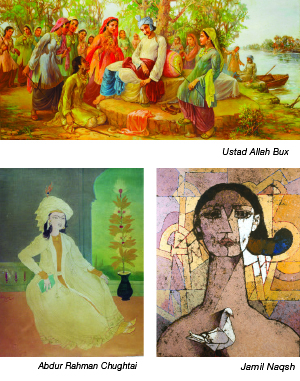 The heritage and history of Pakistani art is extensive. Painting, sculpture, calligraphy, pottery, and textile arts like a woven silk are just a few of the many different creative forms that make up this culture. Geographically, it includes the area that is now Pakistan and is considered to be part of the Indian subcontinent. Islamic tradition’s penchant for geometric forms has long had an impact on Pakistan’s visual arts. Many times, Westerners perceive these ancient designs as “contemporary.” To support Pakistan’s emergence as a modern nation, artists produced artistic works. Although it was a happy event, upcoming challenges made it less so.
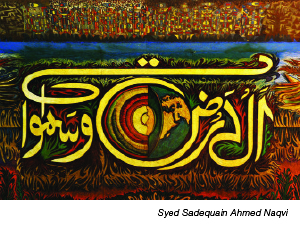 Today, the hubs of artistic activity in many developing countries are art schools. The two main institutions in Pakistan that question notions of what qualifies as contemporary art, particularly the place of post-colonial artists within this discussion, are the National College of Arts (NCA) in Lahore and the Indus Valley School of Art and Architecture in Karachi. Contemporary artists in Pakistan reflect critically on their society and artistic legacy. They employ a variety of regional techniques and supplies, including vivid mass culture aspects and the jewel-like miniature painting style. Pakistani artists sought to position themselves as contemporary by global norms when they emerged on the global stage. They experimented with indigenous traditions to see how they could fit into the modern world while also adopting styles popular in Europe and the United States. Zubeida Agha was the first female artist in Pakistan to have an exhibition of modern painting and portraits Agha received her schooling in both Pakistan and Europe, and later developed a style of painting that mirrored both these influences. She used simplistic shapes and brilliant colours to create images of landscapes and people that are reminiscent of Rajput miniatures and Fauvism.

Leave a Reply