


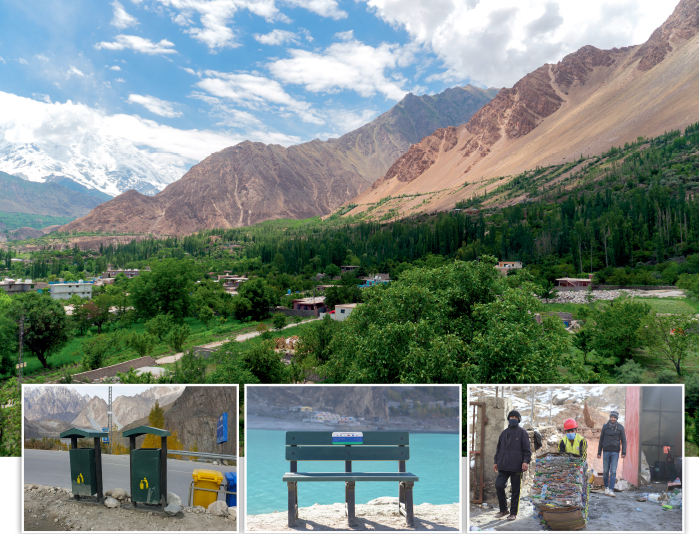
Clean Gilgit and Hunza Project – a joint collaboration between District Administration, Gilgit Baltistan Waste Management Company, Karakoram Area Development Organization and Nestlé Pakistan, aims to encourage waste management of up to 1000 tons of plastic and paper packaging waste by 2025.
The world over, plastic waste has been recognised as a huge challenge in environmental sustainability. A working paper published by Asian Development Bank recently cited “an alarming increase in waste generation” in tourist sites that often saw a surge in vacation seasons.
Siargao island in the Philippines, a surfer’s paradise, was termed as the world’s most beautiful island in South East Asia, by Conde Nast Traveler in 2018. But the paper by ADB stated concerns about the island’s tourism-dependent economy over pollution that saw its shores littered with garbage.
Many tourist sites all over the world are facing a similar ordeal. A surge in the tourist season, has these sites thronging with visitors who litter and leave. Pakistan too has a handful of such locations that are slowly experiencing an increase in waste. Gilgit and Hunza, located in the Karakoram region are two of Pakistan’s famous tourist destinations in the region.
With a total population of approximately 400,000 plus, Gilgit and Hunza have become a popular attraction for local and foreign tourists and more than 1 million tourists are visiting the area annually. These numbers have started increasing since the last few years, as more and more facilities for tourists have been made available in the area, along with access through direct flights by PIA.
While the region is booming, as the influx of tourists has created income generation for the local communities, it is also increasing plastic waste in the region. The district administration already has a waste management company operated by the government to manage the waste in the region. An estimate has indicated that more than 200,000kgs of plastic and paper packaging waste is collected yearly, with major contributors being the influx of tourists who bring packaged goods for consumption and leave it here.
However, organizations such as Nestlé Pakistan, in line with their global vision for a waste-free, future stepped up efforts, and partnered with the district council Hunza and Gilgit Baltistan Waste Management Company (GBWMC) and Karakoram Area Development Organization (KADO) to launch the Clean Gilgit and Hunza Project.
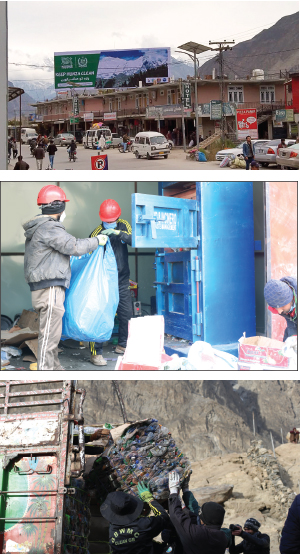 The project focuses on waste segregation and recycling systems for Gilgit and Hunza with installation of two baling machines, one in Hunza and the other in Gilgit, that will encourage waste management of up to 1000 tons of plastic and paper packaging waste by 2025 to make the region waste-free and promote sustainable tourism in the region.

Leave a Reply