


"Every age has its own kind of war, its own limiting conditions, and its own peculiar preconceptions."
—Carl von Clausewitz
Amidst the on-going global battle, all players are straining their every sinew to overpower their adversaries politically and economically, primarily in the regions they are based in. As it can be reasonably expected, every country looks hell-bent on saving its own interest first, that too at the cost of making a mess of others. Historically speaking, many countries resort to serving their interests by employing a mix of both covert and overt tactics just to have a decisive edge over their rivals in the region. However, long past are the days when a powerful country could exert needless influence on the weak nations or invading them mercilessly to rule the roost.
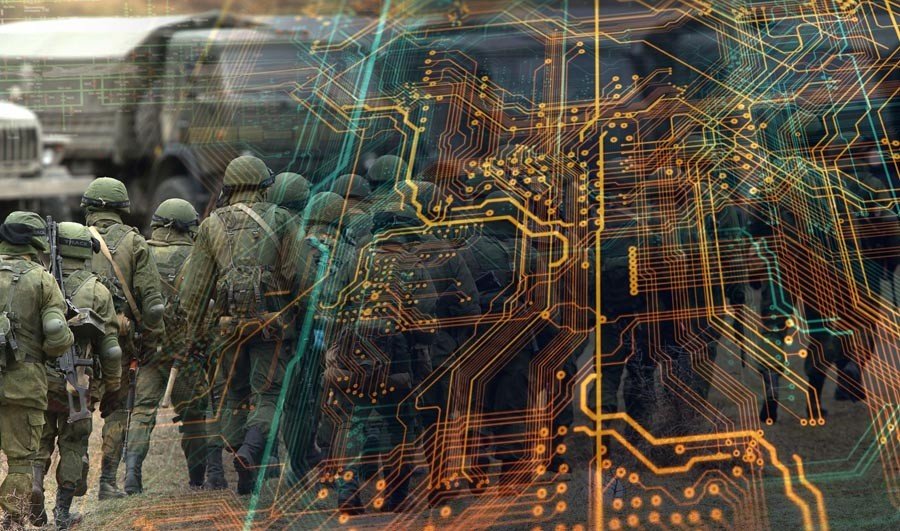
The present-day global war is quite unique by its nature, since it hinges on a range of hybrid measures that include but not limited to: military strategy that involves conventional warfare, so-called 'irregular warfare' and cyberwarfare. Known as the 'Hybrid warfare', using other influencing methods, such as fake news, diplomacy and foreign political interventions is another new normal that come under the new means of modern warfare.
The hybrid warfare, christened as "grey zone warfare," is the latest addition to the way countries their wars. An updated reference to the capabilities of the world's leading armed, the Military Balance offers an annual assessment of the military capabilities and defence economics of more than 170 countries worldwide. The hybrid warfare, according to the 2015 edition of the Military Balance, is “the use of military and non-military tools in an integrated campaign, designed to achieve surprise, seize the initiative and gain psychological as well as physical advantages utilizing diplomatic means; sophisticated and rapid information, electronic and cyber operations; covert and occasionally overt military and intelligence action; and economic pressure.”
The NATO defines that “hybrid threats combine military and non-military as well as covert and overt means, including disinformation, cyberattacks, economic pressure, deployment of irregular armed groups, and use of regular forces. Hybrid methods are used to blur the lines between war and peace, and attempt to sow doubt in the minds of target populations.”
During the 2000s, the use of the term “hybrid” became a common way to describe contemporary warfare, particularly because of the increasing sophistication and lethality of non-state actors as well as the growing potential of cyberwarfare.
In 2006, during the conflict between Israel and Hezbollah this term was frequently used as an example of a war that fitted contemporary definitions of the hybrid warfare. Hezbollah, which had been trained and equipped by Iran, surprised Israel with its sophisticated combination of guerrilla and conventional military tactics and employed such sophisticated weaponry and communication systems, which are normally associated with the armed forces of developed states. At the strategic level, Hezbollah made effective use of the internet and other media for information and propaganda.
Importantly, the term 'hybrid warfare' surfaced in the context of Russian insurgency in Ukraine and Crimea. Russian techniques included the direct use of military force, traditional combination of conventional and irregular combat operations, coupled with sponsoring political movements and economic bullying. In summer 2014, when Russia had exhausted its use of non-military hybrid methods, military operations in Ukraine took on the character of limited conventional war. Russian battalion tactical groups (BTG), for instance, intervened directly in combat against the Ukrainian army.
In hybrid warfare, the People’s Liberation Army (PLA) of China is also a potential adversary to the United States. In September 2017, for example, the members of the PLA were recently indicted by the U.S. for hacking Equifax’s computer systems. In that attack, the personal information of some 145.5 million Americans, 400,000 Britons and of over 19,000 Canadian users was leaked, including their banking record, credit and debit card numbers, postal addresses, and the like.
In October 2019, hackers obtained personal identifiable information from three hospitals in Southwestern Ontario. Falling victim to a cyber attack, the City of Woodstock in Southwestern Ontario had to spend about $1.04 million to recover its system from the attack. On the other hand, the City of Stratford paid about $75,000 worth of bitcoins to hackers to recover its system. The NATO policymakers warn that a new era of warfare has just begun. To cope with this emerging threat, NATO is devising strategies and is making a concerted effort to collect and evaluate the information about hybrid attacks that are directed against its member states. The NATO is also developing rapid-reaction cyber-defence teams to counter such threats. Established by Finland, the European Centre of Excellence is also working along the same lines.
Simply put, Pakistan needs to devise a clear-cut strategy to successfully tackle hybrid warfare challenges and to counter cybersecurity threats emanating from India and from around the globe.

The writer has earned his graduation degree from Shah Abdul Latif University, Khairpur and is currently pursuing his Masters in English Language and Literature from Minhaj University in Lahore. He can be reached at sanwalrind14@gmail.com
Leave a Reply