



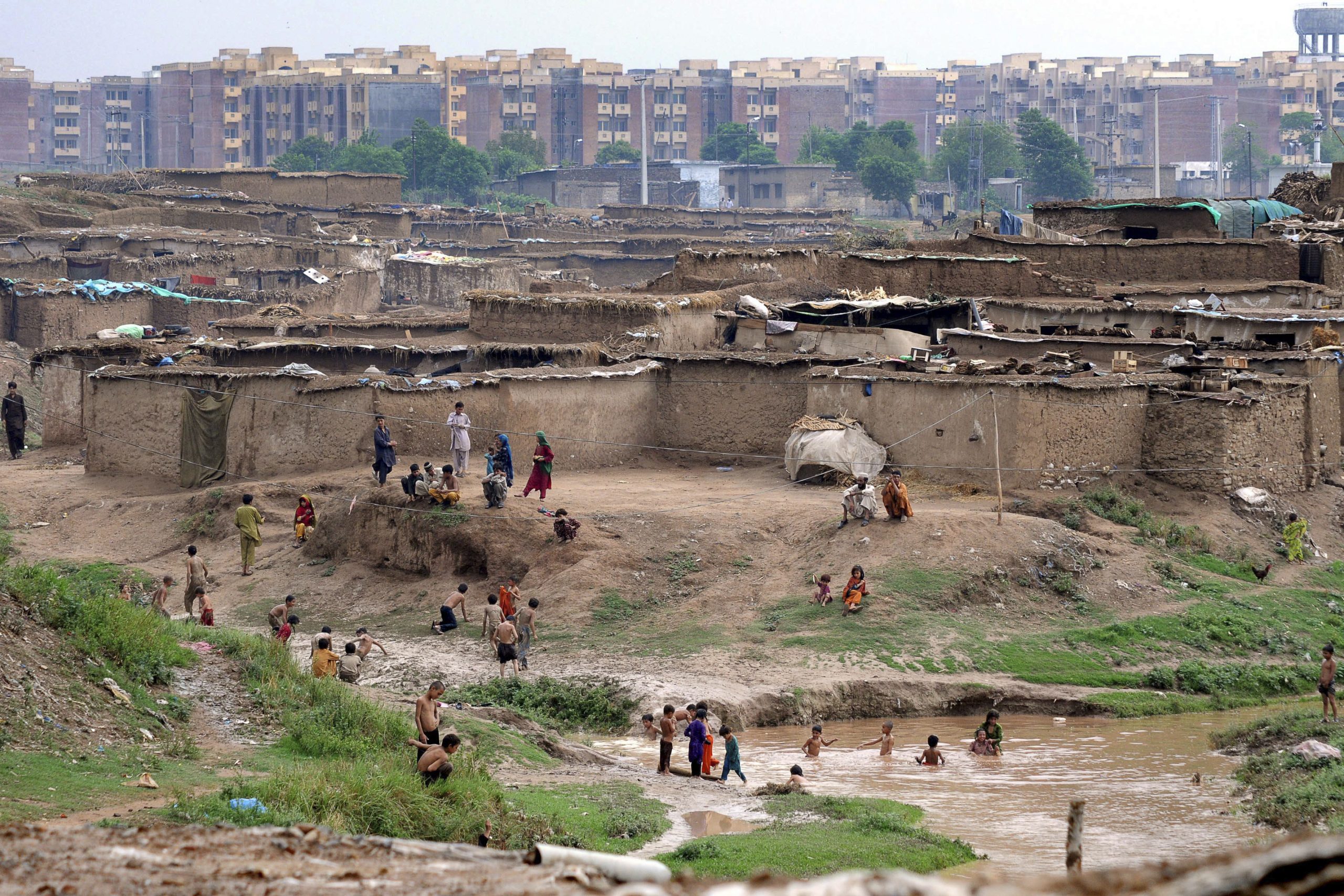
Karachi has been facing multiple problems for decades. With a population influx of people in search of livelihood and being the only port available for years, the city has sprawled well beyond its intended boundaries. This exponential growth has strained the limited sources of the city as well as generated complex problems for the people inhabiting the city and its surroundings. Drinking water, a vital means of survival took a toll with time and waste water flowing under and above ground further deteriorated the living conditions. The solid waste problem further added to this as the city expanded further and further. The city is still surviving and even growing but the future is neither a livable city, nor a sustainable one.
Among many environmental problems that are hampering the life of Karachiites, the heat wave seems to be the newest one. Those living without a roof and with enough water or electricity are among the most vulnerable ones. Irrespective of our search for quick fixes, all problems, including the heat wave issue needs long-term implementation of a feasible plan. To every action there is a reaction and most of the time this reaction is more complex and severe. It may also create another action to get a new reaction. This is also known as chain reaction. Heat wave is also a consequence of different chains of action and reaction.
Heat wave and air pollution, heat wave and urban planning, heat wave and municipal services are all interlinked. A city with higher levels of air pollution will magnify the effects of climate change. Similar to creation of smog, the polluted air intensifies the effects of heat wave too. Cities do produce heat and this has always happened in human history. The internal heat produced in Karachi is expected to be quite high, mainly due to three major problems. The population has increased manifolds, the city has mostly developed in an unplanned manner and the lack of services has added to the apathy of people.
 The number of air conditioners produced and sold in the city are on an increase for several years. Similarly, our obsession with the use of glass exteriors in buildings has further resulted in increased outside temperatures. The quest for getting sunlight and switching off a hundred-watt bulb during the day has resulted in more operation of air conditioners in all neighbourhood. Congested buildings, blocked parks and nullahs act as floating dumps of waste and add to the misery of the city.

The writer is a senior specialist at the Urban Unit in Lahore. He has studied at the Johns Hopkins University, USA and can be reached at azharuup@gmail.com |
|
Cover Story
|
|
News Buzz
|
Leave a Reply |
Update |
There are some practical recommendations mentioned by the writer. That could be used for formal policy formulations.