

Region
Animal Rights
A more comprehensive definition should be provided for Animal Rights. It should classify
different animals sufficiently and place them in appropriate categories.

The case of the Islamabad Wildlife Management Board versus the Metropolitan Corporation of Islamabad plays a pivotal role in establishing the rights of animals and, therefore, the court must tread with the utmost care to ensure that these rights are protected. However, as the proceedings continue and we delve into the crux of the matter, it is clear that what once started as an attempt to progress towards the recognition of the rights of animals has turned into nothing more than a spectacle.
Pakistan is a member of the World Organization on Animal Health and Convention on International Trade in Endangered Species of Wild Fauna and Flora. It relies on outdated legislation enacted in 1890 during the British colonial rule to provide protection to animals from cruelty (the Prevention of Cruelty to Animals Act). The Act lays down penal sanctions for violators but fails to embody a holistic approach towards animal welfare. In 2018, due to the obsolete nature of the penal sanctions, the Act was amended to ensure stricter punishments.
The Wildlife Ordinance 1979 provided protection, preservation, conservation and management of wildlife and deemed it right to set up a National Park in Islamabad Capital Territory. The Ordinance lays down penalties of imprisonment of maximum one year, or a fine of 1000 rupees or both. The amount, in that age, illustrates that legislators acknowledged the importance of preserving wildlife and the environment; it signals to the judge the perceptions of society as Parliament has expressed its oppositions towards an evil that is to be mitigated. Yet the penalties have not grown tougher and fewer perpetrators are held liable in contradiction to the purpose of the legislation. Critics have been quick to remark that archaic legislation is insufficient and the need for new legislation catering to intrinsic values and empathy towards animals in Pakistan is of the utmost importance. It should be comprehensive in categorizing different types of animals and their roles. However, in the meantime, the judges in their formal roles are bound to do justice.
The definition of ‘animal’ in legislation is often complex, though the clear intent is to prevent cruelty. It may exclude certain species or be ambiguous as to which species are covered. The Act of 1890 only refers to ‘domestic or captured animal(s)’. This legislative silence can lead to frequent abuses of the relevant section. A more comprehensive definition should be provided, one that classifies different animals sufficiently and places them in appropriate categories and provides the relevant methods for protection keeping in mind which category the animal falls in.

Pakistan’s wildlife is threatened by habitat degradation and wildlife trade. Cages filled with garbage, lack of proper diet, abuse from caretakers and visitors and often illegal backhand trade of exotic bird eggs, re well-known facts and the situation of zoos is deplorable in Pakistan.
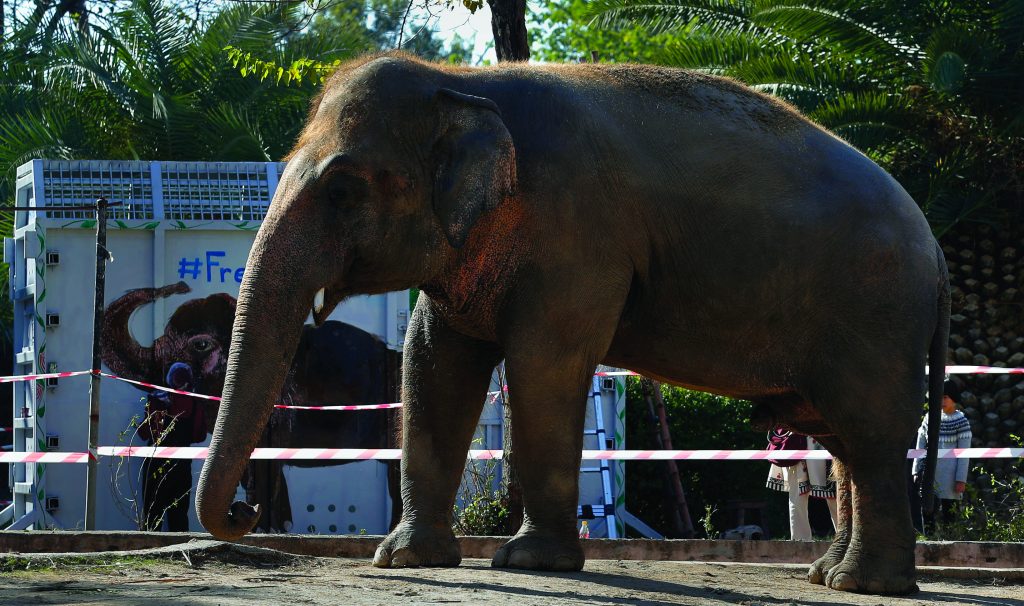
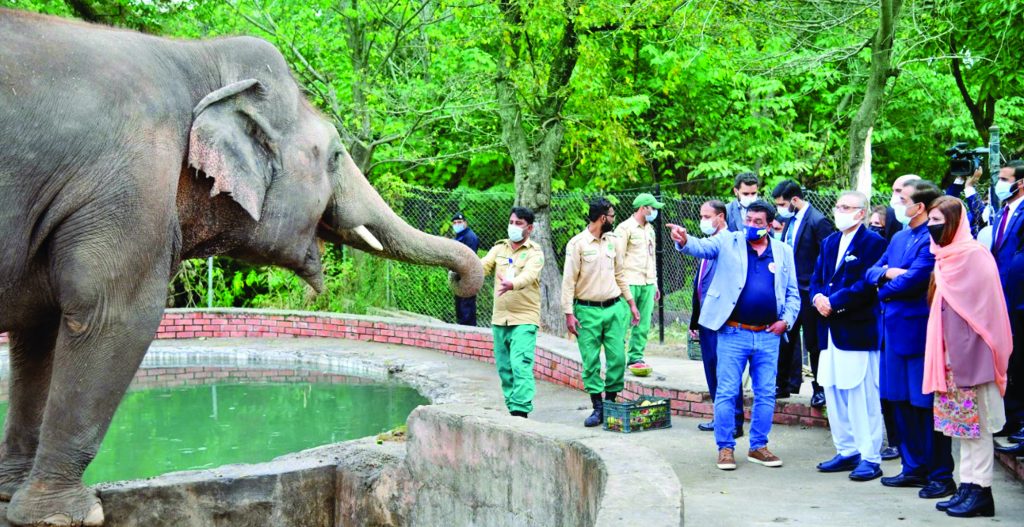
Animals are usually seen as ‘personal property’ therefore perpetuating the notion that they do not have a legal standing and thus are only given indirect protection of their interests. Yet the Islamabad High Court (IHC) has taken a remarkable step in the Kavaan elephant case by recognizing the cruel treatment faced in Marghazar Zoo to animals, thus predisposing the authorities in charge to criminal penalties under the 1890 Act by acknowledging that the law has ever-increasingly assumed an important role in animal protection.
The Wildlife Ordinance 1979 provided protection, preservation, conservation and management of wildlife and deemed it right to set up a National Park in Islamabad Capital Territory.
The Honourable Chief Justice of the Islamabad High Court remarked in the affirmative that animals do have legal rights and that zoos “do not serve any purpose except to display their living inmates as exhibits to visitors” and therefore declared that Kavaan should be shifted to a suitable sanctuary alongside all remaining animals in the zoo, declaring that the Minister of Climate Change and members of IWMB were jointly and severally liable for the welfare of each animal during the relocation process.
This step has been applauded worldwide. According to the Non-Human Rights Project, it is a tremendous sign of progress. The case illustrates the impact of Covid-19 as an “opportunity for humans to introspect and relate to the pain and distress suffered by other living beings” and is “the only fitting judicial response to the existential crisis faced by animals all over the world”. Further, it is noteworthy that the jurisprudence is being relied upon by the United States Supreme Court in the incident involving an elephant and, furthermore, discussed globally.
The case is critical to lead to a reconstruction of public views on the subject, possibly encourage the development of a policy in this regard and as “Islamic jurisprudence has been appreciated worldwide for the first time” we are to be more cautious to ensure the international significance of Pakistani jurisprudence.![]()
The writer is a legal consultant and an animal rights activist. She can be reached at hooriya.muj68 |
|
Cover Story
|
|
News Buzz
|
Update |


Leave a Reply