



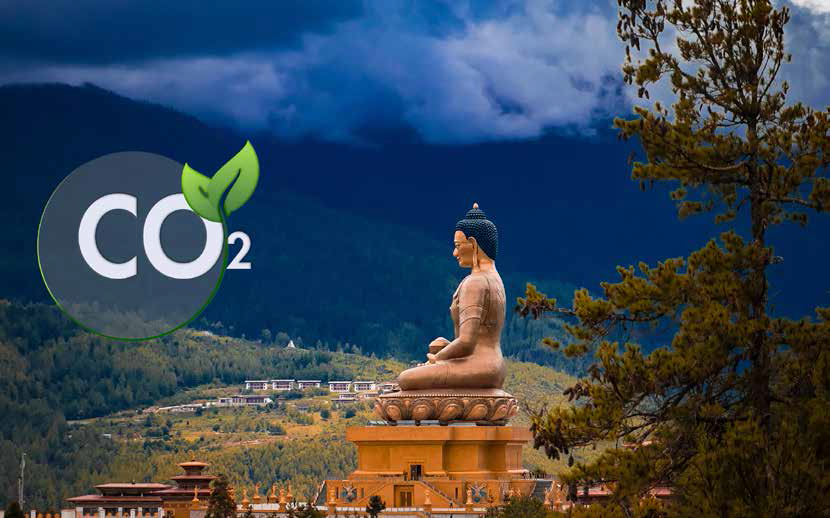
In an era where nations are grappling with maintaining their environmental commitments, particularly in the face of escalating pollution, the Kingdom of Bhutan stands out as an example. Over the past few years, Bhutan has steadfastly pursued its ambitions, aspiring to be environmentally sustainable and transcending these goals. This small, landlocked South Asian country has emerged as a global leader in the ongoing mission to combat climate change.
One of Bhutan’s notable initiatives is its commitment to becoming a carbon-neutral country, a pledge initiated in 2009. Since then, the Bhutanese government, alongside all departments and citizens, has unwaveringly adhered to these policies, embodying a commitment in letter and spirit. This commitment stems from Bhutan’s unique approach to development, emphasizing two crucial factors: Gross National Happiness (GNH) and Gross Domestic Product (GDP). Bhutan recognizes the interconnectedness of economic, social, and environmental well-being, emphasizing the need for a harmonious balance.
At the heart of Bhutan’s environmental strategy is the reliance on renewable energy sources, a phrase that encapsulates the nation’s journey towards its environmental goals. Utilizing its rivers to generate electricity, Bhutan not only meets its energy needs but also sells surplus power to India, achieving dual objectives of energy self-sufficiency and reduced carbon emissions.
Bhutan’s conservation efforts and biodiversity protection further contribute to its carbon-neutral aspirations. With a substantial 72% forest coverage, Bhutan is one of the few carbon sink countries. Ensuring the preservation of this vital resource is enshrined in Bhutan’s constitution, mandating that at least 60% of the total land area remains covered by forests, guaranteeing biodiversity conservation and ecosystem maintenance.
The government’s investment in national parks and wildlife sanctuaries, exemplified by the Wangchuck Centennial Park in northern Bhutan, underscores its commitment to maintaining forested areas. This largest national park has become a sanctuary for flora and fauna, including endangered species like the snow leopard and the red panda.
Bhutan’s commitment extends to sustainable agricultural practices, which contribute to climate change alleviation and safeguard food security. Agro-ecological farming methods, promoting biodiversity, water conservation, and soil health, ensure that agricultural activities have no negative societal impact.
Aligned with these practices, Bhutan aims to become 100% organic, prohibiting synthetic pesticides and fertilizers. This commitment ensures chemical-free food production, promoting health and overall well-being.
Another significant contributor to Bhutan’s carbon-neutral aspirations is its emphasis on renewable energy, surpassing traditional hydropower. Solar energy utilization, particularly in remote areas where traditional infrastructure is challenging, illustrates Bhutan’s commitment to cleaner alternatives.


The author is a novelist and science fiction writer. He has a special interest in the social and political affairs of South Asia. He can be reached at omariftikhar82@gmail.com
Leave a Reply