


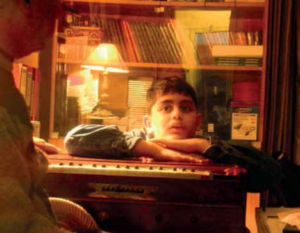
 Having lived the best part of my life with grandson Hasan, 22-year old today, and myself at the fag end of life’s journey, I cannot help the temptation to recall both the glorious and the anxious times shared with this incredible young man.
He has been my music soulmate since he was five or six-year old. He came into my life at the time when my music teacher and guide Ustad Wilayat Ali Khan, had left for his final abode, leaving me stranded in a cultural wilderness.
I sometimes silently wonder what good deed had I done to qualify for such a replacement, a priceless gift from God Almighty, the gift in the form of a beautiful companion with a soul adorned with melody and rhythm?
Hasan is unlike ordinary learners of music. When I say an ordinary learner, my own example may illustrate the point. I had taken more than one year to learn just one raag — Malkaus. I always found it hard to catch the bole (words) of the asthai (first section of a composition) from the 9th matra (beat) of the teen-taal (a cycle of 16 beats). In desperation, I would plead with my Ustad to teach me something else. It was quite frustrating going on and on with sa, ga, ma, dha, ni, sa , and the boles (words of song) of the asthai. The Ustad would, however, say: pahle isko pakka kar lain, phir her raag paanch minute mein seekh len ge (First make it perfect, then you will learn every raag in five minutes). How right he was! After trolling the same lines for a thousand times that made my family members nearly insane, I discovered, to my great relief, that I was now able to pick up the asthais and antaras (first and second sections of other raags) rather easily. But it took 20 years to learn whatever little I knew of classical music.
Hasan is different. Whatever is taught to him, he picks up at once. And he is also a willing learner. I wish my Ustad had him as a shagird (student) instead of me!
Lately, Hasan has started to test my knowledge. When I ask him what raag it is, he says, “Sargam karen!” (Sing the notes).
“Sa Ma, Ga Ma Pa, Dha Pa, Sa Re Sa....” I sing the Sargam.
“It’s Kidara!” He would whisper in my ear.
Regular, rather excessive, listening has enabled him to tell the names of most of the great vocalists and instrumentalists by just listening to the alap (beginning of a musical composition without words). He recognizes the voices of vocalists Ustad Amir Khan, Baray Ghulam Ali Khan, Paluskar, Jasraj, Bhimsen Joshi, Ajoy Chakrabarty, Rashid Khan, Veena Sahasrabudhhe, Kishori Amonkar, Ashwini Deshpande, Prabha Atre, Roshan Ara Begum, Fateh Ali Khan, Salamat Ali Khan, Begum Akhtar, Mehdi Hasan, Iqbal Bano, Tufail Niazi, Talat Mahmood, Rafi, Mukesh, Manna Dey, Saigal, Punkaj, Jagmohan, and others. And he can tell who is playing which instrument: Shehnai, Santoor, Sitar, Sarod, Sarangi, or Violin – played by Bismillah Khan, Shiv Kumar Sharma, Vilayat Khan, Amjad Ali Khan, Sultan Khan or Rajam in that order.
In other words, he can tell a Sitar from a Veena, a Sarangi from a Violin, a Sarod from a Guitar, a flute from a Piccolo, and so on.
It is fascinating to watch him enjoying a raag – all ears, totally engrossed and fully aware of its intricate beauty as if the grace and the gloss of the composition have already been made clear to him by some hidden power. Yes, it is a joy to watch him respond to every note, every inflection, be it in the alap, asthai or drutI (fast beat). He knows that Teen Taal has 16 matras, Ektala has 12, Jhaptal has 10, and Dadra has 6.
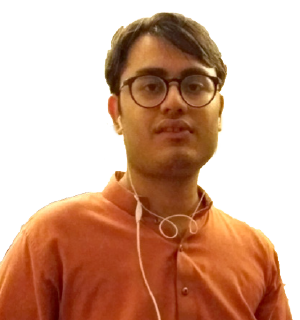 He has already learned the compositions of scores of raags that he sings with me. These raags were taught to me by Ustad Wilayat Ali Khan, and the same I am trying to transfer them to my grandson. His voice is a deep tenor, but it certainly needs to be worked upon and refined through practice.

The writer is an advertising veteran, trained classical vocalist and teacher, author of books on music, art and culture. He can be reached at shahidsm34@gmail.com
Leave a Reply