



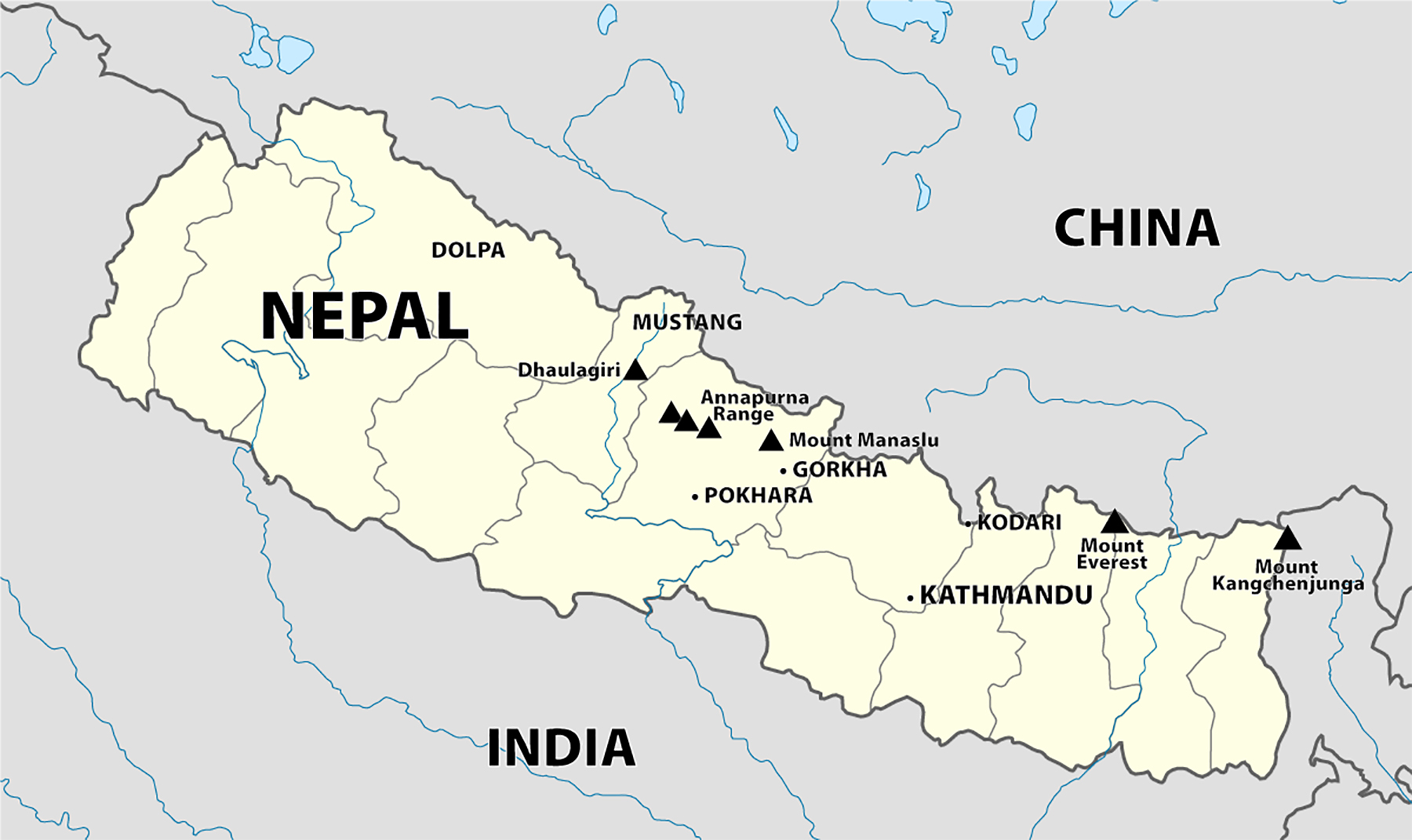
 Nepal is a landlocked country and relies either on India or China for its imports and exports. Its imports from and exports to different countries must pass through Indian ports. That is why its foreign trade is slanted towards India. This reliance on its southern neighbour has further expanded between 2000 and 2010. As indicated by a study by the Nepal Rastra Bank (NRB), India’s share of Nepal’s exports increased by four times and imports jumped by three times compared to the 1990s. At the other end, the China route was not developed on account of the mountainous terrain.
However, now Nepal and India have developed a border dispute and Nepal must take its ties with China to a new level. India must be told in clear terms that it cannot be allowed to become the bully of the region and that all countries need to protect their sovereignity and identity. It is a good thing that this realization has dawned on Nepal and it is now devloping its own independent voice. In its rivalry with China, India cannot simply muzzle smaller nations and territories in the region.
The 2015 Nepal blockade by India which started on September 23, created an emergency for Nepal’s because of its high dependence on its southern neighbour; the blockade affected Nepal and its economy tremendously and was an eye opener. It was after the blockade that Kathmandu sought access to Chinese ports to lessen its reliance on India. Officials from Nepal and China concluded a protocol during a meeting in Kathmandu, giving Nepal access to the Chinese ports of Tianjin, Shenzhen, Lianyungang and Zhanjiang. Nepal has also consented to a few security arrangements with China and operationalized outskirt security collaboration. Nepal has insisted on its obligation to the “one China principle,” acknowledging that Tibet is an internal problem of China. In addition, it has vowed not to allow any enemy of China on its soil and this has bonded their relationship further.


The writer has done his Masters in Defence and Strategic Studies. He can be reached at daniyaltalat2013 |
|
Cover Story
|
|
Special Editorial Feature
|
Region
|
|
News Buzz
|
Update |
Leave a Reply