“Nestlé Pakistan believes that by investing in women across our value chain, we will be able to create winning models of success not just for ourselves but our beneficiaries as well. Today, as part of our Creating Shared Value approach, we launched the Rural Women Sales Program which involves creating business opportunities for the BOP (Bottom of the Pyramid) populations of Pakistan and generating economic prosperity for them. As part of our scale-up of this program, we have also partnered with Akhuwat and extending the facility of micro-loans for these women. Today our program has enrolled over 800 women working as Nestle BISP Rural Sales Agents and are involved in direct selling to their communities, and disbursed over PKR 2 Million worth of loans to over 200 of these women. This program also highlights our commitment to attaining the Sustainable Development Goals (SDGs)”
– Waqar Ahmad, Head of
Corporate Affairs, Nestlé Pakistan
Benazir Income Support Program (BISP)
is a social protection program run by the Government of Pakistan which provides unconditional and conditional cash transfers to the “poorest of the poor” women of Pakistan. Currently, BISP has enrolled 5.7 Million beneficiaries as part of its system who are paid a stipend of PKR 5000 per quarter.

"Benazir Income Support Program (BISP) is the largest cash transfer program of Government of Pakistan, BISP prides itself to be the fifth largest social safety net in the world. BISP is providing Income Support to more than 5.4 million eligible households throughout the country. Our vision is to enhance the financial capacity of poor people and their dependent family members, especially women, through targeted social protection initiatives. Graduating beneficiaries out of poverty is a key priority area for BISP, for which we have launched various partnerships. One of such partnership is with Nestlé Pakistan, where BISP beneficiaries are working as Active Sales Agents. This initiative is a great example of the role successful public-private partnership can play in the socio-economic development of not just BISP Beneficiaries, but rather for the entire BOP (bottom of the pyramid) population of Pakistan”
– Ali Raza Bhutta, Federal Secretary,
Benazir Income Support Program
By rolling out the microcredit scheme for the participants of this program, this collaboration has successfully scaled-up and brought formal financial services to the ultra-poor women. Furthermore, these women are now prioritizing good nutrition and education for their children. Once, these women have been able to earn a sustainable livelihood for themselves they have improved their nutritional outcomes of themselves and their families. They have re-enrolled their children back in school and well on the pathway of prosperity. Another unique aspect of this program is the recognition that access to finance does not guarantee improved outcomes of health and nutrition. Indeed, it is a prerequisite but equally important is to educate these poor women on the importance of nutrition. By successfully running Nutrition seminars to these beneficiaries, the program has successfully taught these women the basics of nutrition in an easy-to-understand manner. With the help of visual aids, this program has reached out to more than 1700 BISP beneficiaries during these nutrition sessions.
Today, Samina BiBi a Nestle BISP Rural Sales Agent is earning a dignified living for herself and her family. She previously was only receiving PKR 5000 per quarter as stipend from BISP, but today, her monthly earning can be as high as PKR 15,000 per month. However, it was not easy for her to step out of her house and start running her own shop, she had to overcome a lot of obstacles particularly from her husband.
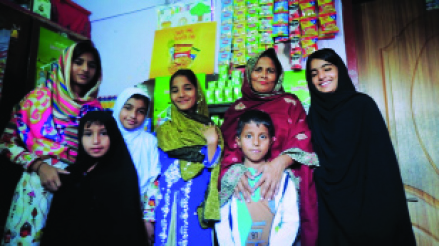
“It’s the mindset that is the hardest to overcome, but today, my husband is my biggest champion. He motivates me and helps me whenever he can despite his illness. My children are back in school, I am providing them proper meals three times a day”. Samina, is one of the Rural Sales Agent running her own shop in PindhBhattian and working as a retailer.
The story of Samina Bibi, and many others shows that investments made by empowering women can not only lead to poverty alleviation but also, improved outcomes of both health and education for the entire family. Lastly, this project is a great example of how cooperation and collaboration is key to poverty alleviation as demonstrated by this tripartite project of Nestlé Pakistan, BISP and Akhuwat Pakistan.





Leave a Reply