

Performing Arts
Beyond the Straitjacket
Channel owners must encourage writers to explore aspects of social life that are seldom featured in television plays.
Decades ago, an eerie emptiness would pervade the streets of Pakistan’s major cities on those evenings when a popular television play was aired. The television viewing experience in the modern-day isn’t as time-bound as it was before. The phenomenon of binge-watching, bolstered by over-the-top content delivery, has provided viewers with the flexibility to watch their favourite shows at their own convenience.
But are a large number of people watching Pakistani TV plays? While local television continues to attract a vast audience on YouTube and various subscription-based streaming services, it has also been criticized for churning out formulaic stories that often promote regressive values. As a result, many viewers tend to avoid such content and gravitate towards foreign TV shows.
For decades, actors, scriptwriters and other industry professionals have cultivated a host of possible explanations for the decline of Pakistan’s TV serials. It is believed that the seeds of destruction were sown with the liberalisation of Pakistani TV channels and the state-run network’s inability to respond effectively to changing trends in consumer demand.
At the same time, industry insiders have defensively argued that Pakistani serials face stiff competition from TV shows produced in other parts of the world. In the 2000s, our television plays had to contend with the immense popularity of Indian soap operas. After 2012, the growing number of dubbed Turkish serials that were broadcast on local channels posed an additional threat.
The question of whether Pakistani TV serials have managed to measure up to expectations and entertain audiences depends entirely on how we measure the success of a TV play.
Those who have pronounced a death sentence on Pakistan’s golden age of TV appear to be sticklers to the old ways. Skeptics would argue that the excessive glorification of the bygone era of PTV is merely an exercise in nostalgia. If we solely adhere to this logic and insist on a deeper engagement with the past, we could run the risk of preventing our TV serials from embracing new creative possibilities. Even so, looking back at the halcyon days of Pakistani TV plays provides useful insights on how far our industry has come and what milestones it has yet to achieve.
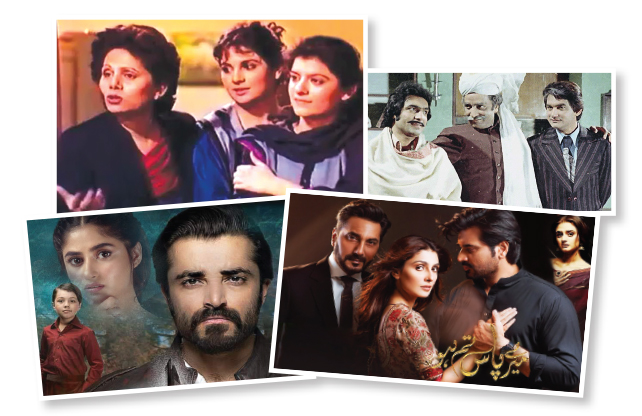
In an essay for the Delhi-based quarterly The Equator Line, titled ‘Framing Women: Tradition and Modernity’, Amina Yaqin analyzes the key differences between the scripts written by Haseena Moin and Umera Ahmad. According to Yaqin, Moin’s scripts acted as a counter to the repressive milieu of the 1980s when General Zia’s repressive policies had pushed women into the four walls of their homes. Moin produced “light-hearted stories” that showcased strong female protagonists. Fuelled by the spirit of liberal modernism, her female protagonists subtly resisted the straitjacket of patriarchal norms. Zara and Sanya from Tanhaiyan were shimmering examples of women who build careers for themselves after surviving familial tragedies.
Yaqin believes that the TV plays penned by Umera Ahmad offer a trenchant critique of the liberal values that are espoused by Moin’s protagonists. By reviving the romantic genre, Ahmad promotes traditional family values, rejects the Western ideals that have permeated Pakistani society and reasserts the merit of heteronormative relationships. Her stories have pushed women back into the stereotypical straitjackets that Moin’s heroines had quietly resisted. Therefore, Ahmad’s female protagonists uncritically accept gender norms without attempting to resist or renegotiate the boundaries of the permissible.
Yaqin’s analysis situates our contemporary plays within a historical context. Her essay hints at an alarming shift in creative standards and ideologies. Though the technical quality of our TV plays has improved significantly, the overall treatment of subject matter needs to be revised.
In most contemporary television plays, women are portrayed as the weaker vessel. Many of them tend to easily forgive husbands who commit all manners of injustices against them. The virtue of forgiveness, which is often steered by an ill-disguised sense of piety, glorifies the idea of sacrifice. This reinforces the misguided belief that only women must shoulder the burden of keeping a family intact. Dehumanized by patriarchy, the women we see in contemporary TV plays are expected to sacrifice their personal aspirations at the altar of conventions. In most TV plays, women are also pitted against each other as rivals rather than earnest collaborators who are resisting the perils of patriarchy.
Regressive values and a growing proclivity to dismiss feminist ideals has weakened the calibre of Pakistani plays. Any attempt to resist this trend is often greeted with opposition. Women-powered web series such as Churails have attempted to break free from this stereotypical mould and have unsurprisingly earned the ire of the conservative faction. However, the prevailing restrictions on the nature of content make it increasingly difficult to imagine a similar attempt to defy the depiction of Pakistani women on television. A subdued approach to challenge the stereotypical role of women in society, which was evident in serials such as Ghisi Piti Mohabbat, might be more effective. Screenwriters need to rethink the role of women in Pakistani television plays and realign it with the values of liberal modernism and feminism.
This can only be achieved if channel owners encourage writers to explore aspects of social life that are seldom featured in television plays. In a heavily saturated media market, TV channels should focus on standing out as purveyors of original content rather than simply focusing on making money. Deviating from market-driven, formulaic concepts will enrich the calibre of Pakistani TV serials.![]()

The writer is a journalist and author. He analyses international issues and can be reached at tahakehar2@gmail.com


Leave a Reply