The Indian Ocean Region (IOR) has been greatly important since the ancient times due to its sea routes of trade, expeditions and migrations. The other supporting factors like favourable climate and winds, slaves, resources and territory too had been irresistible attractions which made this region a desirable place for the greater powers and empires of those times. Overall, the Indian Ocean stands third in size; it is covered by land mass from three sides, i.e., Australia, Asia, and Africa; whereas the fourth side is water in the form of the Southern Indian Ocean. Pakistan is situated in the Western Indian Ocean Region at a highly significant conjunction of places. It is situated on the threshold of two important straits and maritime chokepoints, the Strait of Hormuz and Bab-ul-Mandeb; major Sea Lanes of Communications (SLOCs) which act as jugular veins for global flows, pass through this region. This includes significant international shipping lines which carry voluminous containerized trade.
 The strategic importance of Pakistan in the region has increased especially since the new millennium began. There were a number of events since then which acted as a catalyst to shift focus from the land to the maritime domain, like convergence and divergence of the national interests of different states right after 9/11, and then emergence of new alliances and realignments between/among the states. Then the world started thinking with an established vision and, in some cases, perspectives were witnessed to be changing quite drastically. Since then, the region has been going through changing geopolitics which involve all sorts of interaction among states. This is the region with a large number of navies actively present, including the great powers’ military and/or naval arrangements at different points, like the US presence in Diego Garcia from where it can keep a check on the ongoing trade and communication through that region as well as on the movement of the Peoples Liberation Army-Navy (PLAN) in the Eastern IOR; the US presence in Bahrain helps it to monitor activities in the Western IOR.
Similarly, naval activities and strategic moves have gained steady pace and a pattern within the oceanic space of the Indian Ocean where the Indo-Pacific strategy of the USA engulfs both oceans from the Eastern Pacific to the Western Indian Ocean; Indian maritime constructs in the form of maritime doctrines and strategic plans like the Sagarmala Project and India’s Indo-Pacific Strategy which covers the oceanic regions, starting from the Western Pacific to the Western Indian Ocean; China’s Two-Ocean Strategy which provides reason for China to extend its vision across the Pacific and Indian Oceans, and even showing strong footprints in the other oceanic spaces and its momentous Belt and Road Initiative (BRI) which has engaged numerous states in its vision of economic and energy connectivity through infrastructural development and other assistance; and Germany’s Indo-Pacific Strategy guidelines presented in September 2019 with a clear inclination towards India, which has potential to provide a reason for the EU to follow the Deutsch-led stance in future. It can have serious implications, making the current geopolitical interplay more complex.
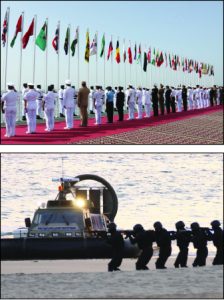
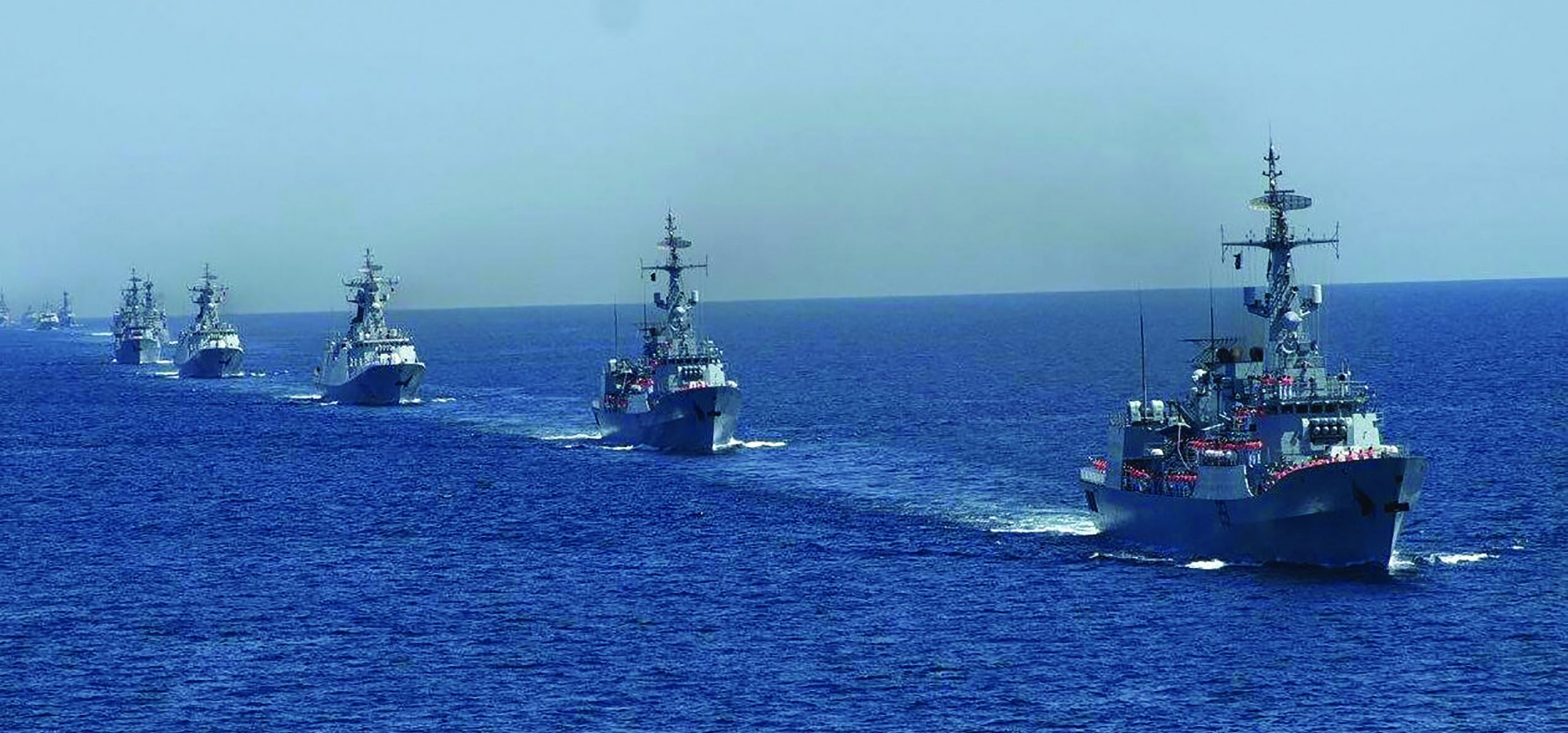
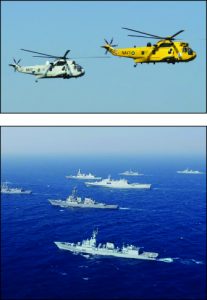
In this environment full of friction, there emerges the need to have such activities which could promote harmony, trust and confidence among states to encourage sustainable peace not only in the region but at the global level. Organizing the naval exercise AMAN-21 by Pakistan is one right step in the right direction as the mechanism under which it is arranged is collaborative security which prevents delusion by and large. There would be around 50 countries taking part in the exercise in different areas like anti-piracy operations, counter terrorism exercises, operational skills, mine sweeping, intelligence sharing and responding to other related kinetic and non-kinetic threats and challenges. This is the first time that Russia is coming to take part in the exercise, besides NATO countries, which is quite unprecedented. That reflects another strong feat of Pakistan to ensure security, peace and harmony in the Western IOR.
AMAN-21 is not only an exercise under a collaborative security arrangement, but in essence, it is reflective of Pakistan’s efforts to play its role to resolve issues and provide opportunity to the world’s nations for enhancement of their capabilities to address the common challenges and threats emerging in the maritime domain. That shows Pakistan’s strong resolve to ensure utmost security in its maritime zones and to promote a harmonious maritime environment and stable “blue order”. Pakistan Navy, as the flag bearer of the exercise AMAN since 2007 has been organizing this event successfully which has lately proven as an effective Confidence Building Measure (CBM) in the region as it has brought a big number of actors to participate in the exercise. Especially Russian representation in the 2021 exercise depicts the efficacy of AMAN not only as a collaborative security means but also as a CBM which has brought NATO countries and Russia together despite the clash of interests.
Such strong measures have multiple goals, like ending sea blindness, bringing states on one forum which enables them to perform till their desired level and also provides states with the opportunity to benefit from this operative CBM. Pakistan has proven its worth on several occasions and has led different initiatives like Task Force 150 and 151, and Regional Maritime Security Patrol (RMSP). The successful organization of AMAN biennially is another brilliant chapter in Pakistan Navy’s excellence at strategic planning and implementation, along with its operational preparedness to deal with the threats and challenges in its maritime zones and Area of Responsibility (AOR). Through providing considerable energy and substantial efforts in policy-making and implementation, Pakistan has enhanced its role in control and command within its maritime domain. The right policies in the right direction are helping Pakistan to extend its foreign policy in the maritime domain rather impeccably.



 Maritime security is a broad domain with numerous threats as well as challenges. Overlapping national security concerns of the littoral states usually put them in an ordeal of finding a mechanism to defend themselves and stay secure from all external threats and internal strife in the vast seas and oceans. Nevertheless, joint exercises take place in the maritime domain. Yet the threat perception or the message being conveyed to the other actors could prove more intense with certain implications, resulting in shifts in maritime geopolitics. One such example was the weakening of the Quadrilateral Security Dialogue arrangement between the USA, Japan, India and Australia soon after its establishment in 2007 when the Second Malabar Exercise of 2007 was conducted under that arrangement in the Bay of Bengal. It was interpreted by China and its friends as strategic containment of China, and an effort to increase control over the Asia-Pacific Region, which eventually put its purpose on hold for a long time.
Leave a Reply