



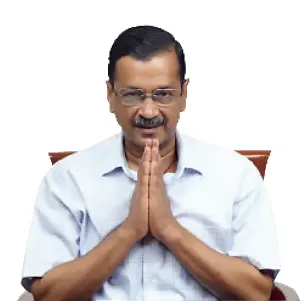
 The Aam Aadmi Party (AAP), founded in 2012 by Arvind Kejriwal, initially emerged as a beacon of hope for many disillusioned citizens in India, particularly for the Muslim community in Delhi. The party’s promises of transparency, anti-corruption measures, and governance reform resonated with voters looking for an alternative to the entrenched political dynamics of the capital. In the early stages, AAP positioned itself as a progressive party that championed the rights of marginalized communities, including Muslims. Kejriwal’s rhetoric often focused on secularism, justice, and equality. The party’s grassroots campaigns appealed to various demographics, fostering an inclusive environment. Many Muslims saw AAP as a fresh alternative to the Indian National Congress (INC) and Bharatiya Janata Party (BJP), both of which had historically taken their support for granted or engaged in communal politics that marginalized them.
During the 2013 Delhi Assembly elections, AAP’s promise of a corruption-free governance model and its emphasis on education and healthcare struck a chord with Muslim voters. The party won a significant portion of the Muslim vote, which was crucial to its electoral success. However, over time, AAP’s relationship with Indian Muslims has shifted dramatically, with growing suspicion and disillusionment. The dynamics began to change as AAP consolidated power and navigated the complexities of Delhi’s political landscape. Several key decisions and statements by Kejriwal and his party members raised eyebrows among Muslims, leading to a growing sense of alienation.
Once hailed as a game-changer in Indian politics for its inclusive and secularist agenda, the Aam Aadmi Party has seen a significant shift in its relationship with the Muslim community. From being viewed as a breath of fresh air, the party is now widely regarded with suspicion by many Muslims. This transformation is largely attributed to perceptions of Kejriwal’s “Soft Hindutva.” Soft Hindutva’ refers to a political strategy where leaders promote Hindu identity and values less aggressively than traditional Hindutva, aiming to appeal to a broader base while maintaining a strong connection to Hindu voters. In other words, it refers to a perceived alignment with Hindu nationalist sentiments without overtly endorsing communal politics.
Kejriwal has embraced this strategy by participating in Hindu festivals, invoking Hindu deities in speeches, and framing his governance around traditional Hindu narratives. This approach, while aimed at consolidating Hindu votes, has led to growing alienation among Muslim communities regarding their place in the political landscape of Delhi. This alienation stems from AAP’s tendencies, policies, and selective approach to issues. The emphasis on Hindu festivals, a focus on symbols and rituals that resonate with Hindu sentiments, and a reluctance to openly criticize the BJP’s xenophobic and communal policies have led many Muslims to feel that the AAP is prioritizing Hindu interests over the secular principles that initially attracted them.
For instance, Kejriwal’s emphasis on Hindu festivals and rituals can be seen as a move to resonate with Hindu voters. While this may foster a sense of inclusion among some, it simultaneously alienates Muslims who feel their cultural and religious practices are sidelined. The perception that the state is prioritizing one religious identity over others can create a sense of disenfranchisement. Moreover, AAP supremo’s rhetoric often emphasizes unity and inclusivity, but his actions can contradict this message. Instances where he has framed issues through a Hindu lens—like during the celebration of Diwali or showcasing Hindu cultural icons—can lead to a narrative that Muslims are an afterthought in his administration’s policies. This can exacerbate feelings of being marginalized within a city where Muslims make up a significant population. Decisions that appear to favor Hindu interests—such as the allocation of resources for Hindu festivals or temples—are also leading to resentment among Muslim constituents. When Muslims perceive that their needs are not being adequately addressed in policy-making, it can foster a growing disconnect between Kejriwal’s government and the Muslim community.


Leave a Reply