



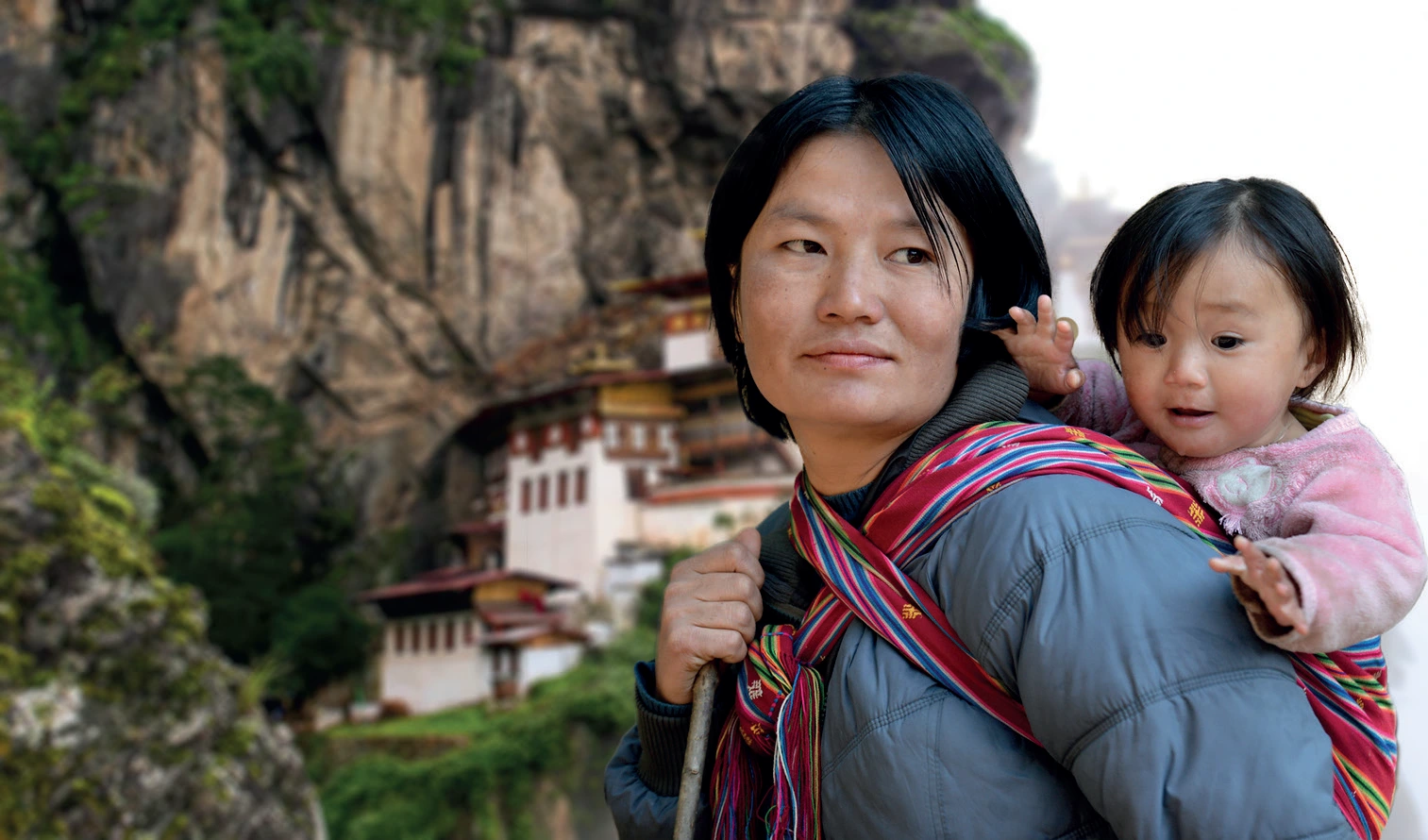
Though achieving enviable socio-economic and political developments is every country’s dream, only a few nations are ready to go the extra mile to reach the desired objectives. As things currently stand, most countries measure development in terms of Gross Domestic Product (GDP), Gross National Product (GNP), annual fiscal outcomes, industrial, service, and agricultural productivity, and the rest.
Although those above may determine a country’s prosperity in statistical terms, the ultimate objectives behind all of them lie in the contentment and happiness of the people. That is to say, hardly fewer societies care about the top end of development—happiness. Bhutan, a South Asian country, is a leading example. For the country, happiness is considered the ultimate end and success of all socio-economic means and statesmanship. Therefore, the country is famously known as the “land of happiness,” but why?
Bhutan is a unique and enchanting place located in the eastern Himalayas. Known for its commitment to measuring Gross National Happiness (GNH) rather than GDP, Bhutan stands out as a beacon of inclusion, holistic development, and cultural preservation.
One of Bhutan’s defining features is its emphasis on Gross National Happiness (GNI), a concept introduced by the country’s Fourth King, Jigme Singye Wangchuck. This alternative approach to development considers spiritual, physical, and environmental well-being, along with social and economic factors. The nine domains of GNH include psychological well-being, health, education, time use, cultural diversity and resilience, good governance, community vitality, ecological diversity and resilience, and living standards. This holistic perspective places the happiness and contentment of the people at the core of Bhutan’s policymaking. This philosophy, enshrined in its constitution, guides all government decision-making.
In addition to that, Bhutan stands out globally due to its dedication to environmental conservation. With stunning landscapes, pristine air, and a strong commitment to protecting the environment, it offers ample room for relaxation, coupled with a chance to connect with nature. Achieving carbon neutrality and having more than 70% of its land under forest cover, Bhutan boldly prioritizes sustainability, maintaining a delicate equilibrium between modernisation and preserving the environment for the well-being of future generations.


The writer is a freelance journalist. He can be reached at alihassanb.34@gmail.com
Leave a Reply