

Kabul
Shedding the Millstone
It is in the interest of all concerned to promote the
intra-Afghan talks and move towards enduring peace.
Pakistan too can play its role in the peace process.
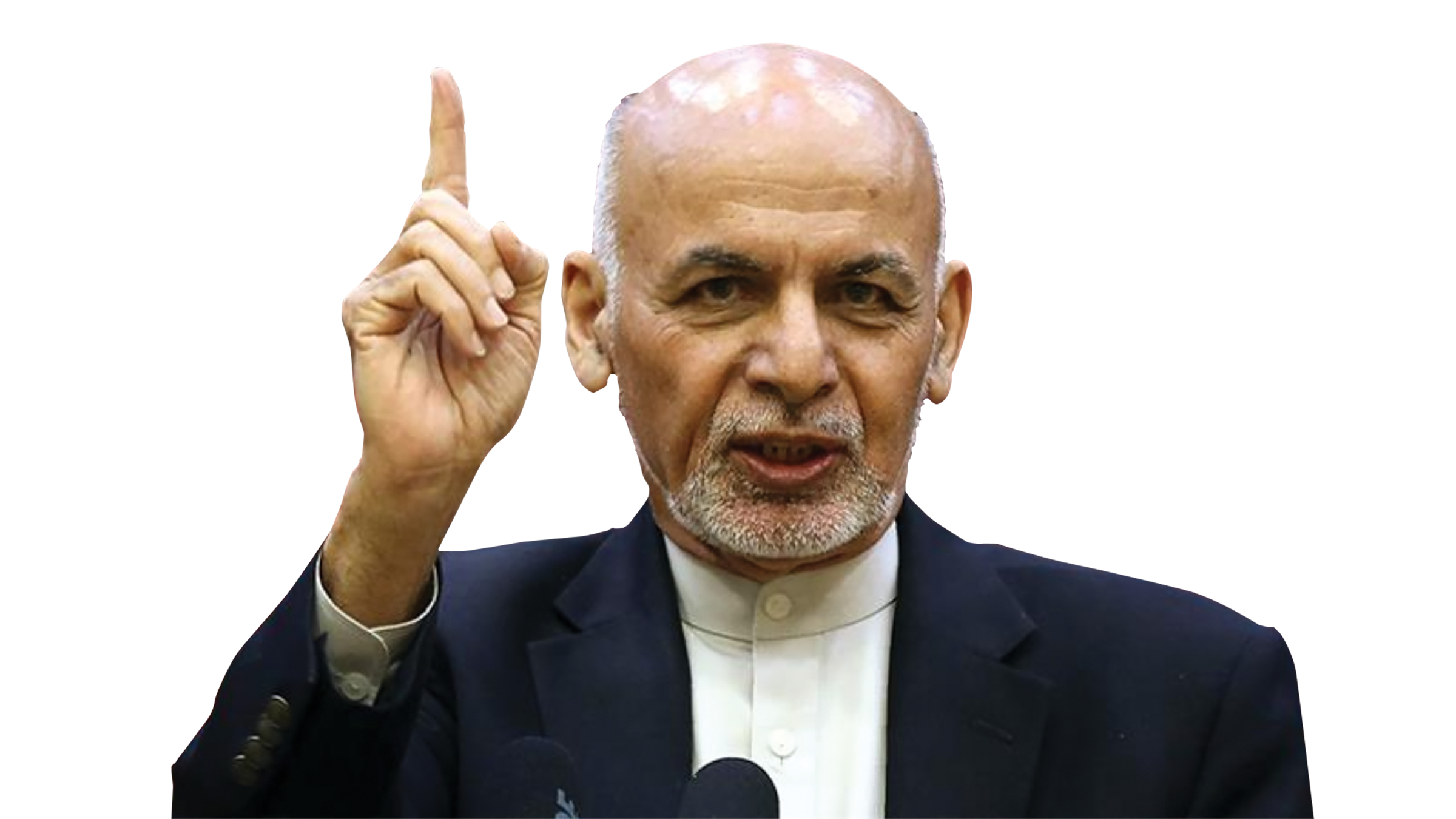
In 2001, the United States invaded Afghanistan and thus embark on what was to become its longest war. In the meantime, many governments have changed in Afghanistan. Ashraf Ghani succeeded Hamid Karzai and is still in power with the Tajik leader Abdullah Abdullah also having his claims. The Taliban have also not betrayed any sign of fatigue.
America wants to shed the millstone of the Afghan war. Although sporadic efforts have taken place since the war began, but serious negotiations and the peace movement intensified in 2018 amid talks between the Taliban, which is the main group fighting against the Afghan government and US troops and the US¸ which is said to maintain 20,000 soldiers on Afghan soil to support the Afghan government.
Most of the talks to end the fighting took place in Doha, where a Taliban office is based. It is expected that soon the Taliban and the United States will agree to a phased American withdrawal and the start of intra-Afghan peace talks. Moreover, besides the United States, other regional powers such as Pakistan, China and Russia, as well as NATO are also playing a part in facilitating the peace process
On February 29, 2020, the U.S. signed a conditional peace agreement with the Taliban, which callsed for the withdrawal of foreign troops in 14 months if the Taliban were to uphold the terms of the agreement. On March 1, 2020, however, the Afghan government, which was not a party to the deal, rejected the U.S. and Taliban’ call for a prisoner swap by March 10, 2020, with President Ghani stating that such an agreement required further negotiations and could also not be implemented as a precondition for future peace negotiations.
On March 10, 2020, Ghani signed a decree agreeing to swap 1,500 Taliban prisoners starting March 14, 2020, but on the condition that they sign pledges agreeing to not return to combat. On the same day, meanwhile, the United Nations Security Council unanimously backed the U.S.-Taliban peace deal.
The next day, however, the Taliban rejected Ghani’s prisoner swap proposal. Besides, on March 14, 2020 the U.S.-Taliban peace deal was endangered when Ghani delayed the release of Taliban prisoners.
On April 7, 2020, the Taliban officially withdrew from prisoner swap talks, which had been taking place in Kabul since 30 March 2020. This resulted in the release of only 100 Taliban prisoners on 8 April 2020.
On May 13, 2020, following a spike in violence, President Ghani ordered the Afghan military to resume its offensive against the Taliban. His decision might have caused a major setback to the peace efforts, including the U.S.-Taliban agreement that envisions the end of U.S. military effort in Afghanistan.
The agreement stated that the Taliban “will start intra-Afghan negotiations” on March 10, 2020. However, whereas, no formal negotiations have been held so far, both sides signaled in June 2020 that progress towards preliminary talks had been made, though complications remained.
Frantic efforts were being made to clear the way for intra-Afghan talks, which was the logical next step forward in the implementation of the U.S.-Taliban deal. Abdullah Abdullah, the head of the High Council for National Reconciliation, was to hold the talks, while the Taliban chief, Hibatullah Akhundzada, had asked members of the group’s Rehbari Shura (Leadership Council) to share their proposals to finalize the agenda. It must be borne in mind that the talks will not take place in a vacuum and cannot happen on their own. The recent talks in Doha between Zalmay Khalilzad, the U.S special envoy for Afghanistan reconciliation and Gen. Scott Miller, the commander of U.S. forces in Afghanistan, with Mullah Baradar, the Taliban deputy leader, need to be seen in this context.
Ordinarily, when the stakes in a conflict are low, the key stakeholders can afford to have intense political disagreements but in a conflict as bloody and intractable as Afghanistan’s, all parties concerned must have an indivisible unity of purpose. Yet, unfortunately, at a time when most Afghans are desperately seeking to live in peace, the Taliban’s perception seems dominated by a narrative obsessed with conflict and confrontation. Distracted and with declining interest in Afghanistan, U.S. President Donald Trump remains focused on getting American forces out of the country, while Pakistan seems determined to shore up its position against India ahead of potential intra-Afghan talks. Ultimately, it is the Afghans who must decide their destiny.
America has no further interest in Afghanistan. There is no Al Qaeda to pursue. The dreaded “Haqqani Network” is also not heard of any more. Maintaining U.S. military presence there any longer is a waste of money.
It is in the interest of all concerned to promote the intra-Afghan talks among all Afghan factions to chalk out a path for enduring peace. Because of its close association with the Taliban, Pakistan can play its role effectively to smoothen out differences and bring the parties together.![]()
The writer is a senior political analyst and former editor of SouthAsia. He can be reached at jilaneesyedghulam |
|
Cover Story
|
|
Special Editorial Feature
|
Region
|
|
News Buzz
|
Update |


Leave a Reply