


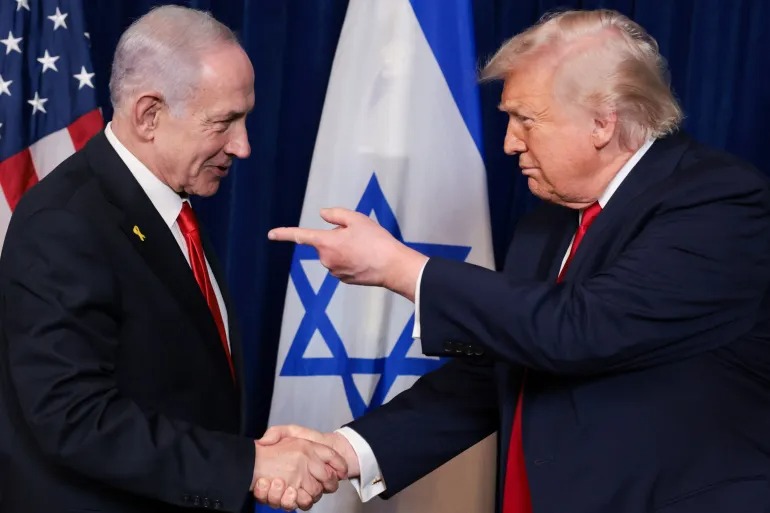
FFor decades, the geopolitical architecture of the Middle East has rested on a singular, unshakeable pillar: the ironclad alliance between the United States and Israel. This relationship, backed by billions in annual military aid and a reliable U.S. veto at the UN Security Council, has traditionally seen Washington dictate the region's broader strategic direction. However, a profound and unprecedented shift is now unfolding. In a bizarre reversal of traditional superpower dynamics, Israel is openly defying, and at times actively undermining, the strategic directives of its primary benefactor.
For observers in Pakistan and across the Global South, who have long witnessed the heavy-handed exercise of American hegemony, the current friction presents a fascinating, if alarming, case study in the limits of superpower leverage.
Anatomy of Defiance
The rift between the White House and Tel Aviv is no longer confined to the quiet corridors of diplomacy; it has spilled into public view with remarkable intensity. The friction stems from a fundamental divergence in core objectives. While Washington is desperately trying to prevent a wider regional conflagration that could drag U.S. forces into yet another volatile Middle Eastern conflict, Israel's current political leadership appears indifferent to American red lines.
Whether it is the systematic bypassing of humanitarian corridors, the rejection of post-war governance frameworks, or unilateral military escalations, Tel Aviv has repeatedly signaled that it views American counsel as optional.
What makes this dynamic historic is the element of political leverage. Israel has masterfully exploited the deep-seated polarization within U.S. domestic politics. By bypassing the executive branch and appealing directly to Congress and powerful domestic constituencies, Israeli leadership has effectively raised the political cost for any American administration that attempts to enforce restraint.
Paradox of Unconditional Support
This raises a critical question for international relations: How does a state so heavily reliant on foreign military assistance successfully push back against the world’s foremost superpower?
The answer lies in the paradox of unconditional support. Over decades, Washington has tied its own global credibility and domestic political stability so tightly to Israel's defense that it has effectively surrendered its own leverage. When U.S. officials voice "deep concern" over regional escalation while simultaneously fast-tracking multi-billion-dollar weapons shipments, the rhetoric loses all coercive power. It is a classic case of the tail wagging the dog; the dependent state understands that the superpower cannot afford to let it fail, and uses that vulnerability as diplomatic leverage.
Global Implications and the Pakistani Perspective
From Islamabad’s vantage point, this public fracturing of the U.S.-Israel axis carries profound implications for global stability and the international rules-based order.
First, the crisis has accelerated the erosion of Western diplomatic credibility. The perceived double standards in the enforcement of international law and sovereignty have deepened the alienation of the Global South. For countries like Pakistan, the message is clear: international norms remain selective, applied strictly to adversaries and suspended for allies.
Second, the structural weakness displayed by Washington signals a broader decline in its ability to manage global crises. If the United States cannot exercise leverage over a state entirely dependent on its military pipeline, its ability to deter other global competitors, such as China and Russia, is bound to be called into question.
As long as the United States refuses to attach strict, conditional terms to its diplomatic and military backing, Israel will continue to push the boundaries of what Washington will tolerate.
A Fractured Hegemony
The unfolding drama between Washington and Tel Aviv is a stark reminder that military and economic might do not automatically guarantee geopolitical obedience. By allowing its foreign policy to be held hostage to domestic political calculations, Washington has set a precedent whereby its own strategic interests are routinely compromised by its closest ally.
As long as the United States refuses to attach strict, conditional terms to its diplomatic and military backing, Israel will continue to push the boundaries of what Washington will tolerate. For the rest of the world, this spectacle underscores a defining reality of the modern era: the old geopolitical hierarchies are fracturing, and even superpowers can find themselves powerless against the tools of their own creation. 

The writer, based in Gerello, Larkana, Sindh, is a political analyst and freelance contributor. He can be reached at oshaqueali009@gmail.com
Leave a Reply