



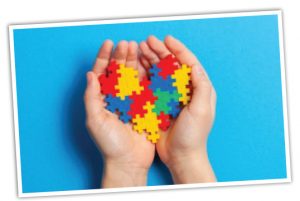
In recent years, Autism Spectrum Disorder (ASD) has become a global concern because of the increasing number of reported cases. According to an estimate, there were 70 million individuals with autism in 2019 and, shockingly, 80 percent of them were in developing countries. Since 2010, the number of autism people has increased by 15 percent globally. It was found in various studies that besides suffering economic and social difficulties, individuals with autism were at a greater risk of poverty, particularly in developing countries (ICANDD Report, 2017).
This Covid-19 pandemic induced unprecedented health crisis-cum-humanitarian crisis has increased unemployment, inequality, poverty and discrimination around the world. During these trying times, individuals with autism and those particularly belonging to underdeveloped countries are going through enormous challenges in every sphere of life. They are facing discrimination in terms of health service delivery and employment.
It is great progress that the United Nations has marked World Autism Awareness Day on April 2 every year to raise awareness about the suffering of the people with autism and spreading kindness to them. Since 2012, every year the UN has given a theme for the World Autism Awareness Day. In2021, the theme was ‘inclusion of Autism in the Workplace: Challenges and Opportunities in a Post-Pandemic World’
In light of the theme, this piece aims to assess how far we have come to offer equitable opportunity for individuals with autism in the workplace and how to assimilate them into mainstream society, including their participation in the job market.
Employment is an avenue of progress for every individual in the spectrum and there are no exceptions. Globally, statistics reveal that the majority of adults with autism are either unemployed or underemployed. The reason for this is the lack of awareness about ASD (Autism Spectrum Disorder).
In the United Kingdom, nearly 700,000 persons are diagnosed with ASD but just 16% of them are in full-time employment. The individuals with autism may have compromised social and communication skills, but they may be gifted with some unique skills that make them an esteemed aspirants. Sadly, despite being gifted with some extraordinary skills, individuals with autism are seldom considered as potential candidates.


Dr Shemaila Saleem is an Associate Professor at the Department of Physiology, Federal Medical and Dental College, Islamabad, Pakistan. She can be reached at drshemailasaleem@gmail.com

Dr Foyasal Khan is Research Fellow at the Bangladesh Institute of Islamic Thought and holds a Ph.D. in Economics from the International Islamic University, Malaysia. He can be reached at foyasal.khan@gmail.com
Leave a Reply