Focus
A common struggle
According to the National Nutrition Survey (NNS) 2018 of Pakistan, 40.2% of children under 5 years of age are stunted, while 18% are wasted with high micronutrient deficiency levels.

On the list of priorities that our society needs to focus on is a scourge so real and so deep, that the United Nations routinely sounds alarms about it. It’s an issue that stares us right in the face, yet we are doing little about it. And unfortunately, it barely gets mention in mainstream media as well. My friends, the crisis that I am referring to is the crisis of malnutrition.
It is imperative to strengthen our narrative around the malnutrition challenges that Pakistan currently faces. As the novel Coronavirus Disease (COVID-19) emerges, it reflects how important immunity is to fight this and many similar types of diseases requiring a strong defense system. More prone to the fatality as a result of COVID-19, year on year studies suggest that children undergoing malnutrition have suppressed immunity and are more likely to catch the infectious diseases.
Pakistan remains at emergency levels of acute malnutrition and has been reported to have one of the highest levels of prevalence of child malnutrition compared to other developing countries. A focus on quality of diet and nutrition awareness is extremely essential to prevent stunting, wasting and other forms of malnutrition. 8 out of 10 children in Pakistan do not eat right type and quantity of food.
According to the National Nutrition Survey (NNS) 2018 of Pakistan, 40.2% of children under 5 years of age in Pakistan are stunted, while 18% are wasted with high micronutrient deficiency levels. Millions of children in Pakistan suffer from stunted growth, cognitive impairments, weak immunity and non-communicable diseases as an outcome of these micronutrient deficiencies. This essentially means that they cannot grow up to be productive, well-functioning members of society since they are not physically nourished to the level that they should be. This doesn’t bode well for the future of the country, since the next generation of adults is not equipped – physically and mentally – to deal with the challenges of the modern world.
Right nutrition at the right time is essential for child survival, health and development. Adequately nourished children are much more equipped to fight infections, grow and learn, act as productive members of society, and respond well in combatting disease, disasters and other public health crises. By the same logic, poor nutrition impacts on health, education and wellbeing through generations and even through the adolescence.
To fight this burden, it costs the government billions of precious rupees each year. This is money that can instead be put to good use to educate the children and help develop their skill sets so they can be empowered to lead the country to new horizons. Unfortunately, however, we are still trying to get the basics right; a struggle which the PM has outlined many times, in calls for action addressed to the nation where he highlights the burden of malnutrition as a battle we must fight with valor.
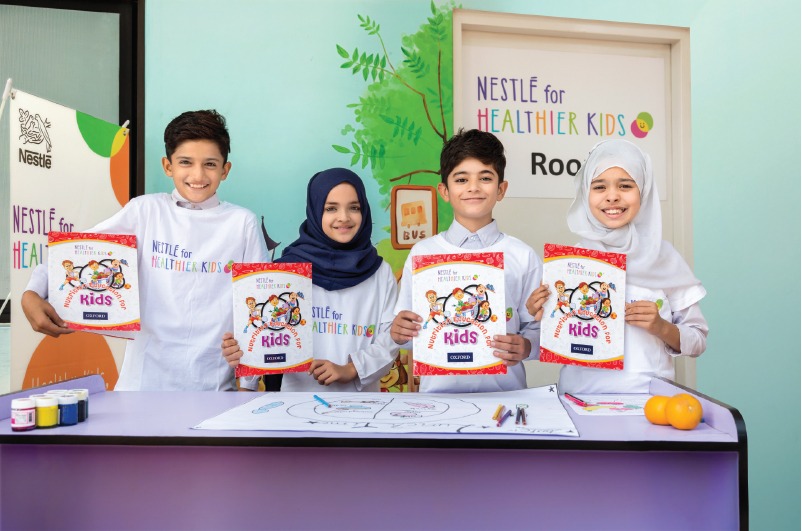
Therefore, it is critical that the private sector step up to the plate and engage with the public sector, and other entities such as NGOs, to eradicate this evil. A prime example of such an initiative is run by the global food and beverage company, Nestlé, titled Nestlé for Healthier Kids (N4HK). Nestlé for Healthier Kids is a comprehensive program which empowers parents, teachers and caregivers to foster healthier eating, drinking and lifestyle habits among school-age children. The program also gives guidance on how to adopt good hygiene habits, such as hand washing and food safety.

Waqar Ahmad, Head of Corporate Affairs, Nestlé Pakistan said, “Nestlé for Healthier Kids initiative is part of our commitment to United Nations Sustainable Development Goal (SDG) 3 of Good Health and Well-Being, to ensure that children understand the value of nutrition and physical activity and continue leading healthy lives as they grow older.
“This is part of our giving back and being responsible in our communities. In Pakistan, the program has reached out to more than 250,000 kids and has trained more than 1300 teachers with 10 partners nationwide,” he added.
The program operates on a train-the-trainer model where the health and wellness expert imparts knowledge on health and nutrition to teachers belonging to partner institutions. Those teachers then go back to their classrooms and teach the same information to their students. The program establishes foundations for healthier eating by inspiring kids through various interactive and fun learning activities like healthy lunchbox contest and cooking workshops for kids.
The N4HK program boasts of several educational institutions and government bodies as its partners, proving that large scale challenges cannot be solved alone. On the contrary, they require efforts on the part of all stakeholders – the public included! The program is continuously strengthening its efforts through various activities aimed at increasing nutritional knowledge and adopting healthier lifestyle habits. As quoted by Seema Aziz, Managing Trustee, Care Foundation, one of the partner organizations; “through our ten years of continuous partnership with Nestlé for Healthier Kids Program, we have achieved significant improvement in nutritional knowledge and adoption of healthy lifestyle among our children at schools”.
N4HK is indicative of what we all need to do in an era of interdependence: share responsibility and take collective action. It may sound difficult, but it starts from home. Eat healthy, promote a healthy lifestyle and most of all, be kind to one another.
During the past few years many nutritional programs have been initiated by the government and nongovernmental organizations. It is important to mention the efforts of UNICEF in addressing acute malnutrition through supporting government in strengthening the health system to scale up and deliver quality care and treatment services for severe acute malnutrition. Its nutrition interventions are positively affecting both child survival and child development, with a focus critical first years of life. In an effort to this end, UNICEF has also collaborated with other partners such as Early Childhood Development (ECD) and the Scaling up Nutrition (SUN) initiative.
Focusing on health at early development stages of individual can definitely nurture a healthy generation and continuity of such programs and partnerships can be seen to have tremendous positive change in the nutritional indicators.![]()


Leave a Reply