



 Of late, there has been a notable shift in the political landscape of South Asia, with instances of public unrest resulting in violent attacks on significant institutions. In Bangladesh, for example, students staged protests against the quota system in job placements, ultimately leading to public pressure that prompted Prime Minister Sheikh Hasina to resign following military intervention. Similarly, in Pakistan, there were attacks on national and military institutions on May 9, 2023, driven by public anger towards the authorities. Notably, these attacks in Pakistan were allegedly carried out under the leadership of a particular political party, unlike the student-led demonstrations in Bangladesh.
In July 2022, the people of Sri Lanka protested against the government’s economic policies, leading to a deteriorating economy and widening crises. The public outcry was fueled by Sri Lanka’s debt-laden economy collapsing, leaving the country unable to pay for essentials such as food, fuel, and medicine. The nation had to rely on assistance from neighboring countries like India and China and the International Monetary Fund (IMF). As a result, Sri Lankans were facing severe food shortages, long queues for scarce fuel and cooking gas, and a severe economic downturn. With the government unable to make interest payments on its massive $51 billion debt and tourism suffering due to the ensuing impacts of the COVID-19 pandemic, the country’s currency plummeted by 80 percent, leading to increased import costs and worsening inflation. The finance ministry reported that Sri Lanka had only $25 million in usable foreign reserves but needed $6 billion to sustain itself for six months. The dire situation had left the country on the brink of bankruptcy, with insufficient funds to import essentials such as fuel, milk, medicine, and even toilet paper.
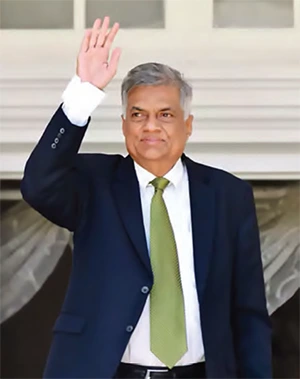
In that period of unrest, Sri Lanka’s President Gotabaya Rajapaksa had agreed to step down next week following a protest at the presidential palace and a fire set at the prime minister’s residence, sparked by public frustration over a deepening economic crisis. Former Prime Minister Ranil Wickremesinghe proclaimed himself Incumbent President in July, a position he holds to this day. As the country prepares for the next presidential election on September 21, 2024, Wickremesinghe has become the first candidate to enter the race officially.

 The writer is currently serving as an Assistant Professor at the Faculty of Heritage, Aror University of Art, Architecture, Design & Heritage, Sukkur. He can be reached at qasim_shu2016@yahoo.com
Leave a Reply